


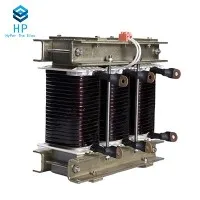
As a dedicated supplier of Hollow Coils, I've spent countless hours exploring the intricate world of these fascinating components. One aspect that has always intrigued me is the relationship between temperature change and the inductance of a hollow coil. In this blog post, I will delve into the science behind this relationship and discuss how it can impact the performance of your electrical systems.
Understanding Inductance and Hollow Coils
Before we dive into the effects of temperature on inductance, let's first take a moment to understand what inductance is and how it relates to hollow coils. Inductance is a property of an electrical conductor that opposes any change in the current flowing through it. It is measured in henries (H) and is denoted by the symbol L.
A hollow coil, as the name suggests, is a coil of wire with a hollow core. It is a fundamental component in many electrical and electronic devices, including transformers, inductors, and solenoids. The inductance of a hollow coil depends on several factors, including the number of turns in the coil, the cross - sectional area of the coil, the length of the coil, and the permeability of the medium inside the coil.
The Physical Principles Governing Inductance
The formula for the inductance of a solenoid (a type of hollow coil) is given by:
[L=\frac{\mu_0\mu_rN^2A}{l}]
where (L) is the inductance, (\mu_0 = 4\pi\times10^{- 7}\space H/m) is the permeability of free space, (\mu_r) is the relative permeability of the core material, (N) is the number of turns in the coil, (A) is the cross - sectional area of the coil, and (l) is the length of the coil.
From this formula, we can see that the inductance is directly proportional to the square of the number of turns, the cross - sectional area, and the relative permeability, and inversely proportional to the length of the coil.
How Temperature Affects the Components of Inductance
1. Resistance of the Wire
One of the primary ways temperature affects a hollow coil is by changing the resistance of the wire. As the temperature increases, the resistance of the wire increases according to the formula:
[R_T=R_0(1 + \alpha(T - T_0))]
where (R_T) is the resistance at temperature (T), (R_0) is the resistance at a reference temperature (T_0), and (\alpha) is the temperature coefficient of resistance.
An increase in resistance can lead to a decrease in the current flowing through the coil, which in turn can affect the magnetic field generated by the coil. Since the inductance is related to the magnetic field, this change in current can have an impact on the inductance.
2. Expansion of the Coil
Another effect of temperature change is the expansion or contraction of the coil. As the temperature increases, the coil will expand due to thermal expansion. This expansion can change the dimensions of the coil, such as the length (l) and the cross - sectional area (A).
According to the inductance formula, an increase in length will cause a decrease in inductance, while an increase in cross - sectional area will cause an increase in inductance. The net effect on inductance depends on the relative magnitudes of these changes.
3. Change in Permeability
In some cases, the temperature can also affect the relative permeability (\mu_r) of the medium inside the coil. Although a hollow coil has air (or a non - magnetic material) as its core, in practical applications, there may be some surrounding materials that can be affected by temperature. A change in (\mu_r) will directly affect the inductance of the coil.
Experimental Evidence of Temperature - Inductance Relationship
Numerous experiments have been conducted to study the effect of temperature on the inductance of hollow coils. In general, it has been found that for most hollow coils made of common materials, the inductance decreases with an increase in temperature.
This decrease is mainly due to the increase in resistance of the wire, which reduces the current and the magnetic field, and the increase in length of the coil due to thermal expansion. However, the exact relationship between temperature and inductance can vary depending on the specific design and materials of the coil.
Implications for Electrical Systems
The temperature - induced change in inductance can have significant implications for the performance of electrical systems. For example, in a resonant circuit, a change in inductance can shift the resonant frequency. This can lead to a decrease in the efficiency of the circuit or even cause it to malfunction.
In power supply applications, the change in inductance can affect the regulation of the output voltage. If the inductance changes too much with temperature, it can cause the output voltage to vary outside the acceptable range, leading to instability in the connected devices.
Mitigating the Effects of Temperature Change
To mitigate the effects of temperature change on the inductance of hollow coils, several strategies can be employed. One approach is to use materials with low temperature coefficients of resistance for the wire. This can reduce the change in resistance with temperature and minimize the impact on the current and magnetic field.
Another strategy is to design the coil in such a way that the effects of thermal expansion on the dimensions of the coil are minimized. For example, using a coil with a more rigid structure or incorporating materials with low thermal expansion coefficients can help to maintain the stability of the coil's dimensions.
Our Offerings as a Hollow Coil Supplier
As a leading supplier of Hollow Coils, we understand the importance of temperature stability in the performance of these components. We offer a wide range of hollow coils that are designed to minimize the effects of temperature change on inductance.
Our DC Solenoid Coils and AC Solenoid Coils are carefully engineered using high - quality materials and advanced manufacturing techniques. We conduct rigorous testing to ensure that our coils meet the highest standards of performance and reliability, even under varying temperature conditions.
Contact us for Your Coil Needs
If you are looking for high - quality hollow coils or solenoid coils that can withstand temperature variations, we are here to help. Our team of experts can work with you to understand your specific requirements and provide the best coil solutions for your applications. Whether you need a standard coil or a custom - designed one, we have the capabilities to deliver.


Feel free to reach out to us to discuss your procurement needs. We look forward to the opportunity to work with you and contribute to the success of your electrical systems.
References
- "Electromagnetic Fields and Waves" by David K. Cheng.
- "Fundamentals of Electric Circuits" by Charles K. Alexander and Matthew N. O. Sadiku.
- Research papers on temperature effects on inductors from IEEE Transactions on Industry Applications.