


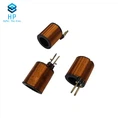


Selecting the appropriate AC solenoid coil for a specific application is a critical task that requires careful consideration of various factors. As an AC solenoid coil supplier, I understand the importance of making the right choice to ensure optimal performance and reliability. In this blog, I will share some key points to help you select the most suitable AC solenoid coil for your needs.
Understanding the Basics of AC Solenoid Coils
Before delving into the selection process, it's essential to have a basic understanding of how AC solenoid coils work. An AC solenoid coil is an electromagnetic device that converts electrical energy into mechanical energy. When an alternating current (AC) passes through the coil, it creates a magnetic field that attracts or repels a ferromagnetic core, causing mechanical movement. This movement can be used to control valves, switches, and other mechanical components in various applications.
Factors to Consider When Selecting an AC Solenoid Coil
1. Voltage and Frequency
The first and most important factor to consider is the voltage and frequency of the power supply. AC solenoid coils are designed to operate at specific voltage and frequency levels. Using a coil with the wrong voltage or frequency can lead to poor performance, overheating, and even damage to the coil. Make sure to check the power supply specifications and choose a coil that is compatible with them. For example, in most household applications in the United States, the standard voltage is 120V at 60Hz, while in many European countries, it is 230V at 50Hz.
2. Power Rating
The power rating of the solenoid coil determines the amount of electrical power it consumes. It is usually measured in watts (W). A higher power rating generally means a stronger magnetic field and more force, but it also results in higher energy consumption and heat generation. Consider the power requirements of your application and choose a coil with an appropriate power rating. If your application requires a high force but only operates intermittently, you may be able to choose a coil with a higher power rating. However, if the coil needs to operate continuously, a lower power rating may be more suitable to prevent overheating.
3. Force and Stroke
The force and stroke of the solenoid coil are crucial parameters for applications that involve mechanical movement. The force is the amount of pulling or pushing power the coil can generate, while the stroke is the distance the core can move. These values depend on the design and construction of the coil, as well as the applied voltage and current. Determine the force and stroke requirements of your application and select a coil that can meet them. For example, in a valve control application, you need to ensure that the coil can generate enough force to open and close the valve and that the stroke is sufficient to achieve the desired flow rate.
4. Duty Cycle
The duty cycle refers to the ratio of the time the solenoid coil is energized to the total time of a cycle. It is expressed as a percentage. Solenoid coils are designed to handle different duty cycles, and choosing the right one is essential to prevent overheating and premature failure. Continuous duty coils are designed to operate continuously without overheating, while intermittent duty coils are suitable for applications where the coil is only energized for a short period. If your application requires the coil to be energized for a long time, choose a continuous duty coil. Otherwise, an intermittent duty coil may be more cost - effective.
5. Environmental Conditions
The environmental conditions in which the solenoid coil will operate also play a significant role in the selection process. Factors such as temperature, humidity, dust, and vibration can affect the performance and lifespan of the coil. For applications in high - temperature environments, choose a coil with a high - temperature insulation material. In humid or corrosive environments, a coil with a protective coating or enclosure may be necessary. Additionally, if the application is subject to vibration, make sure the coil is designed to withstand it.
6. Size and Mounting
The physical size and mounting requirements of the solenoid coil are important considerations, especially in applications where space is limited. Make sure the coil can fit into the available space and that it can be easily mounted using the appropriate mounting hardware. Some coils come with different mounting options, such as flange mounts, bracket mounts, or threaded mounts. Choose the one that best suits your application.
Different Types of AC Solenoid Coils and Their Applications
Solenoid Valve Coils
Solenoid Valve Coil is one of the most common types of AC solenoid coils. They are used to control the flow of fluids (liquids or gases) in various industries, such as water treatment, HVAC, and automotive. Solenoid valve coils can be either direct - acting or pilot - operated, depending on the size and type of the valve. Direct - acting coils are suitable for small valves and low - pressure applications, while pilot - operated coils are used for larger valves and high - pressure systems.
Hollow Coils
Hollow Coil are another type of AC solenoid coil. They have a hollow core, which allows for the passage of a rod or other objects. Hollow coils are often used in applications such as linear actuators, relays, and sensors. They can provide a high force with a relatively small size and are suitable for applications where space is limited.
Comparing AC Solenoid Coils with DC Solenoid Coils
It's also important to understand the differences between AC solenoid coils and DC Solenoid Coil. DC solenoid coils are powered by direct current, while AC solenoid coils use alternating current. DC solenoid coils generally provide a more constant force and are less affected by the frequency of the power supply. However, they require a rectifier to convert AC to DC, which can add to the complexity and cost of the system. AC solenoid coils, on the other hand, are simpler to operate directly from the AC power supply and are often more cost - effective for applications where a high - frequency response is not required.
How Our Company Can Help
As an AC solenoid coil supplier, we offer a wide range of high - quality solenoid coils to meet the diverse needs of our customers. Our coils are designed and manufactured using the latest technology and the highest quality materials to ensure reliable performance and long service life. We have a team of experienced engineers who can provide technical support and help you select the most suitable coil for your application. Whether you need a standard coil or a custom - designed one, we can work with you to meet your specific requirements.
If you are in the process of selecting an AC solenoid coil for your application, we encourage you to contact us for more information. Our sales team is ready to assist you in making the right choice. We can provide detailed product specifications, samples for testing, and competitive pricing. By working with us, you can ensure that you get the best AC solenoid coil for your specific needs.


References
- "Electromagnetic Devices" by Alexander Kusko. This book provides in - depth knowledge about the principles and applications of electromagnetic devices, including solenoid coils.
- "Industrial Control Technology" by various authors. It offers practical information on the use of solenoid coils in industrial control systems.
- Manufacturer's technical manuals and datasheets. These resources provide detailed information about the specific features and performance of different AC solenoid coils.