


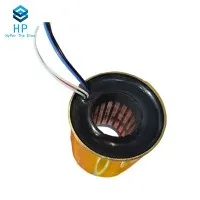
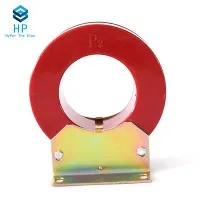

A choke coil, an essential component in electrical and electronic circuits, is a type of inductor designed to block high - frequency alternating current (AC) while allowing direct current (DC) or low - frequency AC to pass through. As a choke coil supplier, I have witnessed firsthand the diverse and critical applications of this remarkable device across multiple industries. In this blog, I will delve into the various applications of choke coils, highlighting their significance and impact.
Power Supply Filtering
One of the most common applications of choke coils is in power supply filtering. In a power supply unit, the incoming AC voltage is rectified to DC. However, the rectified output still contains some AC ripple. Choke coils, often used in combination with capacitors, form a filter circuit to smooth out this ripple.
The choke coil resists changes in current due to its inductive property. When the current in the circuit tries to change rapidly (as in the case of the AC ripple), the choke coil generates a back - electromotive force (EMF) that opposes the change. This effectively reduces the high - frequency components of the ripple, resulting in a more stable DC output. For example, in a linear power supply for electronic devices such as laptops and desktop computers, choke coils play a crucial role in providing clean and stable power to the sensitive electronic components. This helps to prevent malfunctions and damage caused by power fluctuations. You can learn more about choke coils on our website Choke Coil.
Radio Frequency (RF) Circuits
In RF circuits, choke coils are used to isolate different parts of the circuit and to prevent unwanted RF signals from interfering with other components. They act as high - impedance elements at RF frequencies, blocking the flow of RF currents while allowing DC or low - frequency signals to pass.
For instance, in a radio receiver, a choke coil can be used to separate the RF front - end from the audio - processing section. The choke coil blocks the high - frequency RF signals from entering the audio section, ensuring that only the demodulated audio signal is processed. Similarly, in a transmitter, choke coils can be used to prevent RF energy from leaking into the power supply or other parts of the circuit. This improves the overall performance and efficiency of the RF system.
Telecommunication Systems
Telecommunication systems rely heavily on choke coils for signal filtering and isolation. In telephone lines, choke coils are used to filter out high - frequency noise and interference. This helps to improve the quality of voice calls by reducing background noise and distortion.
In fiber - optic communication systems, choke coils are used in the electrical interfaces of optical transceivers. They help to filter out electrical noise and ensure the integrity of the electrical signals being transmitted and received. Additionally, choke coils can be used to isolate different sections of the telecommunication network, preventing the spread of electrical interference between different devices and subsystems.
Motor Drives
Choke coils are also widely used in motor drives. In variable - frequency drives (VFDs), which are used to control the speed and torque of electric motors, choke coils are used to filter the input and output currents.
On the input side, a choke coil can reduce the harmonic currents drawn from the power supply. Harmonics are unwanted high - frequency components of the current that can cause power quality issues, such as overheating of transformers and other electrical equipment. By filtering out these harmonics, the choke coil helps to improve the power factor of the VFD and reduces the stress on the power supply system.
On the output side, a choke coil can smooth out the current waveform supplied to the motor. This reduces the electromagnetic interference (EMI) generated by the motor and helps to improve the motor's performance and reliability.
Inductive Heating
In inductive heating applications, choke coils are used to control the flow of current in the heating circuit. Inductive heating works by inducing eddy currents in a conductive material, which then generates heat due to the material's electrical resistance.
The choke coil in an inductive heating system helps to limit the current and control the power delivered to the heating element. It also helps to filter out any high - frequency noise or interference generated during the heating process. For example, in an industrial induction furnace used for melting metals, the choke coil plays a vital role in ensuring efficient and stable heating.
Lighting Systems
Choke coils are commonly used in lighting systems, especially in fluorescent lamps. In a fluorescent lamp circuit, a choke coil, also known as a ballast, is used to limit the current flowing through the lamp.
When the fluorescent lamp is first turned on, a high voltage is required to ionize the gas inside the lamp. Once the gas is ionized, the resistance of the lamp decreases significantly. Without a ballast, the current flowing through the lamp would increase uncontrollably, leading to overheating and damage to the lamp. The choke coil acts as a current - limiting device, providing the necessary impedance to keep the current at a safe and stable level. This ensures the proper operation and long - term reliability of the fluorescent lamp.
Comparison with Other Coils
It is worth comparing choke coils with other types of coils, such as Oscillating Coil and Antenna Coil. While all these coils are based on the principle of electromagnetic induction, they have different functions and applications.
An oscillating coil is designed to generate or sustain oscillations in a circuit. It is commonly used in oscillators, which are circuits that produce periodic electrical signals. Antenna coils, on the other hand, are used to transmit or receive electromagnetic waves. They are an essential part of radio antennas and other wireless communication devices. In contrast, choke coils are mainly used for filtering and isolation purposes, as described above.


Conclusion
In conclusion, choke coils are versatile and indispensable components in a wide range of electrical and electronic applications. Their ability to block high - frequency AC while allowing DC or low - frequency AC to pass makes them ideal for power supply filtering, RF circuit isolation, telecommunication systems, motor drives, inductive heating, and lighting systems.
As a choke coil supplier, I am committed to providing high - quality choke coils that meet the diverse needs of our customers. Whether you are an electronics manufacturer, a telecommunications company, or an industrial equipment provider, we have the right choke coil solution for you. If you are interested in purchasing choke coils or have any questions about our products, please feel free to contact us for a detailed discussion. We look forward to working with you to meet your specific requirements.
References
- Boylestad, R. L., & Nashelsky, L. (2017). Electronic Devices and Circuit Theory. Pearson.
- Sedra, A. S., & Smith, K. C. (2015). Microelectronic Circuits. Oxford University Press.
- Hayt, W. H., & Kemmerly, J. E. (2012). Engineering Circuit Analysis. McGraw - Hill.