



In the realm of electronics, coil inductors stand as fundamental components, playing pivotal roles across diverse applications. As a seasoned coil inductor supplier, we delve deep into the world of inductors, and today, we focus on a crucial aspect: the shielding of a coil inductor.


Understanding Coil Inductors
Before we explore shielding, it's essential to understand what coil inductors are. A coil inductor is a passive two - terminal electrical component that stores energy in a magnetic field when an electric current flows through it. The basic construction involves a wire wound into a coil, and the magnetic field is generated around this coil. The inductance, measured in henries (H), depends on factors such as the number of turns in the coil, the cross - sectional area of the coil, and the permeability of the core material (if present).
Coil inductors find applications in various circuits, including power supplies, filters, and radio frequency (RF) circuits. For example, BUCK Inductor is commonly used in buck converters, which are a type of DC - DC converter that steps down a DC voltage level.
Why Coil Inductor Shielding is Necessary
-
Reducing Electromagnetic Interference (EMI)
One of the primary reasons for shielding coil inductors is to mitigate electromagnetic interference. When current flows through a coil inductor, it generates a magnetic field. This magnetic field can interact with other nearby components in the circuit, causing unwanted interference. For instance, in a complex electronic device with multiple inductors and other sensitive components, the magnetic fields from the inductors can couple with each other or with other circuits, leading to signal distortion, noise, and even malfunctions. Shielding helps to contain the magnetic field within a specific area, reducing its impact on other components. -
Protecting the Inductor from External Fields
Conversely, external magnetic fields can also affect the performance of a coil inductor. These external fields can be generated by other electrical equipment, power lines, or even the Earth's magnetic field. Shielding provides a barrier that protects the inductor from these external magnetic fields, ensuring that its performance remains stable and consistent. -
Meeting Regulatory Requirements
In many industries, electronic devices must comply with strict electromagnetic compatibility (EMC) regulations. These regulations are in place to ensure that electronic devices do not cause excessive interference to other devices and can operate properly in their intended electromagnetic environment. Shielding coil inductors is often a necessary step to meet these regulatory requirements.
Types of Shielding for Coil Inductors
-
Magnetic Shielding
Magnetic shielding is achieved by using materials with high magnetic permeability, such as mu - metal or ferrite. These materials have the ability to attract and conduct magnetic flux, effectively redirecting the magnetic field away from the sensitive components or containing the magnetic field generated by the inductor. For example, a ferrite shield can be placed around a coil inductor to form a closed - loop path for the magnetic flux, reducing the leakage of the magnetic field to the surrounding environment. -
Electrostatic Shielding
Electrostatic shielding is used to protect the inductor from electrostatic fields. This is typically done using conductive materials, such as copper or aluminum. The conductive shield is grounded, creating an equipotential surface that shields the inductor from external electrostatic charges. In some cases, a combination of magnetic and electrostatic shielding may be used to provide comprehensive protection for the coil inductor.
Shielding in Different Types of Coil Inductors
-
Toroidal Inductors
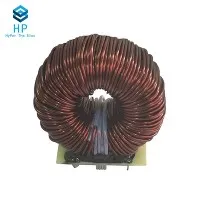
Toroidal inductors have a unique ring - shaped core. Their geometry inherently provides some self - shielding properties because the magnetic field is mostly confined within the toroid. However, additional shielding may still be required in some applications, especially when there are strict EMI requirements. A toroidal inductor can be enclosed in a magnetic shield made of a suitable material to further reduce the magnetic field leakage. -
PFC Inductor
Power Factor Correction (PFC) inductors are used in power supplies to improve the power factor. These inductors generate relatively high magnetic fields due to the high currents flowing through them. Shielding is crucial for PFC inductors to prevent EMI from affecting other components in the power supply and the surrounding environment. Specialized shielding designs are often employed to ensure effective containment of the magnetic field.
Impact of Shielding on Coil Inductor Performance
- Inductance Variation
Shielding can have an impact on the inductance of a coil inductor. The presence of a shield changes the magnetic flux distribution around the inductor, which can lead to a slight change in the inductance value. It is important for designers to consider this effect when selecting and designing shielded inductors to ensure that the circuit operates within the desired specifications. - Losses
Shielding materials can introduce additional losses in the inductor. For example, eddy current losses can occur in conductive shields when the magnetic field changes. These losses can reduce the efficiency of the inductor and increase the heat generation. Proper selection of shielding materials and design techniques can help to minimize these losses.
Design Considerations for Shielded Coil Inductors
- Shield Material Selection
The choice of shielding material depends on the specific application requirements. For magnetic shielding, materials with high magnetic permeability are preferred. For electrostatic shielding, highly conductive materials are used. The cost, availability, and performance characteristics of the materials also need to be taken into account. - Shield Design and Geometry
The design and geometry of the shield play a crucial role in its effectiveness. A well - designed shield should provide a continuous path for the magnetic or electrostatic field and minimize any gaps or discontinuities. The shape and size of the shield should be optimized to enclose the inductor while minimizing the impact on other components in the circuit. - Heat Dissipation
Since shielding can affect the heat dissipation of the inductor, provisions for heat dissipation need to be considered. This may involve the use of heat sinks, ventilation holes in the shield, or other cooling techniques.
Conclusion
The shielding of coil inductors is a critical aspect of electronic design, especially in applications where electromagnetic interference and performance stability are of utmost importance. As a coil inductor supplier, we understand the significance of providing high - quality shielded inductors that meet the diverse needs of our customers.
Our team of experts is dedicated to developing innovative shielding solutions for coil inductors, ensuring that they offer optimal performance, reliability, and compliance with industry standards. If you are in the market for high - quality coil inductors or need advice on shielding options, we invite you to contact us for procurement and discussion. We are committed to working with you to provide the best inductor solutions for your specific applications.
References
- Gupta, K. C., & Garg, R. (1996). Microstrip Lines and Slotlines. Artech House.
- Paul, C. R. (2006). Introduction to Electromagnetic Compatibility. Wiley - Interscience.