


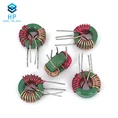


Hey there! As a supplier of solenoid coils, I often get asked about the voltage requirements for these nifty little components. So, I thought I'd take a moment to break it all down for you.
First off, let's talk about what a solenoid coil actually is. A solenoid coil is an electromechanical device that converts electrical energy into mechanical motion. It's basically a coil of wire wound around a core, and when an electric current is passed through the coil, it creates a magnetic field. This magnetic field then interacts with a plunger or armature, causing it to move.
Now, when it comes to the voltage requirements for a solenoid coil, there are a few factors to consider. The most important factor is the design of the coil itself. Different solenoid coils are designed to operate at different voltages, and this is determined by the number of turns in the coil, the wire gauge, and the core material.
For example, a solenoid coil with a large number of turns and a small wire gauge will typically require a higher voltage to operate. This is because the resistance of the coil is higher, and more voltage is needed to overcome this resistance and create a strong enough magnetic field. On the other hand, a solenoid coil with a smaller number of turns and a larger wire gauge will require a lower voltage.
Another factor to consider is the application of the solenoid coil. Different applications may require different voltage levels. For instance, in a low-power application, such as a small electronic device, a solenoid coil may be designed to operate at a relatively low voltage, such as 5 volts or 12 volts. In a high-power application, such as an industrial machinery, the solenoid coil may need to operate at a much higher voltage, such as 24 volts or even higher.
It's also important to note that the voltage requirements for a solenoid coil can vary depending on the operating conditions. For example, if the solenoid coil is operating in a high-temperature environment, it may require a higher voltage to compensate for the increased resistance of the wire. Similarly, if the solenoid coil is operating in a high-humidity environment, it may require a lower voltage to prevent damage to the coil.
So, how do you determine the voltage requirement for a solenoid coil? Well, the first step is to consult the manufacturer's specifications. The manufacturer will typically provide the recommended voltage range for the solenoid coil, as well as other important information such as the current rating, power consumption, and operating temperature range.
If you're not sure which solenoid coil is right for your application, or if you have any questions about the voltage requirements, don't hesitate to reach out to us. We're a Solenoid Coil supplier, and we have a team of experts who can help you choose the right coil for your needs.
Now, let's take a look at some of the different types of solenoid coils that we offer. We have a wide range of solenoid coils available, including Choke Coil, Encapsulated Coil, and Oscillating Coil. Each of these types of solenoid coils has its own unique features and applications, and we can help you choose the right one for your specific needs.
Choke coils are used to filter out unwanted frequencies in an electrical circuit. They're commonly used in power supplies, audio amplifiers, and other electronic devices. Encapsulated coils are designed to be protected from the environment, making them ideal for use in harsh conditions. Oscillating coils are used in radio frequency (RF) circuits to generate and tune radio waves.
No matter what type of solenoid coil you need, we have the expertise and experience to provide you with the highest quality products. We use only the best materials and manufacturing processes to ensure that our solenoid coils are reliable, efficient, and long-lasting.


So, if you're in the market for a solenoid coil, or if you have any questions about the voltage requirements or other aspects of solenoid coils, don't hesitate to contact us. We're here to help you find the right solution for your needs. Whether you're a small business or a large industrial manufacturer, we can provide you with the solenoid coils you need at a competitive price.
In conclusion, the voltage requirement for a solenoid coil depends on a variety of factors, including the design of the coil, the application, and the operating conditions. By consulting the manufacturer's specifications and working with a reputable supplier, you can ensure that you choose the right solenoid coil for your needs. If you have any questions or need further assistance, please don't hesitate to reach out to us. We're here to help you make the best decision for your business.