


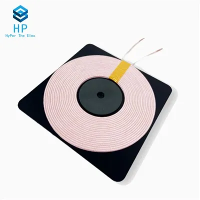


As a supplier of BUCK inductors, I often get asked whether a BUCK inductor can be used in a communication device. This question is not only relevant to the functionality of communication devices but also to the efficiency and performance of the overall system. In this blog, I will delve into the technical aspects of BUCK inductors and explore their suitability for use in communication devices.
Understanding BUCK Inductors
A BUCK inductor is a key component in a BUCK converter, which is a type of DC - DC converter that steps down the input voltage to a lower output voltage. It works based on the principle of energy storage and transfer in an inductor. When the switch in the BUCK converter is closed, current flows through the inductor, storing energy in its magnetic field. When the switch is opened, the inductor releases the stored energy, maintaining the current flow to the load.
The BUCK Inductor plays a crucial role in determining the performance of the BUCK converter. It affects parameters such as output voltage ripple, efficiency, and transient response. A well - designed BUCK inductor can significantly improve the stability and efficiency of the power supply.
Requirements of Communication Devices
Communication devices, such as smartphones, routers, and base stations, have specific requirements for their power supplies. These requirements are driven by the need for reliable operation, low power consumption, and high - speed data transmission.
- Power Efficiency: Communication devices are often battery - powered or need to operate with low power consumption to reduce heat generation and extend battery life. A high - efficiency power supply is essential to meet these requirements. The BUCK converter, with its ability to step down voltage efficiently, can help achieve this goal. The BUCK inductor, as a key part of the converter, needs to have low losses to maximize the overall efficiency.
- Low Ripple: Communication devices are sensitive to voltage fluctuations. High voltage ripple can cause interference in the communication signals, leading to data errors and reduced performance. A BUCK inductor with proper inductance and low resistance can help reduce the output voltage ripple, ensuring a stable power supply for the communication circuits.
- Fast Transient Response: Communication devices may experience sudden changes in load current, for example, when a large number of data packets are transmitted or received. The power supply needs to respond quickly to these changes to maintain a stable output voltage. A well - designed BUCK inductor can store and release energy rapidly, enabling the power supply to adapt to the load changes.
Suitability of BUCK Inductors in Communication Devices
Based on the requirements of communication devices, BUCK inductors can be a suitable choice for power supply applications in these devices.
- Size and Integration: Modern communication devices are becoming smaller and more compact. BUCK inductors can be designed in various sizes and form factors to meet the space constraints of these devices. Surface - mount technology (SMT) inductors are commonly used in communication devices due to their small size and ease of integration onto printed circuit boards (PCBs).
- Efficiency and Performance: As mentioned earlier, BUCK inductors can contribute to high - efficiency power conversion. By carefully selecting the inductor's parameters, such as inductance, resistance, and saturation current, the power supply can operate at optimal efficiency, reducing power consumption and heat generation.
- Compatibility with Other Components: BUCK inductors can be easily integrated with other components in the power supply circuit, such as capacitors and diodes. This compatibility allows for the design of a compact and reliable power supply system for communication devices.
Types of Inductors in Communication Devices
In addition to BUCK inductors, other types of inductors are also used in communication devices.
- Coil Inductor: Coil Inductor is a basic type of inductor that can be used for various purposes in communication devices. It can be used for filtering, impedance matching, and energy storage. Coil inductors can be designed with different inductance values and physical characteristics to meet the specific requirements of the communication circuit.
- Filter Inductor: Filter Inductor is used to filter out unwanted noise and interference in the power supply and signal lines. In communication devices, filter inductors are often used in combination with capacitors to form low - pass, high - pass, or band - pass filters. These filters help to improve the signal quality and reduce electromagnetic interference (EMI).
Challenges and Considerations
While BUCK inductors offer many advantages for use in communication devices, there are also some challenges and considerations.
- EMI and RFI: Inductors can generate electromagnetic interference (EMI) and radio - frequency interference (RFI), which can affect the performance of the communication device. To mitigate these issues, proper shielding and layout techniques need to be employed. The inductor's design and the overall circuit layout should be optimized to reduce EMI and RFI emissions.
- Temperature and Thermal Management: Communication devices can generate a significant amount of heat, especially during high - load operation. The BUCK inductor needs to be able to operate within a wide temperature range without significant degradation in performance. Thermal management techniques, such as heat sinks and proper ventilation, may be required to ensure the inductor's reliability.
- Cost - Effectiveness: In the highly competitive market of communication devices, cost is an important factor. The design and selection of BUCK inductors need to balance performance and cost. Suppliers need to offer high - quality inductors at a reasonable price to meet the market demand.
Conclusion
In conclusion, a BUCK inductor can be effectively used in a communication device. Its ability to step down voltage efficiently, provide low - ripple power, and respond quickly to load changes makes it a suitable choice for power supply applications in communication devices. However, careful consideration needs to be given to factors such as EMI, thermal management, and cost - effectiveness.
As a BUCK inductor supplier, we are committed to providing high - quality inductors that meet the specific requirements of communication devices. Our products are designed with the latest technology and manufacturing processes to ensure optimal performance and reliability. If you are interested in purchasing BUCK inductors for your communication devices, we invite you to contact us for further discussion and negotiation. We look forward to working with you to meet your power supply needs.