


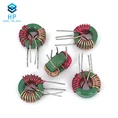

Can a BUCK Inductor be used in a high - voltage circuit?
As a supplier of BUCK Inductors, I've often encountered inquiries from customers about the feasibility of using our BUCK inductors in high - voltage circuits. This is a crucial question that requires a comprehensive understanding of the characteristics of BUCK inductors, high - voltage circuits, and the interaction between them.
Understanding BUCK Inductors
A BUCK inductor is a key component in a BUCK converter, which is a type of DC - DC converter that steps down voltage levels. The basic principle of a BUCK converter involves the inductor storing energy when the switch is closed and releasing it when the switch is open. The inductor's ability to oppose changes in current flow is what allows the converter to regulate the output voltage.
BUCK inductors are designed with specific parameters such as inductance value, current rating, and saturation current. These parameters are carefully selected based on the requirements of the BUCK converter circuit, including the input and output voltage levels, load current, and switching frequency. For more information on BUCK inductors, you can visit our product page BUCK Inductor
High - Voltage Circuits: Characteristics and Requirements
High - voltage circuits typically operate at voltages significantly higher than standard low - voltage circuits. These circuits are commonly found in applications such as power transmission, high - voltage power supplies, and some industrial equipment.
The main challenges in high - voltage circuits include insulation, voltage stress, and the potential for electrical breakdown. Components used in high - voltage circuits must be able to withstand the high electric field without experiencing dielectric breakdown or excessive leakage current. Additionally, the design of the circuit layout and the choice of materials are critical to ensure the safety and reliability of the high - voltage system.
Feasibility of Using BUCK Inductors in High - Voltage Circuits
The use of a BUCK inductor in a high - voltage circuit is not straightforward and depends on several factors.
Insulation and Voltage Rating
One of the primary concerns is the insulation of the BUCK inductor. Standard BUCK inductors are usually designed for low - to medium - voltage applications. In a high - voltage circuit, the insulation of the inductor must be able to withstand the high voltage across its terminals. If the insulation is inadequate, it can lead to electrical breakdown, short - circuits, and potentially damage the entire circuit.
To use a BUCK inductor in a high - voltage circuit, it may be necessary to select an inductor with a higher voltage rating or to modify the inductor's insulation. Some inductors are designed with special insulation materials or techniques to handle high voltages. For example, toroidal inductors, which have a closed - loop magnetic core, can sometimes be more suitable for high - voltage applications due to their better magnetic coupling and potentially better insulation. You can explore our range of Toroidal Inductors for more options.
Saturation and Current Handling
In high - voltage circuits, the current levels can also vary significantly. The BUCK inductor must be able to handle the current without saturating. Saturation occurs when the magnetic core of the inductor reaches its maximum magnetic flux density, and the inductance value decreases rapidly. This can lead to increased ripple current, reduced efficiency, and potential damage to the inductor and other components in the circuit.
When considering using a BUCK inductor in a high - voltage circuit, it is essential to calculate the expected current levels accurately and select an inductor with a sufficient saturation current rating. Our technical team can assist you in making the right selection based on your specific circuit requirements.


Switching Frequency and High - Voltage Effects
The switching frequency of the BUCK converter can also have an impact on the performance of the inductor in a high - voltage circuit. At high frequencies, the parasitic capacitance and inductance of the inductor can become more significant, leading to issues such as electromagnetic interference (EMI) and voltage spikes.
In high - voltage circuits, these effects can be more pronounced due to the high electric fields involved. Special design considerations, such as using low - loss materials and proper shielding, may be required to minimize these issues. Filter inductors can also be used in combination with the BUCK inductor to reduce EMI. You can find more information about filter inductors on our Filter Inductor page.
Case Studies and Applications
There are some cases where BUCK inductors can be successfully used in high - voltage circuits. For example, in some high - voltage DC - DC converters used in telecommunications equipment, a BUCK converter may be used to step down the high voltage to a lower voltage level required by the internal components.
In these applications, careful design and selection of the BUCK inductor are crucial. The inductor must be able to handle the high - voltage stress, the required current levels, and the switching frequency of the converter. By working closely with our customers, we have been able to provide customized solutions for such high - voltage applications.
Conclusion and Call to Action
In conclusion, while it is possible to use a BUCK inductor in a high - voltage circuit, it requires careful consideration of various factors such as insulation, saturation current, and switching frequency. As a leading supplier of BUCK inductors, we have the expertise and experience to help you select the right inductor for your high - voltage application.
If you are considering using a BUCK inductor in a high - voltage circuit or have any questions about our products, we encourage you to contact us for a detailed discussion. Our team of experts will work with you to understand your specific requirements and provide the best solutions for your project.
References
- Erickson, R. W., & Maksimovic, D. (2001). Fundamentals of Power Electronics. Springer.
- Pressman, A. I., & Mok, K.-K. (2013). Switching Power Supply Design. McGraw - Hill.