


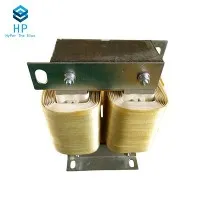



What is the impedance of an Output Reactor?
As a leading supplier of output reactors, I often encounter inquiries about the impedance of these crucial electrical components. Understanding the impedance of an output reactor is fundamental to its proper application and the overall performance of electrical systems. In this blog post, I will delve into the concept of impedance in the context of output reactors, exploring its significance, factors affecting it, and how it impacts system operation.
Understanding Impedance
Impedance, denoted by the symbol Z, is a measure of the total opposition that a circuit presents to the flow of alternating current (AC). It is a complex quantity that includes both resistance (R) and reactance (X). Resistance is the opposition to the flow of current due to the material's inherent properties, while reactance is the opposition due to inductance or capacitance in the circuit. In the case of an output reactor, the reactance is primarily inductive, as output reactors are essentially inductors.
The impedance of an inductor (such as an output reactor) is given by the formula (Z = j\omega L), where (j) is the imaginary unit ((\sqrt{-1})), (\omega) is the angular frequency of the AC signal ((\omega = 2\pi f), where (f) is the frequency in hertz), and (L) is the inductance of the reactor in henries. The impedance of an output reactor is frequency-dependent, increasing linearly with the frequency of the AC signal.
Significance of Impedance in Output Reactors
The impedance of an output reactor plays a crucial role in several aspects of electrical system operation:
- Filtering Harmonics: Output reactors are often used to filter out high-frequency harmonics generated by variable frequency drives (VFDs) or other non-linear loads. The inductive impedance of the reactor increases with frequency, allowing it to block or attenuate high-frequency harmonics while allowing the fundamental frequency (usually 50 or 60 Hz) to pass through with minimal impedance. This helps to reduce the harmonic distortion in the output voltage and current, improving the power quality of the system.
- Protecting Equipment: By limiting the rate of change of current ((di/dt)) and voltage ((dv/dt)), the impedance of the output reactor can protect downstream equipment such as motors, cables, and other electrical devices from the damaging effects of voltage spikes and surges. The reactor acts as a buffer, absorbing and dissipating the energy associated with these transient events, thereby extending the lifespan of the equipment.
- Improving Power Factor: In some cases, the impedance of the output reactor can be used to improve the power factor of the electrical system. By introducing inductive reactance, the reactor can offset the capacitive reactance present in the system, bringing the power factor closer to unity. This reduces the reactive power consumption of the system, resulting in lower energy costs and improved efficiency.
Factors Affecting the Impedance of an Output Reactor
Several factors can influence the impedance of an output reactor:
- Inductance Value: The most significant factor affecting the impedance of an output reactor is its inductance value. As mentioned earlier, the impedance of an inductor is directly proportional to its inductance. Therefore, increasing the inductance of the reactor will increase its impedance at a given frequency.
- Frequency: The impedance of an output reactor is frequency-dependent, increasing linearly with the frequency of the AC signal. This means that the reactor will have a higher impedance at higher frequencies, making it more effective at filtering out high-frequency harmonics.
- Core Material: The core material used in the construction of the output reactor can also affect its impedance. Different core materials have different magnetic properties, such as permeability and saturation characteristics, which can influence the inductance and impedance of the reactor. For example, reactors with a high-permeability core material will have a higher inductance and impedance compared to those with a low-permeability core.
- Temperature: The impedance of an output reactor can also be affected by temperature. As the temperature of the reactor increases, the resistance of the winding material increases, which can cause a slight increase in the overall impedance of the reactor. Additionally, the magnetic properties of the core material may also change with temperature, further affecting the inductance and impedance of the reactor.
Impact of Impedance on System Operation
The impedance of an output reactor can have a significant impact on the operation of an electrical system:


- Voltage Drop: The impedance of the output reactor causes a voltage drop across the reactor when current flows through it. This voltage drop can affect the voltage available at the load, especially in systems with long cable runs or high current loads. Therefore, it is important to select an output reactor with an appropriate impedance to minimize the voltage drop and ensure that the load receives the required voltage.
- Current Limiting: The impedance of the output reactor can limit the current flowing through the system, especially during short-circuit or fault conditions. By increasing the impedance of the reactor, the fault current can be reduced, protecting the system and its components from damage.
- Resonance: In some cases, the impedance of the output reactor can interact with the capacitance of the system to create resonance conditions. Resonance can cause excessive voltage and current oscillations in the system, leading to equipment damage and instability. Therefore, it is important to carefully analyze the system impedance and select an output reactor that avoids resonance conditions.
Types of Reactors and Their Impedance Characteristics
There are several types of reactors used in electrical systems, each with its own impedance characteristics:
- Saturated Reactor: A saturated reactor is a type of reactor whose magnetic core can be saturated by a DC control current. The impedance of a saturated reactor can be controlled by adjusting the DC control current, allowing it to be used for applications such as voltage regulation and power factor correction.
- Series Resonant Reactor: A series resonant reactor is a type of reactor that is designed to resonate at a specific frequency. At resonance, the impedance of the reactor is minimized, allowing it to pass the resonant frequency with minimal attenuation. Series resonant reactors are often used in filter circuits to remove specific harmonics from the system.
- Variable Reactor: A variable reactor is a type of reactor whose impedance can be adjusted continuously or in steps. Variable reactors are often used in applications where the load or system conditions change frequently, allowing the impedance of the reactor to be optimized for different operating conditions.
Selecting the Right Output Reactor
When selecting an output reactor, it is important to consider several factors, including the impedance requirements of the system. Here are some guidelines to help you select the right output reactor:
- Determine the System Requirements: Before selecting an output reactor, it is important to determine the specific requirements of the system, such as the load type, current rating, voltage level, and harmonic content. This will help you to select a reactor with the appropriate impedance and other specifications.
- Consider the Impedance Value: The impedance of the output reactor should be selected based on the specific application and the desired performance. In general, a higher impedance reactor will provide better harmonic filtering and current limiting, but it may also cause a larger voltage drop. Therefore, it is important to balance the impedance requirements with the other requirements of the system.
- Evaluate the Core Material: The core material used in the construction of the output reactor can affect its performance and cost. Different core materials have different magnetic properties, such as permeability and saturation characteristics, which can influence the inductance and impedance of the reactor. Therefore, it is important to evaluate the core material based on the specific requirements of the application.
- Check the Manufacturer's Specifications: When selecting an output reactor, it is important to check the manufacturer's specifications to ensure that the reactor meets the required standards and performance criteria. The manufacturer's specifications should include information such as the impedance, inductance, current rating, voltage rating, and temperature rise.
Conclusion
In conclusion, the impedance of an output reactor is a critical parameter that affects its performance and the overall operation of electrical systems. Understanding the concept of impedance, its significance, factors affecting it, and its impact on system operation is essential for selecting the right output reactor for your application. As a supplier of output reactors, we offer a wide range of products with different impedance values and specifications to meet the diverse needs of our customers. If you have any questions or need assistance in selecting the right output reactor for your application, please feel free to contact us. We are committed to providing high-quality products and excellent customer service to help you achieve optimal performance in your electrical systems.
References
- Electric Power Systems: Analysis and Control by Claudio A. Cañizares
- Power System Harmonics and Passive Filter Design by Math H.J. Bollen