


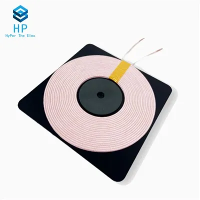

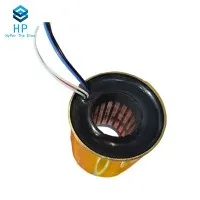
Analyzing the phase characteristics of an oscillating coil is a crucial aspect for anyone involved in electronics, especially for us, an oscillating coil supplier. Understanding these characteristics helps in ensuring the proper functioning of various electronic devices that rely on these coils. In this blog, I'll share some insights on how to analyze the phase characteristics of an oscillating coil.
Basics of Oscillating Coils
Before diving into the phase analysis, let's quickly go over what an oscillating coil is. An oscillating coil, also known as an inductor, stores energy in a magnetic field when an electric current passes through it. It's a fundamental component in many electronic circuits, including radio frequency (RF) circuits, power supplies, and signal processing systems.
There are different types of coils, such as Choke Coil, Antenna Coil, and Trap Coil. Each type has its own unique properties and applications, but they all share the basic principle of energy storage in a magnetic field.
Understanding Phase in Oscillating Coils
Phase in an oscillating coil refers to the relationship between the voltage across the coil and the current flowing through it. In an ideal inductor, the voltage leads the current by 90 degrees. This phase difference is a result of the coil's ability to oppose changes in current due to the induced magnetic field.
To understand this better, let's consider a simple AC circuit with an oscillating coil. When an alternating current is applied to the coil, the magnetic field around the coil changes continuously. According to Faraday's law of electromagnetic induction, this changing magnetic field induces an electromotive force (EMF) in the coil, which opposes the change in current. As a result, the voltage across the coil reaches its maximum value before the current does, leading to a phase difference.


Measuring Phase Characteristics
Now, let's talk about how to measure the phase characteristics of an oscillating coil. There are several methods available, but one of the most common is using an oscilloscope.
- Set up the circuit: Connect the oscillating coil to an AC power source and an oscilloscope. Make sure to connect the voltage probe across the coil and the current probe in series with the coil.
- Adjust the oscilloscope: Set the oscilloscope to display both the voltage and current waveforms. Adjust the timebase and voltage scales to get a clear view of the waveforms.
- Measure the phase difference: Use the cursors on the oscilloscope to measure the time difference between the peaks of the voltage and current waveforms. Convert this time difference to degrees using the formula: Phase difference (in degrees) = (Time difference / Period) * 360.
Another method is to use a phase meter. A phase meter directly measures the phase difference between two signals, making it a more convenient option for accurate measurements.
Factors Affecting Phase Characteristics
Several factors can affect the phase characteristics of an oscillating coil. Here are some of the key factors:
- Frequency: The phase difference between the voltage and current in an oscillating coil depends on the frequency of the applied AC signal. At low frequencies, the phase difference is close to 90 degrees, but as the frequency increases, the phase difference may deviate from 90 degrees due to the coil's parasitic capacitance and resistance.
- Inductance: The inductance of the coil also affects the phase characteristics. A higher inductance value results in a larger phase difference between the voltage and current.
- Resistance: The resistance of the coil can cause a phase shift in the current waveform. This is because the resistance dissipates energy in the form of heat, which affects the overall phase relationship between the voltage and current.
- Parasitic capacitance: Every coil has some parasitic capacitance, which can interact with the inductance to form a resonant circuit. This can cause the phase difference to change at certain frequencies.
Importance of Phase Analysis
Analyzing the phase characteristics of an oscillating coil is important for several reasons:
- Circuit design: Understanding the phase relationship between the voltage and current in a coil helps in designing circuits that operate efficiently. For example, in a power supply circuit, the phase difference between the input and output signals can affect the power factor and efficiency of the circuit.
- Troubleshooting: Phase analysis can be used to diagnose problems in electronic circuits. If the phase difference between the voltage and current in a coil is not as expected, it could indicate a problem with the coil or other components in the circuit.
- Performance optimization: By analyzing the phase characteristics of an oscillating coil, engineers can optimize the performance of electronic devices. For example, in a radio frequency circuit, adjusting the phase of the signals can improve the signal strength and quality.
Conclusion
Analyzing the phase characteristics of an oscillating coil is an important aspect of electronics. By understanding the basics of phase, measuring the phase difference, and considering the factors that affect it, we can ensure the proper functioning of electronic devices that rely on these coils.
If you're in the market for high-quality oscillating coils, we're here to help. We offer a wide range of coils, including Choke Coil, Antenna Coil, and Trap Coil. Contact us to discuss your specific requirements and let's work together to find the perfect solution for your needs.
References
- Boylestad, R. L., & Nashelsky, L. (2013). Electronic Devices and Circuit Theory. Pearson.
- Horowitz, P., & Hill, W. (2015). The Art of Electronics. Cambridge University Press.