


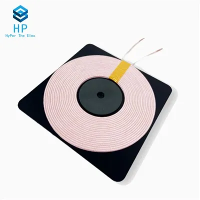

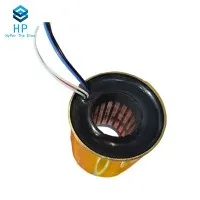
Determining the power rating of an oscillating coil is a crucial aspect for both manufacturers and users. As a supplier of Oscillating Coil, I have encountered numerous challenges and learned valuable insights in this process. In this blog, I will share some key factors and methods to determine the power rating of an oscillating coil.
Understanding Oscillating Coils
Before delving into the power rating, it is essential to understand what an oscillating coil is. An oscillating coil is a type of inductor that is designed to generate or respond to oscillating electrical signals. It plays a vital role in various electronic circuits, such as radio frequency (RF) circuits, oscillators, and resonant circuits. The performance of an oscillating coil is determined by several factors, including its inductance, resistance, and quality factor (Q factor).
Importance of Power Rating
The power rating of an oscillating coil indicates the maximum amount of power that the coil can handle safely without overheating or being damaged. Exceeding the power rating can lead to several problems, such as increased resistance, reduced efficiency, and even permanent damage to the coil. Therefore, determining the correct power rating is crucial to ensure the reliable and safe operation of the coil in a given application.
Factors Affecting Power Rating
Several factors influence the power rating of an oscillating coil. Understanding these factors is essential for accurately determining the power rating.
1. Coil Resistance
The resistance of the coil is one of the primary factors affecting the power rating. When an electrical current flows through the coil, the resistance causes power dissipation in the form of heat. The power dissipated in the coil can be calculated using the formula (P = I^{2}R), where (P) is the power, (I) is the current flowing through the coil, and (R) is the resistance of the coil. A higher resistance will result in more power dissipation and, therefore, a lower power rating.
2. Inductance
The inductance of the coil also affects the power rating. In an oscillating circuit, the inductance determines the resonant frequency and the reactance of the coil. The reactance of the coil is given by the formula (X_{L}=2\pi fL), where (X_{L}) is the inductive reactance, (f) is the frequency of the oscillating signal, and (L) is the inductance of the coil. A higher inductance will result in a higher reactance, which can affect the current flowing through the coil and, consequently, the power dissipation.
3. Quality Factor (Q Factor)
The Q factor of the coil is a measure of its efficiency. It is defined as the ratio of the reactance of the coil to its resistance ((Q = \frac{X_{L}}{R})). A higher Q factor indicates a more efficient coil with less power dissipation. Coils with a higher Q factor can generally handle more power without overheating.
4. Operating Frequency
The operating frequency of the oscillating coil is another important factor. The power dissipation in the coil can vary with frequency due to factors such as skin effect and proximity effect. At higher frequencies, the skin effect causes the current to flow mainly on the surface of the conductor, increasing the effective resistance and power dissipation.
5. Environmental Conditions
The environmental conditions in which the coil operates can also affect its power rating. Factors such as temperature, humidity, and ventilation can impact the heat dissipation from the coil. Higher temperatures can reduce the power rating of the coil as the resistance of the conductor increases with temperature.
Methods for Determining Power Rating
There are several methods for determining the power rating of an oscillating coil. These methods can be broadly classified into theoretical calculations and experimental measurements.


Theoretical Calculations
Theoretical calculations involve using the electrical properties of the coil, such as resistance and inductance, to estimate the power dissipation and power rating. The following steps can be used for theoretical calculations:
- Calculate the resistance ((R)) of the coil: This can be done using the resistivity of the conductor material, the length of the wire, and the cross - sectional area of the wire. The formula for resistance is (R=\rho\frac{l}{A}), where (\rho) is the resistivity, (l) is the length of the wire, and (A) is the cross - sectional area.
- Determine the operating current ((I)) or voltage ((V)) of the circuit: This can be done by analyzing the circuit in which the coil is used. The current or voltage can be calculated using Ohm's law ((V = IR)) and Kirchhoff's laws.
- Calculate the power dissipation ((P)) in the coil: Using the formula (P = I^{2}R) or (P=\frac{V^{2}}{R}), depending on whether the current or voltage is known.
- Consider the derating factor: Due to factors such as temperature rise and environmental conditions, a derating factor should be applied to the calculated power dissipation to determine the safe power rating of the coil.
Experimental Measurements
Experimental measurements involve testing the coil under actual operating conditions to determine its power rating. The following steps can be used for experimental measurements:
- Set up the test circuit: Connect the coil to a power source and a load in a circuit that simulates the actual operating conditions.
- Measure the current and voltage across the coil: Use a multimeter or other appropriate measuring instruments to measure the current and voltage across the coil.
- Calculate the power dissipation: Using the measured current and voltage, calculate the power dissipation in the coil using the formula (P = VI).
- Monitor the temperature of the coil: Use a thermocouple or other temperature - measuring device to monitor the temperature of the coil during the test. The power rating is determined by the maximum power that the coil can handle without exceeding a safe temperature limit.
Applications and Considerations
Oscillating coils are used in a wide range of applications, including radio receivers, transmitters, and electronic oscillators. In each application, the power rating requirements may vary.
Radio Receivers
In radio receivers, oscillating coils are used in the tuning circuits to select specific frequencies. The power rating of the coil in a radio receiver is typically relatively low, as the signals are weak. However, the Q factor of the coil is important to ensure high selectivity and sensitivity.
Radio Transmitters
In radio transmitters, oscillating coils are used in the oscillator and power amplifier circuits. The power rating of the coil in a radio transmitter is much higher, as it needs to handle the high - power signals generated by the amplifier. The coil must be able to dissipate the heat generated by the power dissipation without overheating.
Electronic Oscillators
In electronic oscillators, oscillating coils are used to generate stable oscillating signals. The power rating of the coil in an oscillator depends on the output power of the oscillator and the efficiency of the circuit. A higher power rating may be required for high - power oscillators.
Conclusion
Determining the power rating of an oscillating coil is a complex process that requires a thorough understanding of the electrical properties of the coil and the operating conditions of the circuit. By considering factors such as coil resistance, inductance, Q factor, operating frequency, and environmental conditions, and using appropriate theoretical calculations and experimental measurements, the power rating of the coil can be accurately determined.
As a supplier of Oscillating Coil, we are committed to providing high - quality coils with accurate power ratings. If you have any questions or need assistance in selecting the right oscillating coil for your application, please feel free to contact us for procurement and further discussions. We also offer related products such as Antenna Coil and Resonant Coil to meet your diverse needs.
References
- Hayt, W. H., & Kemmerly, J. E. (1993). Engineering Circuit Analysis. McGraw - Hill.
- Boylestad, R. L., & Nashelsky, L. (2002). Electronic Devices and Circuit Theory. Prentice Hall.