


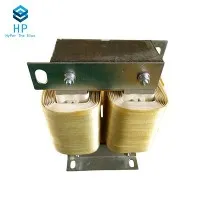



As a supplier of Saturated Reactors, I've seen firsthand the importance of optimizing control algorithms for these crucial electrical components. Saturated reactors play a vital role in various electrical systems, from power grids to industrial applications. In this blog, I'll share some insights on how to optimize the control algorithm for a saturated reactor, drawing on my experience in the field.
Understanding Saturated Reactors
First off, let's quickly go over what a saturated reactor is. A Saturated Reactor is a type of electrical reactor where the magnetic core can be saturated by a DC current. This saturation changes the reactor's inductance, which can be used to control the flow of AC current in a circuit. It's a pretty nifty device, and it's used in a lot of different applications, like voltage regulation, power factor correction, and harmonic filtering.


Why Optimize the Control Algorithm?
Optimizing the control algorithm for a saturated reactor is essential for several reasons. For one, it can improve the efficiency of the reactor. By precisely controlling the saturation level of the magnetic core, we can reduce energy losses and make the reactor work more effectively. This not only saves energy but also extends the lifespan of the reactor.
Secondly, a well - optimized control algorithm can enhance the stability of the electrical system. In power grids, for example, saturated reactors can be used to regulate voltage and prevent voltage fluctuations. A good control algorithm ensures that the reactor responds quickly and accurately to changes in the electrical system, keeping the voltage within acceptable limits.
Key Factors in Optimization
1. Modeling the Reactor
To optimize the control algorithm, we first need to have a good model of the saturated reactor. This model should take into account the non - linear characteristics of the magnetic core, such as hysteresis and saturation. There are several methods for modeling saturated reactors, including finite element analysis (FEA) and equivalent circuit models.
FEA is a powerful tool that can provide detailed information about the magnetic field distribution in the reactor. However, it can be computationally expensive and time - consuming. Equivalent circuit models, on the other hand, are simpler and faster to implement. They use electrical components like resistors, inductors, and capacitors to represent the behavior of the reactor.
2. Choosing the Right Control Strategy
There are several control strategies that can be used for saturated reactors, such as proportional - integral - derivative (PID) control, fuzzy logic control, and model - predictive control.
PID control is a widely used control strategy that adjusts the control signal based on the error between the desired and actual values. It's relatively simple to implement and can work well in many applications. However, it may not be the best choice for systems with non - linear characteristics, like saturated reactors.
Fuzzy logic control is a more flexible control strategy that can handle non - linearity better. It uses fuzzy rules to make decisions based on the input variables. This can be useful for saturated reactors, as it can adapt to changes in the system more easily.
Model - predictive control is a more advanced control strategy that uses a model of the system to predict its future behavior. It then calculates the optimal control signal to achieve the desired output. This strategy can provide better performance in terms of tracking and disturbance rejection, but it requires a more accurate model of the system.
3. Tuning the Control Parameters
Once we've chosen a control strategy, we need to tune the control parameters to get the best performance. This can be a trial - and - error process, but there are also some methods that can help us. For example, we can use optimization algorithms to find the optimal values of the control parameters.
We can also use experimental data to adjust the control parameters. By measuring the output of the reactor under different operating conditions, we can fine - tune the control algorithm to improve its performance.
Real - World Applications
Let's take a look at some real - world applications where optimizing the control algorithm for a saturated reactor can make a big difference.
1. Power Grid Voltage Regulation
In power grids, saturated reactors can be used to regulate the voltage. By optimizing the control algorithm, we can ensure that the reactor responds quickly to changes in the grid voltage. This helps to maintain a stable voltage level, which is crucial for the reliable operation of electrical equipment.
2. Industrial Motor Drives
In industrial motor drives, saturated reactors can be used to control the current and torque of the motor. A well - optimized control algorithm can improve the efficiency of the motor drive and reduce the energy consumption.
The Role of Variable Reactors and Series Resonant Reactors
Variable reactors and series resonant reactors are related to saturated reactors and can also benefit from optimized control algorithms. A Variable Reactor allows for adjustable inductance, which can be useful in applications where the load or operating conditions change. By optimizing the control algorithm for a variable reactor, we can better adapt to these changes and improve the overall performance of the system.
A Series Resonant Reactor is used in resonant circuits, where it can help to filter out specific frequencies. Optimizing the control algorithm for a series resonant reactor can improve its filtering performance and make the circuit more stable.
Conclusion
Optimizing the control algorithm for a saturated reactor is a complex but rewarding task. By understanding the characteristics of the reactor, choosing the right control strategy, and tuning the control parameters, we can improve the efficiency, stability, and performance of the reactor.
If you're in the market for a saturated reactor or have questions about optimizing the control algorithm, I'd love to have a chat. Whether you're working on a power grid project, an industrial application, or something else, we can find the best solution for your needs. Don't hesitate to reach out for a discussion on how our saturated reactors can meet your requirements and how we can optimize the control algorithm for your specific application.
References
- "Power System Analysis and Design" by J. Duncan Glover, Mulukutla S. Sarma, and Thomas J. Overbye.
- "Control Systems Engineering" by Norman S. Nise.
- Research papers on saturated reactor control algorithms from IEEE Xplore and other academic databases.