


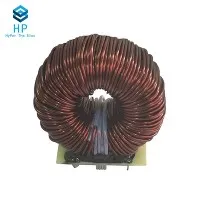

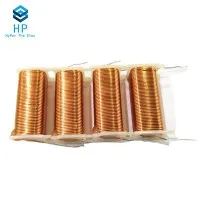

Hey there! As a supplier of Saturated Reactors, I've been getting a lot of questions lately about whether a saturated reactor can be used in traction systems. So, I thought I'd take some time to dive into this topic and share my thoughts.
First off, let's quickly go over what a saturated reactor is. A saturated reactor is a type of electrical reactor whose inductance varies with the current flowing through it. When the current is low, the reactor has a high inductance, but as the current increases and the core of the reactor becomes saturated, the inductance drops significantly. You can learn more about it here.
Now, let's talk about traction systems. Traction systems are used in a variety of applications, like trains, trams, and electric vehicles. These systems are responsible for converting electrical energy into mechanical energy to move the vehicle. They require a reliable and efficient power supply, as well as components that can handle the dynamic nature of the load.
So, can a saturated reactor be used in traction systems? The answer is yes, and here's why.
Advantages of Using Saturated Reactors in Traction Systems
1. Voltage Regulation
One of the key benefits of using a saturated reactor in a traction system is its ability to regulate voltage. In a traction system, the load can vary greatly depending on factors like the speed of the vehicle, the gradient of the track, and the number of passengers. This can cause fluctuations in the voltage supplied to the traction motors. A saturated reactor can help to stabilize the voltage by adjusting its inductance based on the current. When the load increases and the voltage starts to drop, the saturated reactor can increase its inductance, which helps to maintain a more stable voltage.
2. Harmonic Filtering
Traction systems often use power electronics, such as inverters and converters, which can generate harmonics. These harmonics can cause problems like overheating of equipment, interference with communication systems, and reduced efficiency. A saturated reactor can act as a passive harmonic filter. Its non - linear characteristic allows it to absorb and reduce the harmonic content in the electrical system. By doing so, it helps to improve the power quality and protect other components in the traction system.
3. Fault Current Limiting
In the event of a short - circuit or other fault in the traction system, a large amount of current can flow. This can damage the equipment and disrupt the operation of the system. A saturated reactor can limit the fault current. When a fault occurs, the high current causes the reactor to saturate quickly, reducing its inductance and thus limiting the amount of current that can flow. This helps to protect the traction system and its components from damage.
4. Cost - Effectiveness
Compared to some other types of reactors, saturated reactors can be a cost - effective solution for traction systems. They are relatively simple in design and construction, which means they can be produced at a lower cost. Additionally, their ability to perform multiple functions, such as voltage regulation, harmonic filtering, and fault current limiting, can reduce the need for additional components, further saving on costs.
Real - World Applications
There are already some real - world examples of saturated reactors being used in traction systems. In some older electric train systems, saturated reactors were used for voltage control. They helped to ensure that the traction motors received a stable voltage, even when the train was accelerating or decelerating.
In modern electric vehicle charging stations, saturated reactors can also play a role. They can be used to filter out harmonics generated by the charging process and to regulate the voltage supplied to the vehicle's battery. This helps to improve the efficiency of the charging process and extend the lifespan of the battery.
Challenges and Considerations
Of course, using a saturated reactor in a traction system isn't without its challenges.
1. Size and Weight
Saturated reactors can be relatively large and heavy, especially for high - power applications. In a traction system, where space and weight are often at a premium, this can be a drawback. However, advances in materials and design are helping to reduce the size and weight of saturated reactors.
2. Temperature Rise
The non - linear operation of a saturated reactor can cause significant heat generation, especially under high - load conditions. This can lead to a temperature rise, which can affect the performance and lifespan of the reactor. Proper cooling systems need to be in place to manage the temperature and ensure reliable operation.
3. Control and Monitoring
To fully utilize the benefits of a saturated reactor in a traction system, it needs to be properly controlled and monitored. This requires sophisticated control algorithms and monitoring systems. The control system needs to be able to adjust the reactor's operation based on the changing conditions of the traction system.


Other Types of Reactors in Traction Systems
Before we wrap up, it's worth mentioning some other types of reactors that are also used in traction systems.
Output Reactor
An Output Reactor is often used at the output of a variable frequency drive (VFD) in a traction system. It helps to protect the motor from voltage spikes and harmonics generated by the VFD. It can also improve the power factor and reduce electromagnetic interference.
Variable Reactor
A Variable Reactor is a reactor whose inductance can be adjusted continuously. In a traction system, a variable reactor can be used to fine - tune the power factor and voltage regulation. It offers more flexibility compared to a fixed - inductance reactor.
Conclusion
In conclusion, a saturated reactor can definitely be used in traction systems. It offers several advantages, such as voltage regulation, harmonic filtering, fault current limiting, and cost - effectiveness. While there are some challenges to overcome, with proper design and implementation, a saturated reactor can be a valuable component in a traction system.
If you're involved in the design or operation of a traction system and are considering using a saturated reactor, I'd love to have a chat with you. We have a wide range of saturated reactors that are suitable for different traction applications. Contact us to discuss your specific requirements and let's see how we can work together to make your traction system more efficient and reliable.
References
- Electrical Power Systems: Analysis and Design, by J. Duncan Glover, Mulukutla S. Sarma, and Thomas J. Overbye.
- Power Electronics: Converters, Applications, and Design, by Ned Mohan, Tore M. Undeland, and William P. Robbins.