




Hey there! As a supplier of Filter Inductors, I've seen firsthand how crucial it is to pick the right one for your specific needs. In this blog, I'm gonna share some tips on how to choose the right filter inductor, based on my years of experience in the industry.


Understanding Filter Inductors
First things first, let's talk a bit about what Filter Inductors are. A Filter Inductor is an essential component in many electronic circuits. Its main job is to filter out unwanted frequencies or noise, allowing only the desired signals to pass through. You can find out more about Filter Inductors here.
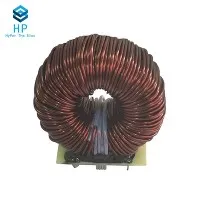
Filter inductors come in different types and configurations, each designed for specific applications. For instance, Toroidal Inductors are known for their high inductance values and low electromagnetic interference (EMI). They're often used in power supplies and audio equipment. You can learn more about Toroidal Inductors here. On the other hand, BUCK Inductors are commonly used in switching power supplies to step down the voltage. Check out more about BUCK Inductors here.
Factors to Consider When Choosing a Filter Inductor
Inductance Value
The inductance value is one of the most important factors to consider. It's measured in henries (H) and determines how much magnetic field the inductor can store. A higher inductance value means the inductor can filter out lower frequencies more effectively. But you gotta be careful, because a too-high inductance value can also cause problems like increased size and cost. You need to figure out the right inductance value based on the frequency range you want to filter.
Current Rating
Another crucial factor is the current rating. This tells you how much current the inductor can handle without overheating or saturating. If the current flowing through the inductor exceeds its rating, it can lead to performance issues or even damage the inductor. So, you need to know the maximum current that will pass through the inductor in your circuit and choose one with a suitable current rating.
DC Resistance (DCR)
The DC resistance of an inductor affects its power loss. A lower DCR means less power is wasted as heat, which is good for efficiency. However, inductors with lower DCR usually have larger wire sizes, which can increase the cost and size of the inductor. You gotta find a balance between DCR and other factors like size and cost.
Frequency Range
The frequency range of the inductor is also important. Different inductors are designed to work best in specific frequency ranges. You need to know the frequency range of the signals you want to filter and choose an inductor that can handle that range.
Size and Form Factor
The size and form factor of the inductor matter, especially if you're working with limited space. You need to choose an inductor that fits into your circuit board or enclosure. Some applications may require surface-mount inductors, while others may need through-hole inductors.
Temperature Rating
The temperature rating of the inductor tells you the maximum temperature it can operate at without losing its performance. You need to consider the operating temperature of your circuit and choose an inductor with a suitable temperature rating.
Application-Specific Considerations
Power Supplies
In power supplies, filter inductors are used to smooth out the DC output and reduce ripple. You need to choose an inductor with a high current rating and low DCR to ensure efficient operation. For switching power supplies, like those using BUCK converters, you also need to consider the switching frequency and choose an inductor that can handle it.
Audio Equipment
In audio equipment, filter inductors are used to improve the sound quality by reducing noise and interference. You need to choose an inductor with low EMI and a suitable inductance value for the audio frequency range. Toroidal inductors are often a good choice for audio applications because of their high inductance and low EMI.
RF Circuits
In RF circuits, filter inductors are used to select specific frequencies and reject others. You need to choose an inductor with a high Q factor (quality factor) and a suitable frequency range for the RF signals.
Testing and Validation
Once you've chosen a filter inductor, it's a good idea to test it in your circuit to make sure it meets your requirements. You can use test equipment like an oscilloscope and a spectrum analyzer to measure the performance of the inductor. If you find any issues, you may need to go back and choose a different inductor.
Conclusion
Choosing the right filter inductor is not always easy, but by considering the factors I've mentioned above and understanding your specific application, you can make an informed decision. As a Filter Inductor supplier, I'm here to help you find the best inductor for your needs. If you have any questions or need assistance with choosing a filter inductor, feel free to reach out to me. Let's work together to get the right inductor for your project!
References
- "Inductor Design Handbook" by Colonel William T. McLyman
- "The Art of Electronics" by Paul Horowitz and Winfield Hill