


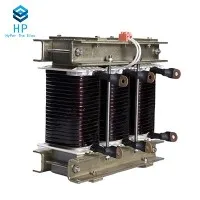
Choosing the right toroidal inductor is a critical decision in various electrical and electronic applications. As a supplier of Toroidal Inductors, I understand the complexities and considerations involved in this process. In this blog, I will guide you through the key factors to consider when selecting the appropriate toroidal inductor for your specific needs.
Understanding Toroidal Inductors
Toroidal inductors are passive electronic components that store energy in a magnetic field when an electric current flows through them. They consist of a coil of wire wound around a toroidal (doughnut-shaped) core. The toroidal shape offers several advantages over other inductor geometries, such as lower electromagnetic interference (EMI), higher inductance values for a given volume, and better magnetic coupling.


Toroidal inductors are widely used in a variety of applications, including power supplies, audio equipment, telecommunications, and automotive electronics. They can be found in different types, such as Toroidal Inductors, PFC Inductor, and Filter Inductor, each designed to meet specific requirements.
Key Factors to Consider
Inductance Value
The inductance value is one of the most important parameters to consider when choosing a toroidal inductor. It is measured in henries (H) and determines the amount of magnetic energy that the inductor can store. The required inductance value depends on the specific application. For example, in a power supply filter circuit, a higher inductance value is typically needed to provide better filtering of the ripple current.
To determine the appropriate inductance value, you need to consider the frequency of the signal, the impedance requirements of the circuit, and the desired performance characteristics. You can use online calculators or consult the inductor manufacturer's datasheet to select the right inductance value for your application.
Current Rating
The current rating of a toroidal inductor specifies the maximum amount of current that it can carry without overheating or saturating. It is an important parameter to consider, especially in high-power applications. If the current exceeds the rating of the inductor, it can lead to increased resistance, power loss, and even component failure.
When selecting a toroidal inductor, you need to ensure that the current rating is sufficient for your application. You can calculate the required current rating based on the load current, the operating conditions, and the safety margin. It is also recommended to choose an inductor with a slightly higher current rating than the calculated value to account for any potential fluctuations or surges in the current.
DC Resistance (DCR)
The DC resistance of a toroidal inductor is the resistance of the wire used to wind the coil. It is measured in ohms (Ω) and can have a significant impact on the performance of the inductor. A lower DCR means less power loss and higher efficiency, especially in high-current applications.
When choosing a toroidal inductor, you should look for one with a low DCR. However, it is important to note that a lower DCR may also result in a larger size and higher cost. Therefore, you need to balance the DCR requirements with the other factors, such as the inductance value, current rating, and physical size.
Core Material
The core material of a toroidal inductor plays a crucial role in determining its performance characteristics. Different core materials have different magnetic properties, such as permeability, saturation flux density, and loss characteristics. The choice of core material depends on the specific application and the operating conditions.
Some common core materials used in toroidal inductors include ferrite, powdered iron, and laminated steel. Ferrite cores are widely used due to their high permeability, low loss, and good frequency response. They are suitable for applications with high frequencies and low currents. Powdered iron cores offer a good balance between permeability and saturation flux density, making them suitable for applications with moderate frequencies and currents. Laminated steel cores are used in high-power applications where high saturation flux density is required.
Q Factor
The Q factor, or quality factor, of a toroidal inductor is a measure of its efficiency and selectivity. It is defined as the ratio of the reactance of the inductor to its resistance at a specific frequency. A higher Q factor indicates a lower loss and better performance.
In applications where high selectivity is required, such as in radio frequency (RF) circuits, a toroidal inductor with a high Q factor is preferred. However, a high Q factor may also result in a narrow bandwidth. Therefore, you need to consider the specific requirements of your application when choosing an inductor with the appropriate Q factor.
Temperature Stability
The temperature stability of a toroidal inductor is an important consideration, especially in applications where the operating temperature can vary significantly. The inductance value and other performance characteristics of an inductor can change with temperature, which can affect the overall performance of the circuit.
When selecting a toroidal inductor, you should choose one with good temperature stability. This can be achieved by using a core material with a low temperature coefficient of inductance (TCI) and by ensuring that the inductor is designed to operate within a specified temperature range.
Application-Specific Considerations
Power Supply Applications
In power supply applications, toroidal inductors are commonly used for filtering, energy storage, and power factor correction. For filtering applications, the inductor should have a high inductance value and a low DCR to effectively filter out the ripple current. For energy storage applications, the inductor should have a high current rating and a high saturation flux density to store and deliver the required amount of energy. In power factor correction applications, a PFC Inductor is used to improve the power factor of the power supply by reducing the harmonics and improving the efficiency.
Audio Applications
In audio applications, toroidal inductors are used in crossovers, equalizers, and power amplifiers. For crossover applications, the inductor should have a low distortion and a high Q factor to ensure accurate frequency separation. In equalizers and power amplifiers, the inductor should have a low DCR and a high current rating to minimize the power loss and ensure high-quality sound reproduction.
Telecommunications Applications
In telecommunications applications, toroidal inductors are used in filters, transformers, and impedance matching circuits. For filter applications, the inductor should have a high selectivity and a low insertion loss to effectively filter out the unwanted frequencies. In transformers and impedance matching circuits, the inductor should have a high coupling coefficient and a low DCR to ensure efficient power transfer.
Automotive Applications
In automotive applications, toroidal inductors are used in power electronics, engine control units, and lighting systems. In power electronics, the inductor should have a high temperature stability and a high current rating to withstand the harsh operating conditions. In engine control units and lighting systems, the inductor should have a low EMI and a high reliability to ensure the proper functioning of the vehicle.
Conclusion
Choosing the right toroidal inductor requires careful consideration of various factors, such as the inductance value, current rating, DC resistance, core material, Q factor, and temperature stability. The specific requirements of your application will also play a crucial role in determining the appropriate inductor.
As a supplier of Toroidal Inductors, we offer a wide range of high-quality products to meet your specific needs. Our experienced team of engineers can provide technical support and assistance in selecting the right inductor for your application. If you are interested in our products or need more information, please feel free to contact us for procurement and further discussions.
References
- "Inductor Design Handbook", Coilcraft Inc.
- "Passive Components for Circuit Design", Richard C. Dorf