


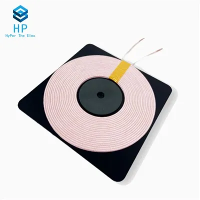

Measuring the inductance of an antenna coil is a crucial task, especially for those involved in the design, production, and application of electronic devices. As an antenna coil supplier, I understand the significance of accurate inductance measurement in ensuring the optimal performance of antenna coils. In this blog post, I will share some common methods for measuring the inductance of an antenna coil and provide insights into the factors that can affect the measurement results.
Why Measure the Inductance of an Antenna Coil?
Before delving into the measurement methods, it is essential to understand why measuring the inductance of an antenna coil is so important. Inductance is a fundamental electrical property that determines the behavior of a coil in an electrical circuit. In the context of antenna coils, the inductance value directly influences the resonant frequency, impedance, and radiation efficiency of the antenna.
- Resonant Frequency: The resonant frequency of an antenna is determined by the inductance and capacitance of the antenna circuit. By accurately measuring the inductance of the antenna coil, engineers can calculate the resonant frequency and adjust the circuit parameters to ensure that the antenna operates at the desired frequency.
- Impedance Matching: Impedance matching is crucial for maximizing the power transfer between the antenna and the transmission line. The inductance of the antenna coil affects the impedance of the antenna, and measuring the inductance allows engineers to design impedance matching networks to minimize signal loss.
- Radiation Efficiency: The radiation efficiency of an antenna is related to its electrical properties, including the inductance. By measuring the inductance and optimizing the antenna design, engineers can improve the radiation efficiency and enhance the overall performance of the antenna.
Common Methods for Measuring the Inductance of an Antenna Coil
There are several methods available for measuring the inductance of an antenna coil, each with its own advantages and limitations. Here are some of the most commonly used methods:
1. Using an LCR Meter
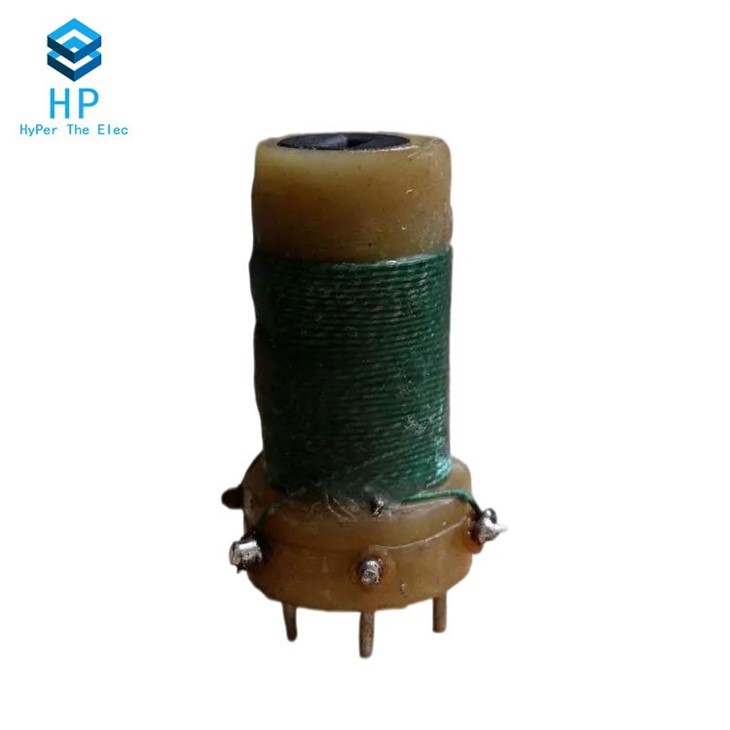
An LCR meter is a specialized instrument designed to measure the inductance (L), capacitance (C), and resistance (R) of electronic components. It is a straightforward and accurate method for measuring the inductance of an antenna coil.

-
Procedure:
- Connect the antenna coil to the LCR meter according to the manufacturer's instructions.
- Set the LCR meter to the inductance measurement mode.
- Select the appropriate measurement frequency based on the application requirements.
- Read the inductance value displayed on the LCR meter.
-
Advantages:
- High accuracy and precision.
- Easy to use and operate.
- Can measure inductance at different frequencies.
-
Limitations:
- Relatively expensive compared to other measurement methods.
- May require a calibrated LCR meter for accurate results.
2. Resonance Method
The resonance method is based on the principle that a resonant circuit consisting of an antenna coil and a capacitor will resonate at a specific frequency. By measuring the resonant frequency and the capacitance of the capacitor, the inductance of the antenna coil can be calculated.
-
Procedure:
- Connect the antenna coil in series with a variable capacitor to form a resonant circuit.
- Apply a signal source to the resonant circuit and vary the frequency of the signal until resonance occurs. Resonance is indicated by a maximum amplitude of the output signal.
- Measure the resonant frequency (f) using a frequency counter.
- Measure the capacitance (C) of the variable capacitor at resonance.
- Calculate the inductance (L) of the antenna coil using the formula (L = \frac{1}{(2\pi f)^2C}).
-
Advantages:
- Does not require a specialized inductance measurement instrument.
- Can provide accurate results if the measurement is carried out carefully.
-
Limitations:
- Requires a variable capacitor and a signal source.
- The accuracy of the measurement depends on the accuracy of the frequency counter and the capacitor.
3. Bridge Method
The bridge method is a classical electrical measurement technique that uses a Wheatstone bridge or a Maxwell bridge to measure the inductance of a coil.
-
Procedure:
- Connect the antenna coil to the bridge circuit along with known resistors and capacitors.
- Adjust the bridge circuit until it is balanced. At balance, the potential difference across the bridge is zero.
- Calculate the inductance of the antenna coil using the known values of the resistors and capacitors in the bridge circuit.
-
Advantages:
- High accuracy and precision.
- Can measure inductance with low uncertainty.
-
Limitations:
- Requires a bridge circuit and a skilled operator.
- The measurement process can be time-consuming.
Factors Affecting the Inductance Measurement
When measuring the inductance of an antenna coil, several factors can affect the measurement results. It is important to be aware of these factors and take appropriate measures to minimize their impact.
- Frequency: The inductance of an antenna coil can vary with frequency due to the skin effect, proximity effect, and parasitic capacitance. Therefore, it is important to measure the inductance at the operating frequency of the antenna.
- Temperature: The inductance of a coil can change with temperature due to the thermal expansion of the coil material. It is recommended to measure the inductance at a stable temperature or to compensate for the temperature effect.
- Mutual Inductance: If the antenna coil is in the vicinity of other coils or conductors, mutual inductance can occur, which can affect the measured inductance value. To minimize the mutual inductance effect, the antenna coil should be measured in isolation or at a sufficient distance from other conductors.
- Parasitic Capacitance: The parasitic capacitance between the turns of the coil and the coil and its surroundings can affect the measured inductance value. To minimize the parasitic capacitance effect, the coil should be wound tightly and the measurement should be carried out in a low-capacitance environment.
Our Antenna Coils and the Importance of Accurate Inductance
As an Antenna Coil Supplier, we take pride in offering high - quality antenna coils. Our product range includes Resonant Coil and Oscillating Coil, which are designed to meet the diverse needs of our customers.
Accurate inductance measurement is the cornerstone of our quality control process. We use state - of - the - art measurement equipment and strict testing procedures to ensure that each antenna coil we produce has the specified inductance value. This not only guarantees the performance and reliability of our products but also helps our customers to design and develop high - performance electronic devices.
Conclusion and Call to Action
Measuring the inductance of an antenna coil is a critical step in the design, production, and optimization of antenna systems. Whether you are an antenna designer, an electronic engineer, or a manufacturer, understanding the measurement methods and factors affecting the inductance is essential for achieving the desired performance.
As an antenna coil supplier, we are dedicated to providing high - quality antenna coils with accurate inductance values. If you are in the market for reliable antenna coils or have any questions about inductance measurement, we invite you to contact us to discuss your specific requirements. Our team of experts is ready to provide you with professional advice and support. Let's work together to create high - performance antenna solutions!
References
- "The Art of Electronics," Paul Horowitz and Winfield Hill.
- "RF Circuit Design," Chris Bowick.
- "Antenna Theory: Analysis and Design," Constantine A. Balanis.