


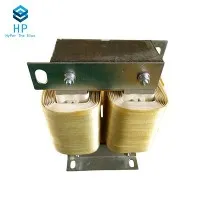

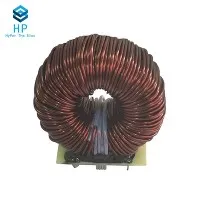
As a supplier of Variable Reactors, I've had the privilege of witnessing the wide - ranging applications and benefits of these devices. However, like any technology, Variable Reactors come with their own set of limitations. In this blog, I'll delve into these limitations, providing a detailed understanding for those considering using or purchasing a Variable Reactor.
1. Limited Range of Reactance Variation
One of the primary limitations of a Variable Reactor is the restricted range within which the reactance can be varied. While these reactors are designed to change their reactance, there are physical and engineering constraints that prevent an infinitely wide range of adjustment.
The core material of a Variable Reactor plays a crucial role in determining its reactance variation. Ferromagnetic materials, commonly used in reactors, have a saturation point. Once the magnetic field within the core reaches this saturation point, the relationship between the current and the magnetic flux changes significantly, and the ability to further increase or decrease the reactance is severely limited. For example, in a power system where large - scale compensation is required, if the initial conditions of the system change drastically, a Variable Reactor may not be able to provide the extreme levels of reactance needed. This can result in inefficient power factor correction or sub - optimal system performance.
2. Non - linearity Issues
Variable Reactors often exhibit non - linear characteristics. The relationship between the control input (such as current or voltage) and the resulting reactance change is not always a simple linear one. Non - linearity can introduce several problems in power systems.


Harmonic Generation
Non - linear behavior in a Variable Reactor can lead to the generation of harmonics in the electrical system. When the reactor operates in a non - linear region, it distorts the sinusoidal waveform of the electrical current. These harmonics can cause interference in other electrical equipment connected to the same system. For instance, sensitive electronic devices may malfunction due to the presence of harmonics, and there could be increased losses in transformers and other power components.
Control Difficulties
The non - linearity also makes it challenging to precisely control the reactance of the Variable Reactor. Since the response of the reactor to a control signal is not straightforward, sophisticated control algorithms are required to achieve accurate and stable operation. This increases the complexity of the control system and may result in higher costs for the overall installation.
3. High Initial Cost and Maintenance Requirements
Variable Reactors are relatively expensive compared to fixed - reactance reactors. The design and construction of a Variable Reactor involve more complex components and technologies. The need for adjustable elements, such as magnetic shunts or controlled windings, adds to the manufacturing cost.
In addition to the high initial purchase price, Variable Reactors also have significant maintenance requirements. The moving parts or adjustable components in a Variable Reactor are subject to wear and tear over time. For example, if the reactor uses mechanical means to adjust the reactance, such as a sliding core or a rotating coil, these parts need to be regularly inspected and maintained. Any malfunction in these components can lead to a loss of performance or even a complete failure of the reactor.
4. Sensitivity to Environmental Conditions
Variable Reactors are sensitive to environmental factors such as temperature, humidity, and dust.
Temperature Effects
Temperature changes can affect the electrical and magnetic properties of the core material in a Variable Reactor. As the temperature rises, the resistance of the windings increases, which can lead to additional power losses. Moreover, the magnetic characteristics of the core material may change, altering the reactance of the reactor. In extreme cases, high temperatures can cause thermal stress on the components, reducing their lifespan.
Humidity and Dust
Humidity can cause corrosion of the metal components in the reactor, leading to electrical problems and reduced reliability. Dust accumulation on the surface of the windings or in the core can also affect the heat dissipation of the reactor, increasing the risk of overheating. These environmental sensitivities mean that Variable Reactors often require proper enclosures and environmental control, which adds to the overall cost of the installation.
5. Comparison with Other Reactor Types
When comparing Variable Reactors with other types of reactors, such as Saturated Reactor and Output Reactor, certain limitations become more apparent.
Saturated Reactors
Saturated Reactors are often simpler in design and more robust compared to Variable Reactors. While Variable Reactors are designed to provide a variable reactance over a certain range, Saturated Reactors can be more cost - effective for applications where a fixed, saturated - state reactance is sufficient. In some power systems, the straightforward operation of a Saturated Reactor may be preferred due to its lower cost and reduced maintenance requirements.
Output Reactors
Output Reactors are specifically designed to protect motors and other loads from the effects of voltage spikes and harmonics in variable - frequency drive (VFD) systems. In contrast, Variable Reactors are more focused on power factor correction and reactive power compensation. For applications where the main concern is load protection rather than reactive power management, an Output Reactor may be a more suitable choice.
Conclusion and Call to Action
Despite these limitations, Variable Reactors still play a vital role in many power systems, especially in applications where dynamic reactive power compensation is required. Their ability to adjust reactance in real - time can improve power quality, increase system efficiency, and reduce energy costs in the right circumstances.
If you're considering a Variable Reactor for your power system, it's important to carefully evaluate the limitations against your specific requirements. Our team of experts is here to help you make the right decision. We can provide in - depth technical support and guidance to ensure that you select the most suitable Variable Reactor for your application. Whether you're dealing with a small - scale industrial installation or a large - scale power grid project, we have the experience and knowledge to assist you.
If you're interested in learning more about our Variable Reactor products or have any questions regarding their limitations and applications, please don't hesitate to reach out. We're eager to engage in a discussion and explore how our Variable Reactors can meet your needs. Contact us today to start a productive conversation about your power system requirements.
References
- Electric Machinery Fundamentals by Stephen J. Chapman
- Power System Analysis and Design by J. Duncan Glover, Mulukutla S. Sarma, and Thomas J. Overbye
- Handbook of Electric Power Calculations by Hadi Saadat