




What is the coupling coefficient of a trap coil?
As a professional trap coil supplier, I am often asked about the coupling coefficient of trap coils. In this blog, I will delve into the concept of the coupling coefficient of a trap coil, its significance, and how it relates to the performance of these essential components.
Understanding Trap Coils
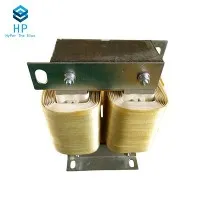
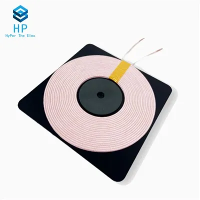
Before we discuss the coupling coefficient, let's first understand what a trap coil is. A Trap Coil is a type of inductor that is designed to block or “trap” specific frequencies in an electrical circuit. It is typically used in radio frequency (RF) applications, such as in radio receivers and transmitters, to filter out unwanted frequencies and improve the overall signal quality.
Trap coils work based on the principle of electromagnetic induction. When an alternating current (AC) flows through a coil, it creates a magnetic field around the coil. This magnetic field can interact with other nearby coils or components in the circuit, leading to various electromagnetic phenomena.
The Concept of Coupling Coefficient
The coupling coefficient, denoted as (k), is a dimensionless quantity that measures the degree of magnetic coupling between two coils. It ranges from 0 to 1. A coupling coefficient of 0 means that there is no magnetic coupling between the two coils, i.e., the magnetic field generated by one coil does not affect the other coil at all. On the other hand, a coupling coefficient of 1 indicates perfect magnetic coupling, where all the magnetic flux generated by one coil links with the other coil.
Mathematically, the coupling coefficient (k) is defined as:
[k=\frac{M}{\sqrt{L_1L_2}}]
where (M) is the mutual inductance between the two coils, (L_1) is the self - inductance of coil 1, and (L_2) is the self - inductance of coil 2.
Mutual inductance (M) represents the ability of one coil to induce an electromotive force (EMF) in the other coil due to a changing current in the first coil. Self - inductance (L) is a property of a single coil that measures its ability to induce an EMF in itself when the current through it changes.


Importance of Coupling Coefficient in Trap Coils
The coupling coefficient plays a crucial role in the performance of trap coils. In RF circuits, the coupling between a trap coil and other components, such as resonant circuits or antennas, can significantly affect the frequency response and selectivity of the system.
- Frequency Response: A proper coupling coefficient ensures that the trap coil can effectively block the unwanted frequencies. If the coupling is too weak ((k) close to 0), the trap coil may not be able to interact strongly enough with the rest of the circuit to filter out the target frequencies. Conversely, if the coupling is too strong ((k) close to 1), it may introduce unwanted interactions and distort the overall frequency response of the circuit.
- Selectivity: Selectivity refers to the ability of a circuit to distinguish between different frequencies. A well - tuned coupling coefficient can enhance the selectivity of the trap coil, allowing it to trap specific frequencies more precisely. This is particularly important in applications where multiple frequencies are present, and only certain frequencies need to be blocked.
Factors Affecting the Coupling Coefficient
Several factors can influence the coupling coefficient of a trap coil:
- Physical Distance: The closer the two coils are to each other, the stronger the magnetic coupling, and thus the higher the coupling coefficient. As the distance between the coils increases, the magnetic field strength at the location of the other coil decreases, leading to a lower coupling coefficient.
- Orientation: The relative orientation of the two coils also affects the coupling coefficient. When the coils are parallel to each other, the coupling is usually stronger compared to when they are perpendicular. This is because the magnetic field lines are more likely to link with the other coil when the coils are parallel.
- Number of Turns: The number of turns in each coil can impact the coupling coefficient. Generally, increasing the number of turns in a coil increases its self - inductance and can also increase the mutual inductance between the two coils, resulting in a higher coupling coefficient.
- Core Material: The presence of a magnetic core in the coils can significantly affect the coupling coefficient. A magnetic core can concentrate the magnetic field, increasing the magnetic flux linkage between the two coils and thus increasing the coupling coefficient.
Comparison with Other Types of Coils
It is also interesting to compare the coupling coefficient of trap coils with other types of coils, such as Resonant Coils and Oscillating Coils.
- Resonant Coils: Resonant coils are designed to resonate at a specific frequency. The coupling coefficient in resonant circuits is often carefully adjusted to achieve the desired resonance characteristics. A proper coupling coefficient can ensure that the energy transfer between the resonant coil and other components in the circuit is optimized, leading to a sharp resonance peak and high selectivity.
- Oscillating Coils: Oscillating coils are used in oscillator circuits to generate continuous oscillations. The coupling coefficient in oscillating circuits affects the stability and frequency of the oscillations. A well - chosen coupling coefficient can help maintain a stable oscillation frequency and prevent unwanted frequency variations.
Measuring and Controlling the Coupling Coefficient
Measuring the coupling coefficient of a trap coil typically involves using specialized equipment, such as an impedance analyzer or a network analyzer. These instruments can measure the self - inductance of the coils, the mutual inductance between them, and then calculate the coupling coefficient using the formula mentioned above.
Controlling the coupling coefficient can be achieved by adjusting the factors mentioned earlier, such as the physical distance between the coils, their orientation, the number of turns, and the use of magnetic cores. As a trap coil supplier, we have the expertise and experience to design and manufacture trap coils with the desired coupling coefficients to meet the specific requirements of our customers.
Conclusion
In conclusion, the coupling coefficient of a trap coil is a critical parameter that affects its performance in RF circuits. It measures the degree of magnetic coupling between the trap coil and other components in the circuit and plays a significant role in determining the frequency response and selectivity of the system. Understanding the concept of the coupling coefficient and its influencing factors is essential for the proper design and application of trap coils.
If you are looking for high - quality trap coils with precisely controlled coupling coefficients for your RF applications, we are here to help. Our team of experts has extensive knowledge and experience in coil design and manufacturing, and we can provide you with customized solutions to meet your specific needs. Contact us today to start a discussion about your requirements and explore how our trap coils can enhance the performance of your circuits.
References
- Hayt, W. H., & Kemmerly, J. E. (1993). Engineering Circuit Analysis. McGraw - Hill.
- Kraus, J. D., & Marhefka, R. J. (2002). Antennas for All Applications. McGraw - Hill.