


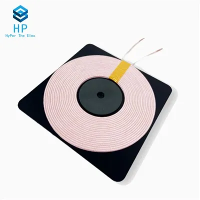
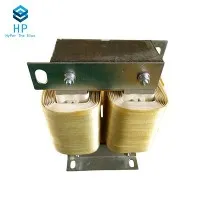

Hey there! As a supplier of Encapsulated Coil, I've been getting a lot of questions lately about how the encapsulation material affects a coil's flexibility. So, I thought I'd take a deep dive into this topic and share my insights with you.
Let's start with the basics. Encapsulation is the process of covering a coil with a protective material. This isn't just for show; it serves some really important functions. First off, it protects the coil from environmental factors like moisture, dust, and chemicals. Think of it as a shield that keeps the coil in good working condition. Second, it can enhance the mechanical stability of the coil, making it more durable. But here's the thing - the type of encapsulation material you choose can have a huge impact on how flexible the coil is.
Different Encapsulation Materials and Their Impact on Flexibility
Epoxy Resin
Epoxy resin is one of the most commonly used encapsulation materials. It's known for its excellent adhesion, chemical resistance, and electrical insulation properties. When you encapsulate a coil with epoxy resin, you're essentially creating a hard, rigid shell around it. This is great for applications where you need a high level of protection and stability. For example, in AC Solenoid Coil applications, epoxy resin can help the coil withstand the high electrical currents and mechanical stresses without getting damaged.
However, the downside of epoxy resin is that it significantly reduces the coil's flexibility. Once the epoxy resin cures, it forms a solid mass that doesn't bend easily. So, if your application requires the coil to be flexible, like in some wearable devices or flexible electronics, epoxy resin might not be the best choice.
Silicone Rubber
Silicone rubber is another popular encapsulation material, especially when flexibility is a key requirement. It has a high degree of elasticity, which means it can stretch and bend without losing its shape. When you use silicone rubber to encapsulate a coil, the coil retains a good amount of its original flexibility. This makes it ideal for applications where the coil needs to be bent or flexed during normal use, such as in Hollow Coil applications for flexible sensors or actuators.
In addition to its flexibility, silicone rubber also offers good thermal stability, weather resistance, and electrical insulation. It can withstand a wide range of temperatures, from very cold to very hot, without losing its properties. This makes it suitable for use in harsh environments.
Polyurethane
Polyurethane is a versatile encapsulation material that offers a balance between flexibility and protection. It has good mechanical properties, including moderate flexibility and high abrasion resistance. When used to encapsulate a coil, polyurethane can provide a certain level of protection against environmental factors while still allowing the coil to be somewhat flexible.
Polyurethane is often used in applications where the coil needs to be protected from impact and abrasion, but also requires some degree of flexibility. For example, in automotive applications, polyurethane-encapsulated coils can be used in sensors and actuators that are exposed to vibrations and mechanical stresses.
Factors to Consider When Choosing an Encapsulation Material for Flexibility
Application Requirements
The first thing you need to consider is the specific requirements of your application. If your application requires the coil to be highly flexible, like in a flexible circuit or a wearable device, then you should choose a material like silicone rubber. On the other hand, if your application requires a high level of protection and stability, like in an industrial control system, then epoxy resin might be a better choice.
Environmental Conditions
The environmental conditions in which the coil will be used also play a crucial role in choosing the encapsulation material. If the coil will be exposed to high temperatures, chemicals, or moisture, then you need to choose a material that can withstand these conditions. For example, silicone rubber is a good choice for high-temperature applications, while epoxy resin offers excellent chemical resistance.
Cost
Cost is always a factor in any manufacturing process. Different encapsulation materials have different costs, and you need to balance the cost with the performance requirements of your application. Epoxy resin is generally less expensive than silicone rubber, but it may not be suitable for applications that require high flexibility.


How We Can Help
As a supplier of Encapsulated Coil, we understand the importance of choosing the right encapsulation material for your specific needs. We offer a wide range of encapsulation options, including epoxy resin, silicone rubber, and polyurethane, to ensure that you get the best combination of flexibility and protection for your coils.
Our team of experts can work with you to understand your application requirements and recommend the most suitable encapsulation material. We also have state-of-the-art manufacturing facilities that allow us to produce high-quality encapsulated coils with precise control over the encapsulation process.
If you're interested in learning more about our encapsulated coils or have any questions about how the encapsulation material affects flexibility, don't hesitate to reach out. We're here to help you make the right choice for your project. Whether you're a small startup or a large corporation, we can provide you with the customized solutions you need. Let's start a conversation and see how we can work together to meet your coil encapsulation needs.
References
- "Handbook of Electronic Packaging Materials" by C. A. Harper
- "Polymer Science and Technology" by Robert F. Storey
- "Silicone Elastomers: Chemistry and Technology" by Werner Noll