


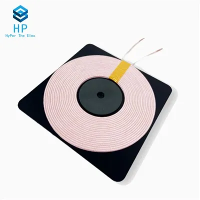
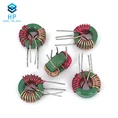

Hey there! As a supplier of Oscillating Coils, I've had my fair share of chats with folks curious about what these little wonders do in sensors. So, I thought I'd break it down in this blog post and share the ins and outs of the role of an oscillating coil in a sensor.
First off, let's get to know what an oscillating coil is. An Oscillating Coil is a type of coil that can generate an oscillating magnetic field. It's made up of a wire wound around a core, and when an electric current passes through the wire, it creates a magnetic field. The oscillation part comes from the fact that the current and the resulting magnetic field change over time in a regular pattern.
Now, let's dive into how these coils play a crucial role in sensors. One of the main functions of an oscillating coil in a sensor is to detect changes in the magnetic field around it. You see, when there's a change in the magnetic field, it can affect the way the coil oscillates. This change can be caused by various things, like the presence of a metal object, a change in the distance between the coil and an object, or even a change in the magnetic properties of the surrounding environment.
For example, in a metal detector sensor, the oscillating coil creates a magnetic field. When a metal object comes close to the coil, it disturbs the magnetic field. This disturbance causes a change in the oscillation of the coil, which the sensor can then detect and signal that there's a metal object nearby. It's like a little detective that can sense the presence of metals just by "feeling" the changes in the magnetic field.


Another important application is in proximity sensors. These sensors are used to detect the presence or absence of an object without making physical contact. The oscillating coil in a proximity sensor emits an oscillating magnetic field. When an object enters the range of this magnetic field, it causes a change in the coil's oscillation frequency or amplitude. The sensor then processes this change and determines whether an object is present or not. This is super useful in all sorts of industries, from manufacturing to automotive, where you need to know if something is close by without actually touching it.
In addition to detecting the presence of objects, oscillating coils can also be used to measure the distance between the sensor and an object. The closer an object gets to the oscillating coil, the more it affects the magnetic field and the coil's oscillation. By analyzing the changes in the oscillation, the sensor can calculate the distance to the object. This is really handy in applications like robotics, where robots need to know how far away they are from obstacles or other objects in their environment.
Now, let's talk about the relationship between oscillating coils and other types of coils. You might have heard of Resonant Coils and Antenna Coils. Resonant coils are designed to resonate at a specific frequency. When an oscillating coil is used in combination with a resonant coil, they can work together to enhance the sensitivity and accuracy of the sensor. The resonant coil can help to amplify the signals generated by the oscillating coil, making it easier for the sensor to detect even small changes in the magnetic field.
Antenna coils, on the other hand, are used to transmit and receive electromagnetic signals. In some sensors, an oscillating coil can act as an antenna coil. It can both generate an oscillating magnetic field and receive signals that are affected by the surrounding environment. This dual function allows the sensor to not only detect changes in the magnetic field but also communicate with other devices or systems.
As a supplier of oscillating coils, I know how important it is to have high - quality coils for these sensor applications. We make sure that our oscillating coils are made with the best materials and the latest manufacturing techniques. This ensures that they have stable performance, high sensitivity, and long - term reliability. Whether you're working on a small - scale project or a large - scale industrial application, our oscillating coils can meet your needs.
If you're in the market for oscillating coils for your sensor projects, I'd love to have a chat with you. We can discuss your specific requirements, and I can help you find the perfect coil for your application. Whether you need a coil with a specific frequency range, a certain level of sensitivity, or a particular size and shape, we've got you covered. So, don't hesitate to reach out and start a conversation about your oscillating coil needs.
In conclusion, the role of an oscillating coil in a sensor is truly remarkable. It's like the heart of the sensor, enabling it to detect changes in the magnetic field, sense the presence of objects, measure distances, and even communicate with other devices. With its wide range of applications and the ability to work in conjunction with other types of coils, the oscillating coil is an essential component in many modern sensor systems. If you're looking for a reliable supplier of high - quality oscillating coils, I'm here to help you make your sensor projects a success.
References:
- "Principles of Magnetic Sensors" by some well - known author in the field of sensor technology.
- Various industry reports on sensor applications and coil technologies.