


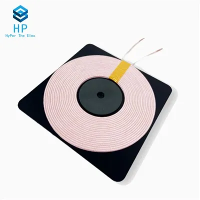
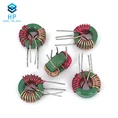

Hey there! As a supplier of resonant coils, I often get asked about the self - inductance of these little wonders. So, let's dive right in and break down what self - inductance of a resonant coil is all about.
What's Self - Inductance Anyway?
First off, we need to understand what self - inductance means. In simple terms, self - inductance is a property of an electrical circuit that opposes any change in the current flowing through it. When the current in a coil changes, it creates a magnetic field around the coil. This changing magnetic field then induces an electromotive force (EMF) in the same coil, which tries to oppose the change in current.
The unit of self - inductance is the henry (H). A coil has an inductance of 1 henry if an EMF of 1 volt is induced in it when the current through the coil changes at a rate of 1 ampere per second.
Self - Inductance in Resonant Coils
Resonant coils are special because they are designed to operate at a specific resonant frequency. At this frequency, the inductive reactance and the capacitive reactance in the circuit cancel each other out, and the impedance of the circuit becomes purely resistive.
The self - inductance of a resonant coil plays a crucial role in determining its resonant frequency. The resonant frequency ($f_0$) of an LC circuit (a circuit with an inductor and a capacitor) is given by the formula:
$f_0=\frac{1}{2\pi\sqrt{LC}}$
where $L$ is the self - inductance of the coil and $C$ is the capacitance of the capacitor in the circuit. So, you can see that the self - inductance directly affects the resonant frequency of the circuit.
Factors Affecting the Self - Inductance of a Resonant Coil
There are several factors that can influence the self - inductance of a resonant coil.
Number of Turns
The number of turns in the coil is one of the most significant factors. Generally, the more turns a coil has, the higher its self - inductance. This is because each turn of the coil adds to the magnetic field produced by the current flowing through it. So, if you increase the number of turns, you increase the total magnetic flux, which in turn increases the self - inductance.
Cross - sectional Area
The cross - sectional area of the coil also matters. A larger cross - sectional area allows for a greater magnetic flux to pass through the coil. As a result, the self - inductance of the coil increases. Think of it like a bigger pipe allowing more water to flow through; a larger cross - sectional area of the coil allows more magnetic flux to pass through.
Core Material
The core material of the coil can have a huge impact on its self - inductance. Coils with a magnetic core, such as iron or ferrite, have a much higher self - inductance compared to air - core coils. This is because magnetic materials can enhance the magnetic field produced by the current in the coil. They have a high magnetic permeability, which means they can easily store and transfer magnetic energy.
Different Types of Coils and Their Self - Inductance
There are various types of coils, each with its own characteristics and self - inductance values. For example, a Trap Coil is designed to block certain frequencies while allowing others to pass through. Its self - inductance is carefully tuned to achieve this filtering effect.
A Choke Coil is used to block high - frequency alternating current (AC) while allowing direct current (DC) to pass. The self - inductance of a choke coil is chosen based on the frequency range it needs to block.
An Oscillating Coil is used in oscillator circuits to generate a stable frequency. The self - inductance of an oscillating coil is a key parameter in determining the frequency of oscillation.
Measuring the Self - Inductance of a Resonant Coil
Measuring the self - inductance of a resonant coil can be done using various methods. One common method is to use an LCR meter. This device can measure the inductance, capacitance, and resistance of a circuit. By connecting the resonant coil to the LCR meter, you can directly read the value of its self - inductance.
Another method is to use a test circuit. You can set up an LC circuit with the resonant coil and a known capacitor. By measuring the resonant frequency of the circuit and using the formula $f_0=\frac{1}{2\pi\sqrt{LC}}$, you can calculate the self - inductance of the coil.
Importance of Self - Inductance in Resonant Coil Applications
The self - inductance of a resonant coil is crucial in many applications. In radio frequency (RF) circuits, for example, resonant coils are used to tune in to specific frequencies. The self - inductance of the coil determines the frequency at which the circuit will resonate, allowing the receiver to pick up the desired radio signal.
In power electronics, resonant coils are used in switch - mode power supplies. The self - inductance of the coil helps in storing and transferring energy efficiently, reducing power losses and improving the overall performance of the power supply.
Why Choose Our Resonant Coils?
As a supplier of resonant coils, we take pride in offering high - quality products. Our coils are carefully designed and manufactured to have precise self - inductance values. We use the best materials and advanced manufacturing techniques to ensure that our coils meet the highest standards.
Whether you need a coil for a specific frequency application or a custom - designed coil, we've got you covered. Our team of experts can work with you to understand your requirements and provide the perfect solution.

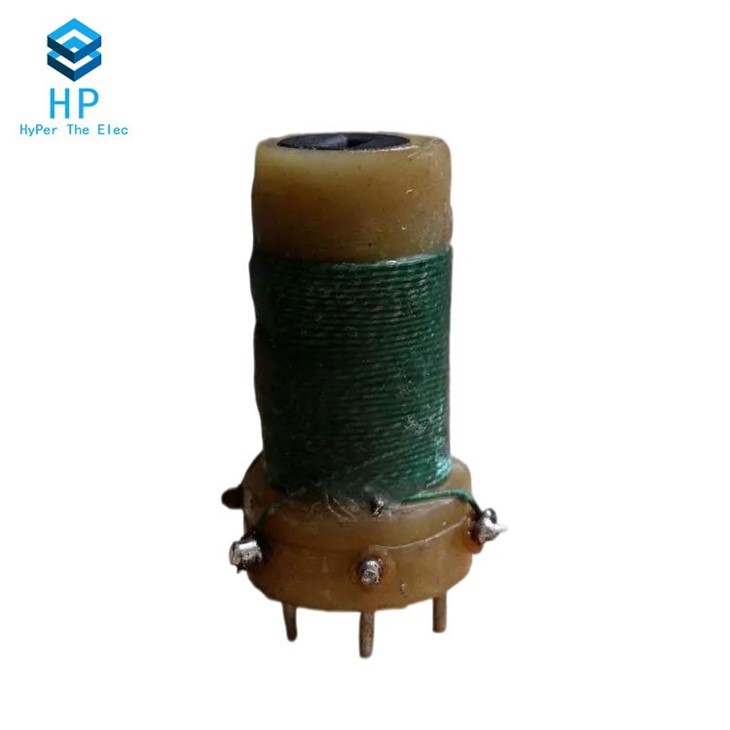
If you're in the market for resonant coils, don't hesitate to reach out. We're here to help you with all your coil needs. Whether it's for a small project or a large - scale industrial application, we can provide the right coil with the right self - inductance.
So, if you're interested in learning more or want to discuss your coil requirements, just drop us a message. We're looking forward to working with you!