


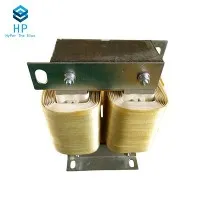

Can a filter inductor be used in a communication system?
In the realm of modern communication systems, the quest for high - performance, reliable, and interference - free operation is unending. As a supplier of Filter Inductor, I am often asked about the viability of using filter inductors in communication systems. In this blog, we will delve into the technical aspects, applications, and advantages of incorporating filter inductors in communication setups.


Technical Fundamentals of Filter Inductors
A filter inductor is a passive electronic component that stores energy in a magnetic field when an electric current flows through it. Its fundamental property is inductance, measured in henries (H). The inductor resists changes in current flow, which makes it an ideal candidate for filtering applications. When used in a circuit, a filter inductor can block high - frequency signals while allowing low - frequency signals to pass through, based on the principle of inductive reactance ((X_{L}=2\pi fL)), where (f) is the frequency of the signal and (L) is the inductance.
In communication systems, various types of interference can disrupt the transmission and reception of signals. These include electromagnetic interference (EMI), radio - frequency interference (RFI), and power - supply noise. Filter inductors can be designed to target specific frequency ranges associated with these interferences, thereby enhancing the signal - to - noise ratio (SNR) of the communication system.
Applications of Filter Inductors in Communication Systems
Power Supply Filtering
Communication equipment, such as base stations, routers, and mobile devices, require stable and clean power supplies. Power - supply noise can introduce errors in data transmission and reduce the overall performance of the system. A filter inductor can be used in a power - supply filter circuit, often in combination with capacitors, to form an LC (inductor - capacitor) filter. This filter can effectively suppress high - frequency noise from the power source, providing a smooth DC voltage to the communication components.
For example, in a cellular base station, the power amplifier requires a stable power supply to operate efficiently. Any power - supply ripple or noise can cause distortion in the amplified signal, leading to decreased coverage and call quality. By using a well - designed filter inductor in the power - supply filter, the base station can maintain a high - quality signal output.
Signal Line Filtering
In communication systems, signal lines are also susceptible to interference. Filter inductors can be used in signal - line filtering to protect the sensitive communication signals from external EMI and RFI. For instance, in a high - speed data - transmission link, such as an Ethernet connection, a filter inductor can be placed in series with the signal line. This inductor can block unwanted high - frequency signals while allowing the desired data signals to pass through, ensuring reliable data transfer.
Antenna Matching and Filtering
Antennas are crucial components in wireless communication systems. They need to be properly matched to the transmission line to maximize the power transfer and radiation efficiency. Filter inductors can be used in antenna - matching networks to adjust the impedance of the antenna to match that of the transmission line. Additionally, they can be used as part of an antenna filter to reject unwanted frequencies, such as out - of - band interference.
Advantages of Using Filter Inductors in Communication Systems
Improved Signal Quality
As mentioned earlier, filter inductors can significantly reduce interference in communication systems. By improving the SNR, the quality of the transmitted and received signals is enhanced. This leads to fewer errors in data transmission, better voice - call quality in voice - communication systems, and higher data - transfer rates in data - communication systems.
Compliance with Regulatory Standards
Many countries and regions have strict regulations regarding EMI and RFI emissions from electronic equipment. Communication devices need to comply with these standards to be sold in the market. Filter inductors can help communication equipment meet these regulatory requirements by reducing the levels of electromagnetic emissions. This not only ensures legal compliance but also improves the overall electromagnetic compatibility (EMC) of the system.
Enhanced System Reliability
By reducing the impact of interference, filter inductors can increase the reliability of communication systems. They can prevent system malfunctions caused by noise - induced errors, such as data corruption, dropped calls, and system crashes. This is particularly important in critical communication applications, such as emergency - response systems and military communication networks.
Comparison with Other Filtering Components
While filter inductors offer many advantages in communication systems, it is also important to compare them with other filtering components, such as ferrite beads and capacitors.
Ferrite Beads
Ferrite beads are another type of passive component used for filtering high - frequency noise. They are essentially inductors with a high resistance at high frequencies. However, ferrite beads are more suitable for suppressing very high - frequency noise in the range of several hundred MHz to GHz. Filter inductors, on the other hand, can be designed for a wider range of frequencies and can handle larger currents. In communication systems where a combination of low - and high - frequency filtering is required, filter inductors may be a better choice.
Capacitors
Capacitors are commonly used for filtering in communication systems. They can store and release electrical energy, and they are effective at bypassing high - frequency signals to ground. However, capacitors alone may not be sufficient to block low - frequency interference. Filter inductors can complement capacitors in a filter circuit, providing a more comprehensive filtering solution. For example, in an LC filter, the inductor blocks low - frequency signals while the capacitor bypasses high - frequency signals.
Our Offerings as a Filter Inductor Supplier
As a supplier of filter inductors, we offer a wide range of products to meet the diverse needs of communication systems. Our filter inductors are designed with high - quality materials and advanced manufacturing processes to ensure excellent performance and reliability.
We have BUCK Inductor which are suitable for power - supply filtering in step - down voltage - conversion applications commonly found in communication devices. These inductors are designed to handle high currents and have low DC resistance, which helps to reduce power losses.
Our PFC Inductor are used in power - factor - correction circuits in communication equipment. They can improve the power factor of the system, reducing the overall power consumption and complying with energy - efficiency standards.
In addition, we can customize filter inductors according to the specific requirements of our customers. Whether it is a specific inductance value, current rating, or frequency response, our engineering team can design and manufacture the ideal filter inductor for your communication system.
Conclusion
In conclusion, filter inductors can play a vital role in communication systems. Their ability to suppress interference, improve signal quality, and enhance system reliability makes them an essential component in modern communication technology. As a supplier of filter inductors, we are committed to providing high - quality products that meet the evolving needs of the communication industry.
If you are involved in the design, manufacturing, or operation of communication systems and are interested in incorporating filter inductors into your products, we invite you to contact us for more information. Our team of experts can assist you in selecting the right filter inductor for your specific application and guide you through the procurement process.
References
- Paul, Clayton R. "Electromagnetic Compatibility for Power Electronics: Principles, Design, and Applications." Wiley - IEEE Press, 2007.
- Schmitt, Ron. "Electromagnetic Compatibility Engineering." Wiley, 2008.
- Gonzalez, Guillermo. "RF Microelectronics." Prentice Hall, 2001.