


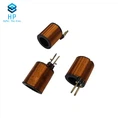

In the realm of power electronics, electromagnetic interference (EMI) is a significant concern that can disrupt the normal operation of electronic devices and systems. As a leading PFC inductor supplier, I have witnessed firsthand the crucial role that PFC inductors play in mitigating EMI. This blog post aims to explore the question: Can a PFC inductor reduce electromagnetic interference?
Understanding Electromagnetic Interference (EMI)
Before delving into the role of PFC inductors in EMI reduction, it is essential to understand what EMI is and why it is a problem. Electromagnetic interference refers to the disruption of the operation of an electronic device by an electromagnetic field. This interference can be caused by a variety of sources, including power lines, radio frequency (RF) transmitters, and other electronic devices.
EMI can have several negative effects on electronic devices, including:
- Malfunction: EMI can cause electronic devices to malfunction, leading to errors, data loss, or even complete failure.
- Data corruption: EMI can corrupt data transmitted between electronic devices, leading to errors in communication and communication breakdowns.
- Safety hazards: In some cases, EMI can pose safety hazards, such as interference with medical devices or automotive electronics.
Power Factor Correction (PFC)
Power factor correction (PFC) is a technique used to improve the efficiency of electrical power conversion by reducing the reactive power drawn from the electrical grid. Reactive power is the power that is used to create and maintain the magnetic fields in electrical devices, such as motors and transformers. By reducing the reactive power, PFC can improve the power factor of an electrical device, which is a measure of how effectively the device uses electrical power.
PFC is typically implemented using a PFC converter, which is a type of power converter that uses a PFC inductor to store and release energy. The PFC inductor is a key component of the PFC converter, as it helps to smooth the current waveform and reduce the harmonic distortion of the input current.


How PFC Inductors Reduce EMI
PFC inductors play a crucial role in reducing EMI in power electronics systems. They do this by performing several functions:
- Filtering: PFC inductors act as low-pass filters, blocking high-frequency noise and allowing only the desired low-frequency signals to pass through. This helps to reduce the EMI generated by the power electronics system.
- Energy storage: PFC inductors store energy during the on-time of the switching device and release it during the off-time. This helps to smooth the current waveform and reduce the harmonic distortion of the input current, which in turn reduces the EMI generated by the power electronics system.
- Magnetic field cancellation: PFC inductors can be designed to cancel out the magnetic fields generated by other components in the power electronics system. This helps to reduce the overall EMI generated by the system.
Types of PFC Inductors
There are several types of PFC inductors available, each with its own advantages and disadvantages. Some of the most common types of PFC inductors include:
- Toroidal Inductors: Toroidal inductors are made by winding a coil of wire around a toroidal core. They have a high inductance value and a low resistance, which makes them ideal for use in PFC converters. Toroidal inductors also have a low electromagnetic radiation, which helps to reduce EMI.
- PFC Inductor: PFC inductors are specifically designed for use in PFC converters. They are typically made with a high-permeability core material and a large number of turns of wire. PFC inductors are designed to have a high inductance value and a low resistance, which helps to improve the efficiency of the PFC converter and reduce EMI.
- Coil Inductor: Coil inductors are made by winding a coil of wire around a cylindrical core. They have a simple structure and are easy to manufacture. Coil inductors are typically used in low-power applications where cost is a major consideration.
Design Considerations for PFC Inductors
When designing a PFC inductor, several factors need to be considered to ensure that it can effectively reduce EMI. Some of the key design considerations include:
- Inductance value: The inductance value of the PFC inductor is a critical parameter that affects its performance. A higher inductance value can help to reduce the harmonic distortion of the input current and improve the power factor of the PFC converter. However, a higher inductance value also increases the size and cost of the PFC inductor.
- Core material: The core material of the PFC inductor has a significant impact on its performance. Different core materials have different magnetic properties, such as permeability, saturation flux density, and core loss. The choice of core material depends on the specific application requirements, such as the operating frequency, the power level, and the temperature range.
- Winding configuration: The winding configuration of the PFC inductor can also affect its performance. Different winding configurations, such as single-layer winding, multi-layer winding, and bifilar winding, have different electrical and magnetic properties. The choice of winding configuration depends on the specific application requirements, such as the inductance value, the current rating, and the EMI requirements.
Conclusion
In conclusion, PFC inductors can play a significant role in reducing electromagnetic interference in power electronics systems. By acting as low-pass filters, storing and releasing energy, and canceling out magnetic fields, PFC inductors can help to smooth the current waveform, reduce the harmonic distortion of the input current, and improve the power factor of the PFC converter. This, in turn, helps to reduce the EMI generated by the power electronics system and improve its reliability and performance.
As a PFC inductor supplier, we understand the importance of providing high-quality PFC inductors that can effectively reduce EMI. Our PFC inductors are designed and manufactured using the latest technologies and materials to ensure that they meet the highest standards of quality and performance. We offer a wide range of PFC inductors to meet the diverse needs of our customers, including toroidal inductors, PFC inductors, and coil inductors.
If you are looking for a reliable PFC inductor supplier, please contact us to discuss your specific requirements. We are committed to providing you with the best possible solutions and services to help you achieve your goals.
References
- Mohan, N., Undeland, T. M., & Robbins, W. P. (2012). Power Electronics: Converters, Applications, and Design. John Wiley & Sons.
- Erickson, R. W., & Maksimovic, D. (2001). Fundamentals of Power Electronics. Springer Science & Business Media.
- Middlebrook, R. D. (1980). Input filter considerations in switching regulator design. IEEE Journal of Solid - State Circuits, 15(6), 908 - 916.