



Can a Variable Reactor reduce harmonic distortion?
Hey there! I'm a supplier of Variable Reactors, and today we're going to dig into whether these nifty devices can actually reduce harmonic distortion. First off, let's talk a bit about what harmonic distortion is.


Harmonic distortion is basically the presence of unwanted frequencies in an electrical system. These harmonics can mess things up big time. They can cause overheating in transformers, motors, and other equipment. That overheating can lead to reduced efficiency, shorter equipment lifespan, and even system failures. And nobody wants that!
So, where do these harmonics come from? Well, modern electrical systems are full of non - linear loads. Think about things like computers, LED lights, and variable - speed drives. These devices draw current in a non - sinusoidal way, which generates harmonics.
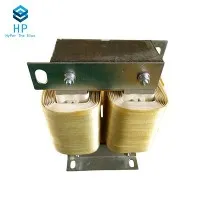
Now, let's get to the star of the show: the Variable Reactor. A Variable Reactor is a type of electrical device that can adjust its reactance. Reactance is like a resistance for AC circuits, but it depends on the frequency of the current.
How does a Variable Reactor work? It uses a magnetic core and a coil. By changing the magnetic field in the core, we can change the reactance of the coil. This adjustability is what makes it so special.
One of the ways a Variable Reactor can help with harmonic distortion is by providing reactive power compensation. Reactive power is the power that sloshes back and forth between the source and the load without doing any real work. Non - linear loads often have a high demand for reactive power, and this can contribute to harmonic problems.
A Variable Reactor can be tuned to supply or absorb reactive power as needed. When it supplies the right amount of reactive power, it can help balance the electrical system. This balancing can reduce the stress on the system caused by harmonics.
Let's take a closer look at some of the technical aspects. In an electrical system, harmonics are multiples of the fundamental frequency (usually 50 or 60 Hz). For example, the 3rd harmonic has a frequency of 150 or 180 Hz.
A Variable Reactor can be designed to have a different reactance at different frequencies. This means it can act as a kind of filter. It can block or reduce the flow of harmonic currents while allowing the fundamental frequency to pass through with minimal impedance.
Another important concept is resonance. In an electrical circuit, resonance occurs when the inductive reactance equals the capacitive reactance. This can lead to a huge increase in current at the resonant frequency, which is usually a harmonic frequency.
A Variable Reactor can be used to avoid or dampen these resonant conditions. By adjusting its reactance, it can change the resonant frequency of the system or reduce the amplitude of the resonant current.
Now, let's compare the Variable Reactor with some other types of reactors. The Series Resonant Reactor is another option for dealing with harmonics. It is connected in series with the load and is designed to resonate at a specific harmonic frequency. This helps to block that particular harmonic.
However, a Series Resonant Reactor is fixed in its operation. It can only target one specific harmonic frequency. On the other hand, a Variable Reactor can be adjusted to deal with multiple harmonics or to adapt to changing system conditions.
The Output Reactor is often used to protect motors and other equipment from voltage spikes and high - frequency noise. It can also have some effect on harmonics, but its main job is to smooth out the output of a variable - speed drive.
A Variable Reactor, on the other hand, can be more versatile. It can be used in different parts of the electrical system and can be adjusted for different applications.
Let's talk about some real - world examples. In a factory with a lot of variable - speed drives, the harmonic distortion can be quite high. By installing a Variable Reactor, the factory can reduce the harmonic levels and improve the overall power quality.
The reduced harmonic distortion means less overheating in the motors and transformers. This can lead to significant energy savings and a longer lifespan for the equipment.
In a commercial building with a large number of LED lights and computers, a Variable Reactor can also make a big difference. It can help balance the electrical load and reduce the stress on the electrical distribution system.
But it's not all sunshine and rainbows. There are some limitations to using a Variable Reactor. One of the main challenges is the cost. Variable Reactors are more expensive than fixed - reactance reactors. However, when you consider the long - term benefits, such as energy savings and reduced maintenance costs, the investment can be worth it.
Another limitation is the complexity of installation and operation. A Variable Reactor needs to be properly sized and tuned for the specific electrical system. This requires some technical expertise.
Despite these limitations, the potential benefits of using a Variable Reactor to reduce harmonic distortion are significant. If you're dealing with harmonic problems in your electrical system, a Variable Reactor could be the solution you've been looking for.
If you're interested in learning more about how a Variable Reactor can work for your specific application, or if you're thinking about a purchase, don't hesitate to reach out. We're here to help you find the best solution for your electrical system.
In conclusion, a Variable Reactor can definitely play a crucial role in reducing harmonic distortion. Its adjustability allows it to adapt to different system conditions and target multiple harmonics. While there are some challenges, the long - term benefits make it a viable option for many applications.
References
- Electrical Power Systems Quality by Roger C. Dugan, Mark F. McGranaghan, Surya Santoso, and H. Wayne Beaty
- Power System Harmonics: Analysis, Identification, and Mitigation by George J. Anders