


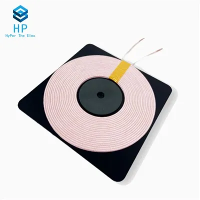
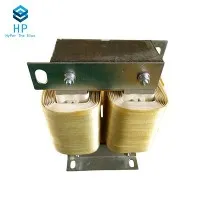

As a seasoned supplier of Coil Inductors, I've witnessed firsthand how the choice of core material can significantly impact the performance of these essential electronic components. In this blog, I'll delve into the science behind core materials and their effects on coil inductor performance, drawing on my years of experience in the industry.
Understanding Coil Inductors
Before we explore the role of core materials, let's briefly review what a coil inductor is and how it works. A coil inductor is a passive electronic component that stores energy in a magnetic field when an electric current flows through it. It consists of a coil of wire wound around a core material, which can be made of various substances such as air, ferrite, iron, or powdered iron.
The primary function of a coil inductor is to oppose changes in current flow by inducing an electromotive force (EMF) in the opposite direction of the current change. This property makes inductors useful in a wide range of applications, including power supplies, filters, oscillators, and transformers.
The Role of Core Materials
The core material of a coil inductor plays a crucial role in determining its performance characteristics. Different core materials have distinct magnetic properties, such as permeability, saturation flux density, and core loss, which directly affect the inductor's inductance, current handling capacity, and efficiency.
Permeability
Permeability is a measure of how easily a magnetic field can pass through a material. A high-permeability core material allows for a stronger magnetic field to be generated with a given amount of current, resulting in a higher inductance value. This is particularly important in applications where a large inductance is required, such as in power supplies and filters.
Ferrite cores are known for their high permeability, making them a popular choice for many coil inductor applications. They offer excellent magnetic properties at high frequencies, making them suitable for use in RF circuits and switching power supplies. On the other hand, air cores have a low permeability, which limits their inductance value but can be advantageous in applications where a low inductance and high self-resonance frequency are desired.
Saturation Flux Density
Saturation flux density is the maximum magnetic flux density that a core material can support before it becomes saturated and loses its ability to store additional magnetic energy. When an inductor's core reaches saturation, its inductance value decreases significantly, leading to a loss of performance and potential overheating.
Materials with high saturation flux density, such as iron and powdered iron cores, are capable of handling higher currents without saturating. This makes them ideal for applications that require high current handling capacity, such as BUCK Inductor and PFC Inductor in power electronics.
Core Loss
Core loss refers to the energy dissipated as heat in the core material when an alternating current flows through the inductor. It is caused by two main factors: hysteresis loss and eddy current loss. Hysteresis loss occurs due to the repeated magnetization and demagnetization of the core material, while eddy current loss is caused by the induced currents circulating within the core.
Low core loss is essential for achieving high efficiency in coil inductors, especially in high-frequency applications. Ferrite cores are known for their low core loss at high frequencies, making them a popular choice for RF and switching power supply applications. Powdered iron cores also offer relatively low core loss, but they are more suitable for lower frequency applications.
Common Core Materials and Their Applications
Now that we understand the key properties of core materials, let's take a closer look at some of the most common core materials used in coil inductors and their typical applications.
Ferrite Cores
Ferrite cores are made of a ceramic material composed of iron oxide and other metal oxides. They offer high permeability, low core loss, and excellent magnetic properties at high frequencies. Ferrite cores are widely used in RF circuits, switching power supplies, and electromagnetic interference (EMI) filters.


One of the main advantages of ferrite cores is their ability to operate at high frequencies without significant core loss. This makes them ideal for applications where high efficiency and low noise are required. However, ferrite cores have a relatively low saturation flux density, which limits their current handling capacity.
Iron Cores
Iron cores are made of pure iron or iron alloys and offer high saturation flux density and low cost. They are commonly used in power transformers, inductors, and electric motors. Iron cores are capable of handling high currents without saturating, making them suitable for applications that require high power handling capacity.
However, iron cores have a relatively high core loss at high frequencies, which can lead to increased heat generation and reduced efficiency. To overcome this limitation, laminated iron cores are often used to reduce eddy current loss.
Powdered Iron Cores
Powdered iron cores are made of tiny iron particles that are insulated from each other by a non-conductive material. They offer a good balance between high saturation flux density and low core loss, making them suitable for a wide range of applications, including power supplies, filters, and RF circuits.
Powdered iron cores have a higher saturation flux density than ferrite cores, allowing them to handle higher currents without saturating. They also have a lower core loss than iron cores at high frequencies, making them more efficient. However, powdered iron cores have a lower permeability than ferrite cores, which may limit their inductance value.
Air Cores
Air cores are simply coils of wire wound without a core material. They offer a very low inductance value and a high self-resonance frequency, making them suitable for applications where a low inductance and high frequency response are required, such as in RF antennas and resonators.
Air cores have the advantage of being free from core loss, which makes them highly efficient. However, they also have a very low magnetic field strength, which limits their ability to store energy.
Choosing the Right Core Material for Your Application
When selecting a core material for a coil inductor, it's important to consider the specific requirements of your application. Here are some key factors to keep in mind:
Frequency Range
The frequency range of your application will determine the type of core material that is most suitable. For high-frequency applications, ferrite cores are often the best choice due to their low core loss and high permeability. For low-frequency applications, iron or powdered iron cores may be more appropriate.
Current Handling Capacity
If your application requires a high current handling capacity, you'll need to choose a core material with a high saturation flux density, such as iron or powdered iron cores. Ferrite cores have a relatively low saturation flux density and may not be suitable for high-current applications.
Efficiency
Efficiency is an important consideration in many applications, especially those where power consumption is a concern. To achieve high efficiency, you'll need to choose a core material with low core loss, such as ferrite or powdered iron cores.
Cost
Cost is always a factor to consider when selecting a core material. Ferrite cores are generally more expensive than iron or powdered iron cores, but they offer better performance at high frequencies. Air cores are the least expensive option, but they have limited applications due to their low inductance value.
Conclusion
In conclusion, the choice of core material has a significant impact on the performance of a coil inductor. Different core materials have distinct magnetic properties, such as permeability, saturation flux density, and core loss, which directly affect the inductor's inductance, current handling capacity, and efficiency.
As a Coil Inductor supplier, I understand the importance of selecting the right core material for each application. By carefully considering the specific requirements of your application, you can choose a core material that will provide the best performance and value for your money.
If you're looking for high-quality coil inductors or need assistance in selecting the right core material for your application, please don't hesitate to contact us. Our team of experts is here to help you find the perfect solution for your needs.
References
- Grover, F. W. (1946). Inductance Calculations: Working Formulas and Tables. Dover Publications.
- McLyman, C. W. (2004). Transformer and Inductor Design Handbook (3rd ed.). CRC Press.
- Terman, F. E. (1955). Radio Engineers' Handbook (2nd ed.). McGraw-Hill.