



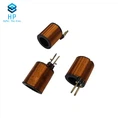
Hey there! As a supplier of DC Solenoid Coils, I've had my fair share of experiences dealing with the ins and outs of these nifty little devices. One of the most common questions I get from customers is how to adjust the magnetic field of a DC solenoid coil. So, I thought I'd put together this blog post to share some tips and tricks based on my hands-on knowledge.
First off, let's quickly go over what a DC solenoid coil is. A DC solenoid coil is basically a coil of wire that generates a magnetic field when an electric current flows through it. These coils are used in a wide range of applications, from automotive to industrial, and even in some consumer products. The strength and direction of the magnetic field can be adjusted to suit the specific needs of the application.
Understanding the Basics of Magnetic Fields in DC Solenoid Coils
Before we dive into how to adjust the magnetic field, it's important to understand the basic factors that affect it. The magnetic field of a DC solenoid coil is primarily determined by three things: the number of turns in the coil, the current flowing through the coil, and the core material inside the coil.
The number of turns in the coil is pretty straightforward. The more turns you have, the stronger the magnetic field will be. This is because each turn of the wire adds to the overall magnetic field generated by the coil. So, if you want to increase the magnetic field strength, you can simply add more turns to the coil.
The current flowing through the coil also plays a crucial role. According to Ampere's law, the magnetic field strength is directly proportional to the current. So, if you increase the current, the magnetic field will get stronger. However, you need to be careful not to exceed the maximum current rating of the coil, as this can cause overheating and damage to the coil.
The core material inside the coil can also have a significant impact on the magnetic field. A core made of a ferromagnetic material, such as iron or steel, can greatly increase the magnetic field strength. This is because ferromagnetic materials have high magnetic permeability, which means they can easily conduct magnetic lines of force. On the other hand, a non-magnetic core, such as plastic or air, will have a much weaker effect on the magnetic field.
Adjusting the Number of Turns
One of the simplest ways to adjust the magnetic field of a DC solenoid coil is by changing the number of turns. If you need to increase the magnetic field strength, you can add more turns to the coil. This can be done by carefully winding additional wire around the existing coil. However, you need to make sure that the wire is wound evenly and tightly to avoid any short circuits.


Conversely, if you need to decrease the magnetic field strength, you can remove some turns from the coil. This can be a bit more tricky, as you need to be careful not to damage the remaining turns. You can use a small pair of wire cutters to carefully snip off the excess turns.
Controlling the Current
Another effective way to adjust the magnetic field is by controlling the current flowing through the coil. As mentioned earlier, the magnetic field strength is directly proportional to the current. So, by increasing or decreasing the current, you can easily adjust the magnetic field.
There are several ways to control the current. One common method is to use a variable resistor, also known as a potentiometer. By adjusting the resistance of the potentiometer, you can change the current flowing through the coil. Another option is to use a power supply with adjustable voltage. By increasing or decreasing the voltage, you can also control the current.
However, it's important to note that changing the current can also affect the power consumption and temperature of the coil. So, you need to make sure that the coil can handle the new current level without overheating.
Choosing the Right Core Material
As I mentioned earlier, the core material can have a big impact on the magnetic field. If you need a stronger magnetic field, you can choose a core made of a ferromagnetic material, such as iron or steel. These materials have high magnetic permeability, which means they can greatly enhance the magnetic field generated by the coil.
On the other hand, if you need a weaker magnetic field, you can choose a non-magnetic core, such as plastic or air. These materials have low magnetic permeability, which means they will have a much weaker effect on the magnetic field.
When choosing a core material, you also need to consider other factors, such as the size and shape of the core, as well as its cost and availability.
Other Considerations
In addition to the above methods, there are a few other things you can do to adjust the magnetic field of a DC solenoid coil. For example, you can change the shape of the coil. A coil with a longer length and a smaller diameter will generally have a stronger magnetic field than a coil with a shorter length and a larger diameter.
You can also adjust the spacing between the turns of the coil. A tighter spacing will generally result in a stronger magnetic field, while a looser spacing will result in a weaker magnetic field.
Conclusion
Adjusting the magnetic field of a DC solenoid coil is not as complicated as it may seem. By understanding the basic factors that affect the magnetic field, such as the number of turns, the current, and the core material, you can easily make the necessary adjustments to suit your specific needs.
If you're in the market for a high-quality DC solenoid coil, or if you have any questions about adjusting the magnetic field, feel free to reach out to us. We're a leading supplier of DC Solenoid Coil, Solenoid Valve Coil, and Encapsulated Coil, and we're always happy to help.
References
- Halliday, D., Resnick, R., & Walker, J. (2014). Fundamentals of Physics. Wiley.
- Serway, R. A., & Jewett, J. W. (2018). Physics for Scientists and Engineers with Modern Physics. Cengage Learning.