



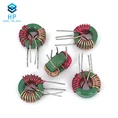

Hey there! As a supplier of PT & CT, I've seen firsthand the incredible advantages of using current transformers (CTs) in a power system. In this blog, I'm gonna break down why CTs are such a big deal and how they can make a real difference in your power setup.
1. Accurate Measurement of Electrical Current
One of the most important jobs of a CT is to measure electrical current accurately. In a power system, knowing the exact amount of current flowing through a circuit is crucial. Whether it's for billing purposes, load management, or system monitoring, accurate current measurement is the foundation.
CTs work by stepping down the high current in a primary circuit to a lower, more manageable current in a secondary circuit. This stepped - down current is proportional to the primary current, allowing for easy and accurate measurement. For example, in a large industrial plant, the main power lines may carry thousands of amperes. It's not practical to directly measure such high currents. A CT can step this current down to a few amperes in the secondary circuit, which can then be measured by a standard ammeter.
This accurate measurement helps power companies bill their customers fairly. They can calculate the exact amount of electricity consumed based on the measured current. It also helps in load management. By knowing the current levels in different parts of the system, operators can balance the load and prevent overloading of circuits.
2. Electrical Isolation
Another major advantage of CTs is electrical isolation. In a power system, there are high - voltage and high - current circuits that can be extremely dangerous. CTs provide a way to measure the current in these circuits without directly connecting the measuring equipment to the high - voltage source.
The primary winding of the CT is connected to the high - current circuit, while the secondary winding is connected to the measuring or protection device. The two windings are magnetically coupled but electrically isolated. This means that the measuring equipment, like meters or relays, is protected from the high voltage and current of the primary circuit.
For instance, in a substation, where the primary voltage can be in the tens or hundreds of kilovolts, a CT allows technicians to measure the current safely from a lower - voltage, isolated secondary circuit. This isolation also reduces the risk of electrical shock and damage to the measuring equipment, enhancing the overall safety of the power system.
3. Protection of Power System Equipment
CTs play a vital role in protecting power system equipment. They are an essential part of protective relay systems. Protective relays are devices that detect abnormal conditions in the power system, such as overcurrent, short - circuits, or ground faults, and initiate appropriate actions to isolate the faulty part of the system.
When an abnormal current condition occurs, the CT senses the change in current and sends a corresponding signal to the protective relay. The relay then analyzes the signal and, if necessary, trips the circuit breaker to disconnect the faulty section from the rest of the power system. This helps prevent damage to expensive equipment like transformers, generators, and transmission lines.
For example, if a short - circuit occurs in a distribution line, the CT will quickly detect the sudden increase in current. The protective relay will then trip the circuit breaker within milliseconds, isolating the short - circuit and preventing further damage to the system.
There are different types of CTs designed for protection purposes. You can check out our Protective Current Transformer for more details on the ones we offer.
4. Monitoring and Control of Power System
CTs are also used for continuous monitoring and control of the power system. By measuring the current in different parts of the system, operators can keep track of the system's performance and make adjustments as needed.
In a smart grid, CTs are integrated with other sensors and communication devices. The data collected from the CTs is sent to a central control center, where it can be analyzed in real - time. Operators can use this data to optimize the power flow, improve the efficiency of the system, and detect any potential problems before they become serious.
For example, if the current in a particular feeder is increasing steadily, it may indicate an approaching overload. Operators can then take preventive measures, such as redistributing the load or starting up additional generation sources.
5. Compatibility with Different Types of Equipment
CTs are highly versatile and can be used with a wide range of equipment. They can be connected to ammeters, wattmeters, energy meters, and protective relays. This compatibility makes them a popular choice in power systems.
Whether you have a small residential electrical panel or a large industrial power plant, there's a CT that can meet your needs. For example, in a home electrical system, a small CT can be used to measure the current consumption of individual appliances. In an industrial setting, larger CTs can be used to monitor the current in high - power machinery.
We offer different types of CTs, including Open End Current Transformer and Ring Current Transformer. These different types are designed to suit various applications and installation requirements.
6. Cost - Effectiveness
When it comes to the overall cost of a power system, CTs are a cost - effective solution. They are relatively inexpensive compared to other power system components, especially considering the important functions they perform.
The initial cost of purchasing and installing a CT is much lower than the cost of replacing damaged equipment due to overcurrent or short - circuits. Also, since CTs are durable and require minimal maintenance, the long - term cost of using them is quite low.
For small and medium - sized power systems, CTs provide a cost - effective way to measure current, protect equipment, and monitor the system's performance. Even in large power systems, the cost of installing a network of CTs is a small fraction of the total cost of the system but can save a significant amount in terms of preventing equipment damage and improving efficiency.
Why Choose Our CTs?
As a PT & CT supplier, we take pride in offering high - quality CTs. Our products are designed to meet the highest industry standards. We have a wide range of CTs to choose from, whether you need a small CT for a residential application or a large, high - capacity CT for an industrial power system.


Our CTs are reliable, accurate, and built to last. We also provide excellent customer support. If you have any questions about our CTs or need help with installation and maintenance, our team of experts is here to assist you.
Let's Connect
If you're in the market for CTs for your power system, I'd love to talk to you. Whether you're looking to upgrade your existing system, install a new one, or just need more information, feel free to reach out. We can discuss your specific requirements and find the best CT solution for you.
References
- "Power System Protection" by A. G. Phadke and J. S. Thorp
- "Electrical Power Systems Quality" by Roger C. Dugan, Mark F. McGranaghan, and Surya Santoso