


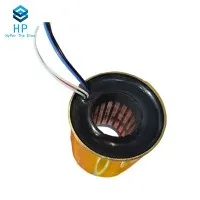
Hey there! As a supplier of saturated reactors, I've been getting a lot of questions lately about how to improve the transient recovery performance of these bad boys. So, I thought I'd put together this blog post to share some tips and insights that I've picked up over the years.
First off, let's talk about what transient recovery performance actually means. In simple terms, it's how quickly a saturated reactor can return to its normal operating state after experiencing a sudden change in current or voltage. This is important because in many applications, such as power electronics and electrical drives, saturated reactors are used to control and protect the system from transient events like short circuits or voltage spikes. If the reactor can't recover quickly enough, it can lead to damage to the equipment or even a complete system failure.
So, how can we improve the transient recovery performance of a saturated reactor? Well, there are a few key factors that we need to consider, including the core material, the winding design, and the control strategy. Let's take a closer look at each of these factors.
Core Material
The core material is one of the most important factors that affects the transient recovery performance of a saturated reactor. Different core materials have different magnetic properties, such as saturation flux density, coercivity, and remanence, which can have a significant impact on how quickly the reactor can recover from a transient event.
For example, materials with high saturation flux density, such as silicon steel, can handle higher levels of magnetic flux without saturating, which means that they can recover more quickly from a transient event. On the other hand, materials with low coercivity, such as ferrite, can be easily magnetized and demagnetized, which also helps to improve the transient recovery performance.
In addition to the magnetic properties, the core material also needs to have good thermal stability and mechanical strength. This is because during a transient event, the reactor can generate a lot of heat, which can cause the core material to expand and contract, leading to mechanical stress and potential damage.
Winding Design
The winding design is another important factor that affects the transient recovery performance of a saturated reactor. The number of turns, the wire gauge, and the winding configuration can all have a significant impact on the inductance, resistance, and capacitance of the reactor, which in turn affects how quickly it can recover from a transient event.
For example, increasing the number of turns in the winding can increase the inductance of the reactor, which can help to reduce the rate of change of current during a transient event. However, increasing the number of turns also increases the resistance of the winding, which can lead to higher power losses and slower transient recovery.
On the other hand, using a larger wire gauge can reduce the resistance of the winding, which can help to improve the transient recovery performance. However, using a larger wire gauge also increases the size and cost of the reactor.


In addition to the number of turns and the wire gauge, the winding configuration can also have a significant impact on the transient recovery performance. For example, using a parallel winding configuration can reduce the inductance of the reactor, which can help to improve the transient recovery performance. However, using a parallel winding configuration also increases the capacitance of the reactor, which can lead to higher electromagnetic interference (EMI).
Control Strategy
The control strategy is the third key factor that affects the transient recovery performance of a saturated reactor. The control strategy determines how the reactor is controlled during normal operation and during a transient event, which can have a significant impact on how quickly it can recover from a transient event.
For example, using a feedback control strategy can help to maintain the reactor at a constant operating point, which can reduce the likelihood of saturation and improve the transient recovery performance. However, using a feedback control strategy also requires additional sensors and control circuitry, which can increase the cost and complexity of the system.
On the other hand, using a feedforward control strategy can help to anticipate and compensate for transient events before they occur, which can also improve the transient recovery performance. However, using a feedforward control strategy requires accurate knowledge of the system dynamics and the transient events, which can be difficult to obtain in practice.
In addition to the feedback and feedforward control strategies, there are also other control strategies that can be used to improve the transient recovery performance of a saturated reactor, such as pulse-width modulation (PWM) control and hysteresis control.
Other Considerations
In addition to the core material, the winding design, and the control strategy, there are also other considerations that can affect the transient recovery performance of a saturated reactor, such as the operating temperature, the ambient environment, and the load characteristics.
For example, operating the reactor at a higher temperature can reduce the magnetic properties of the core material, which can lead to slower transient recovery. Similarly, operating the reactor in a harsh ambient environment, such as a high humidity or high dust environment, can also reduce the performance and reliability of the reactor.
In addition, the load characteristics can also have a significant impact on the transient recovery performance of a saturated reactor. For example, a load with a high inductance or capacitance can cause the reactor to experience more severe transient events, which can require a more robust control strategy and a higher performance reactor.
Conclusion
In conclusion, improving the transient recovery performance of a saturated reactor requires a careful consideration of the core material, the winding design, the control strategy, and other factors. By choosing the right core material, optimizing the winding design, and implementing an effective control strategy, we can significantly improve the transient recovery performance of the reactor and ensure its reliable operation in a wide range of applications.
If you're interested in learning more about saturated reactors or need help improving the transient recovery performance of your reactor, please don't hesitate to contact us. We're a leading supplier of saturated reactors, Output Reactor, Variable Reactor, and Parallel Resonant Reactor, and we have a team of experts who can provide you with the technical support and guidance you need.
References
- [1] J. G. Kassakian, M. F. Schlecht, and G. C. Verghese, Principles of Power Electronics, Addison-Wesley, 1991.
- [2] M. H. Rashid, Power Electronics: Circuits, Devices, and Applications, Prentice Hall, 2003.
- [3] P. C. Sen, Principles of Electric Machines and Power Electronics, Wiley, 1997.