


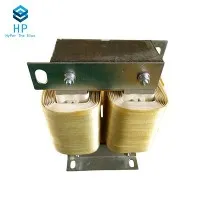

As a seasoned supplier of Antenna Coils, I've witnessed firsthand the critical role these components play in modern communication systems. The efficiency of an Antenna Coil can significantly impact the performance of a wide range of devices, from mobile phones to radio transmitters. In this blog, I'll share some valuable insights on how to increase the efficiency of an Antenna Coil, drawing on my years of experience in the industry.
Understanding Antenna Coil Efficiency
Before delving into the methods of enhancing efficiency, it's essential to understand what efficiency means in the context of Antenna Coils. Efficiency refers to the ratio of the power radiated by the antenna to the power supplied to the coil. A highly efficient Antenna Coil can convert a larger proportion of the input power into electromagnetic radiation, resulting in better signal transmission and reception.
Several factors can affect the efficiency of an Antenna Coil, including its design, materials, and operating environment. By optimizing these factors, we can improve the overall performance of the coil and enhance the functionality of the devices it powers.
Optimizing Coil Design
The design of an Antenna Coil is one of the most critical factors influencing its efficiency. Here are some key design considerations to keep in mind:
1. Number of Turns
The number of turns in a coil affects its inductance, which in turn influences the resonant frequency and impedance of the antenna. Generally, increasing the number of turns can increase the inductance and improve the coil's ability to store magnetic energy. However, too many turns can also increase the resistance of the coil, leading to higher power losses. Therefore, it's essential to find the optimal number of turns that balances inductance and resistance for the specific application.
2. Coil Shape
The shape of the coil can also impact its efficiency. Common coil shapes include solenoid, toroid, and helical. Solenoid coils are the most straightforward and widely used, but they may have higher magnetic leakage compared to toroid coils. Toroid coils, on the other hand, have a more compact design and can provide better magnetic confinement, resulting in higher efficiency. Helical coils are often used in applications where a specific radiation pattern is required.
3. Pitch and Diameter
The pitch (the distance between adjacent turns) and diameter of the coil can affect its self - capacitance and inductance. A smaller pitch or larger diameter can increase the self - capacitance, which may shift the resonant frequency of the coil. It's important to carefully select the pitch and diameter to ensure that the coil operates at the desired frequency and maintains high efficiency.
Choosing the Right Materials
The materials used in the construction of an Antenna Coil can have a significant impact on its efficiency. Here are some important material considerations:
1. Conductor Material
The conductor material of the coil determines its electrical conductivity. Copper is the most commonly used material due to its high conductivity and relatively low cost. However, for applications where weight is a concern, aluminum may be a suitable alternative. In some high - frequency applications, silver - plated copper conductors can be used to further reduce resistance and improve efficiency.


2. Core Material
The core material of the coil can enhance its magnetic properties. Ferrite cores are often used in Antenna Coils because they have high magnetic permeability, which can increase the inductance of the coil without increasing its physical size. Different types of ferrite materials have different characteristics, such as high - frequency ferrite for applications above 1 MHz and power ferrite for high - power applications.
Minimizing Losses
Reducing losses in an Antenna Coil is crucial for improving its efficiency. Here are some ways to minimize losses:
1. DC Resistance Loss
The DC resistance of the coil conductor causes power losses in the form of heat. To minimize DC resistance, use conductors with large cross - sectional areas and low - resistance materials. Additionally, proper winding techniques can help reduce the length of the conductor and thus lower the resistance.
2. Eddy Current Loss
Eddy currents are induced in the conductor and core material when the magnetic field changes. These currents can cause power losses and heating. To reduce eddy current loss, use laminated or powdered core materials, which can break up the eddy current paths. In addition, using thin conductors can also help minimize eddy current losses in the conductor itself.
3. Dielectric Loss
Dielectric loss occurs in the insulating materials surrounding the coil. To minimize dielectric loss, use high - quality insulating materials with low dielectric constant and low loss tangent. In some cases, air can be used as an insulator to reduce dielectric losses.
Tuning and Matching
Tuning and matching the Antenna Coil to the rest of the system is essential for maximizing its efficiency. Here's how it can be done:
1. Tuning
Tuning the coil involves adjusting its resonant frequency to match the operating frequency of the device. This can be achieved by changing the number of turns, the core material, or the capacitance of the coil. Tuning ensures that the coil operates at its peak efficiency and provides the best performance.
2. Impedance Matching
Impedance matching is the process of ensuring that the impedance of the Antenna Coil matches the impedance of the transmission line and the load. A proper impedance match can minimize reflections and maximize the power transfer between the source and the antenna. This can be achieved using matching networks, such as L - networks, T - networks, or Pi - networks.
Types of Antenna Coils and Their Efficiency Considerations
There are different types of Antenna Coils, each with its own efficiency characteristics. Let's take a look at some common types:
1. Trap Coil
Trap Coils are used to filter out unwanted frequencies in an antenna system. To increase the efficiency of a Trap Coil, it's important to select the appropriate resonant frequency and ensure that the coil has low losses at that frequency. Using high - quality materials and proper design techniques can help achieve this.
2. Oscillating Coil
Oscillating Coils are used in oscillator circuits to generate alternating currents. For optimal efficiency, the coil should have a stable inductance and low resistance. The core material and winding configuration should be carefully chosen to meet the specific requirements of the oscillator circuit.
3. Resonant Coil
Resonant Coils are designed to operate at a specific resonant frequency. To increase their efficiency, it's crucial to accurately tune the coil to the desired frequency and minimize losses. This may involve using high - Q (quality factor) components and precise manufacturing techniques.
Conclusion
Increasing the efficiency of an Antenna Coil requires a comprehensive approach that considers design, materials, loss reduction, and tuning. By carefully optimizing these factors, we can significantly improve the performance of the coil and enhance the functionality of the devices it powers.
As a trusted Antenna Coil supplier, we are committed to providing high - quality coils that meet the most demanding requirements. Our team of experts can work with you to design and manufacture Antenna Coils that offer optimal efficiency for your specific application. If you're interested in learning more about our products or discussing your Antenna Coil needs, we invite you to contact us for a detailed consultation and procurement negotiation.
References
- “Antenna Theory: Analysis and Design” by Constantine A. Balanis
- “RF Circuit Design” by Chris Bowick
- Technical papers from industry research institutions on Antenna Coil technology and efficiency improvement.