


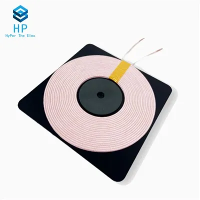
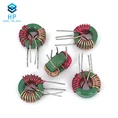

In the realm of electronic circuits, particularly in low - noise applications, the selection of a filter inductor is a critical task that can significantly impact the performance of the entire system. As a supplier of filter inductors, I have witnessed firsthand the importance of making the right choice. This blog aims to guide you through the process of selecting a filter inductor for low - noise applications.
Understanding the Basics of Filter Inductors
Filter inductors are passive electronic components that store energy in a magnetic field when an electric current flows through them. They are commonly used in power supplies, audio equipment, and communication systems to filter out unwanted electrical noise and interference. In low - noise applications, the inductor plays a crucial role in maintaining signal integrity and reducing electromagnetic interference (EMI).
The basic principle behind a filter inductor is its ability to oppose changes in current. When an alternating current (AC) or a fluctuating direct current (DC) passes through an inductor, it creates a back - electromotive force (EMF) that resists the change in current. This property allows the inductor to block high - frequency noise while allowing the desired low - frequency signals to pass through.
Key Parameters for Selecting a Filter Inductor
Inductance Value
The inductance value (L) is one of the most important parameters when selecting a filter inductor. It is measured in henries (H) and determines the inductor's ability to store energy in the magnetic field. In low - noise applications, the inductance value should be chosen based on the frequency range of the noise that needs to be filtered.
For example, if you are dealing with high - frequency noise in the range of several megahertz, a lower inductance value may be sufficient. On the other hand, if the noise is in the lower frequency range (e.g., a few kilohertz), a higher inductance value will be required to effectively filter it out.
Current Rating
The current rating of an inductor is the maximum amount of current that it can handle without overheating or saturating. In low - noise applications, it is essential to select an inductor with a current rating that is higher than the maximum current that will flow through it in the circuit.
If the current exceeds the inductor's rating, it can lead to increased resistance, which in turn can generate heat and cause the inductor to saturate. Saturation occurs when the magnetic field in the inductor reaches its maximum capacity, and the inductor loses its ability to store energy effectively. This can result in a significant increase in noise and a decrease in the overall performance of the circuit.
DC Resistance (DCR)
The DC resistance of an inductor is the resistance it offers to direct current. A lower DCR is generally preferred in low - noise applications because it reduces power losses and heat generation. When current flows through an inductor with a high DCR, a portion of the energy is dissipated as heat, which can introduce additional noise into the circuit.
Quality Factor (Q)
The quality factor (Q) of an inductor is a measure of its efficiency. It is defined as the ratio of the reactance of the inductor to its resistance at a given frequency. A higher Q value indicates that the inductor has lower losses and can store energy more effectively.


In low - noise applications, a high - Q inductor is desirable because it can provide better filtering performance and reduce the amount of noise introduced into the circuit. However, it is important to note that the Q value is frequency - dependent, and the optimal Q value may vary depending on the specific application.
Types of Filter Inductors for Low - Noise Applications
PFC Inductor
PFC Inductor is commonly used in power factor correction circuits. Power factor correction is a technique used to improve the efficiency of electrical power systems by reducing the reactive power. In low - noise applications, PFC inductors can help to reduce the harmonic distortion and electromagnetic interference generated by the power supply.
PFC inductors are designed to handle high currents and have a relatively high inductance value. They are typically made of high - permeability magnetic materials to minimize the size of the inductor while maintaining its performance.
BUCK Inductor
BUCK Inductor is used in buck converters, which are a type of DC - DC converter that steps down the voltage. In low - noise applications, BUCK inductors play a crucial role in smoothing the output voltage and reducing the ripple.
The selection of a BUCK inductor depends on the input and output voltages, the load current, and the switching frequency of the buck converter. A proper selection of the inductor can help to improve the efficiency of the converter and reduce the noise generated by the switching process.
Toroidal Inductors
Toroidal Inductors are known for their low electromagnetic radiation and high efficiency. They are made by winding a coil around a toroidal core, which provides a closed magnetic path. This design helps to minimize the leakage of the magnetic field and reduces the interference with other components in the circuit.
In low - noise applications, toroidal inductors are often used in audio equipment, power supplies, and communication systems. They can provide excellent filtering performance and help to maintain the signal integrity.
Considerations for Low - Noise Applications
Shielding
In low - noise applications, it is important to consider the shielding of the filter inductor. Shielding can help to reduce the electromagnetic interference (EMI) generated by the inductor and prevent it from affecting other components in the circuit.
There are several types of shielding available, including magnetic shielding and electrostatic shielding. Magnetic shielding is used to block the magnetic field, while electrostatic shielding is used to block the electric field. The choice of shielding depends on the specific application and the level of interference that needs to be reduced.
Temperature Stability
The temperature stability of the filter inductor is another important consideration in low - noise applications. Changes in temperature can affect the inductance value, the resistance, and the quality factor of the inductor.
It is important to select an inductor with a low temperature coefficient to ensure that its performance remains stable over a wide range of temperatures. This can help to prevent the introduction of additional noise into the circuit due to temperature variations.
Size and Mounting
The size and mounting of the filter inductor can also impact the performance of the circuit. In low - noise applications, it is often desirable to use a compact inductor to minimize the space occupied on the printed circuit board (PCB).
The mounting method of the inductor should also be considered. Surface - mount inductors are commonly used in modern electronic circuits because they can be easily integrated into the PCB. Through - hole inductors, on the other hand, are more suitable for applications where a higher power handling capacity is required.
Conclusion
Selecting the right filter inductor for a low - noise application is a complex process that requires a thorough understanding of the circuit requirements and the properties of the inductor. By considering the key parameters such as inductance value, current rating, DC resistance, and quality factor, and choosing the appropriate type of inductor such as PFC Inductor, BUCK Inductor, or Toroidal Inductors, you can ensure that your circuit operates with minimal noise and interference.
If you are in the process of selecting a filter inductor for your low - noise application, I encourage you to reach out for a detailed discussion. Our team of experts can provide you with the guidance and support you need to make the best choice for your specific requirements.