


Hey there, power grid nerds and innovation chasers! As someone who's been selling resonant coils to grid operators and clean energy teams for over a decade, I've heard every high and low about this tech. On the good days, it's amazing-fixing voltage drops in long-distance lines, smoothing out the chaos from solar and wind farms that pop up in random fields. But let's be real: it's not all sunshine (or wind) roses. Today, I'm breaking down the actual, messy challenges we deal with when using resonant coils on the power grid-stuff that doesn't make the press releases, and that every grid engineer will nod so hard at they get a neck cramp.
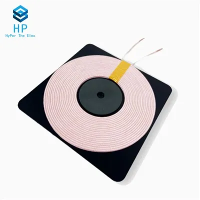
First, let's quick reset for anyone new here: resonant coils are those specialized electromagnetic loopers that sync up their inductance with grid frequency to make power transfer way more efficient, right? We've got a whole line of them over at our site, including standard fixed-inductance options, but resonant coils are the wild cards here. If you need a refresher on how these differ from other coil types, check out our Antenna Coil, Oscillating Coil, Choke Coil, or Trap Coil pages-each serves a specific niche, but resonant coils are built for that exact frequency-tweaking grid work.
Now, onto the problems. Let's start with the big one: frequency sensitivity. The grid is stubborn about keeping its frequency locked at 50 or 60 Hz (depending on where you are-shoutout to our 50Hz EU and 60Hz US clients). Resonant coils only work their magic when they're perfectly tuned to that specific frequency. The second the grid drifts? And yes, it does drift-especially when you add a bunch of variable renewables kicking in or out? Those coils go from efficiency heroes to useless dead weight. I once worked with a solar farm in Arizona that had a string of resonant coils installed to cut voltage drop on a 100-mile line. One day, a cloud covered the entire array for 20 minutes, and the grid frequency dipped just 0.2 Hz. The coils went completely off-resonance, and the line lost 15% of its power capacity. We had to send a tech out to adjust them manually-something that shouldn't need to happen that often. The worst part? Modern grids are getting way more variable with all the distributed energy resources (DERs) popping up. So static tuning? It's a band-aid, not a solution.
Next up: harmonic distortion. Harmonics are those weird, unwanted frequency multiples of the grid's base frequency, kind of like a off-key note in a choir. Resonant coils are designed to resonate at the grid's main frequency, which means they can actually amplify harmonics if those harmonics line up with their secondary resonant frequencies. Let's make this real: a wind farm in the Midwest we partnered with had a major issue a few years back. The wind turbines were already generating higher harmonics because of their variable-speed drives, and the resonant coils we sold to boost power transfer on their interconnection line ended up amplifying a 3rd-order harmonic by 22%. That caused voltage spikes at the substation, which fried a handful of smart meters and tripped out a local factory's equipment. We had to rework the coil designs to add harmonic filters-adding 30% to the project cost and delaying their timeline by two months. Here's the thing: harmonics aren't going away. DERs, inverters, even EV chargers all pump them into the grid. So building resonant coils that don't play nice with these is a recipe for headaches.
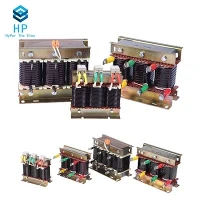
Then there's the physical size and grid integration mess. Resonant coils aren't small. We're talking big, bulky units that take up the space of two parked cars each, and they need heavy-duty insulation and cooling systems because they get hot when they're operating at resonance. Let's say a utility company wants to install them on an existing substation-most substations were built in the 70s or 80s, with zero space for a whole bank of these coils. I had a conversation with a transmission engineer in Texas last year who said they wanted to add resonant coils to their 345kV line, but the substation's land was already used for transformers and switchgear. They ended up having to buy an extra 2 acres of land nearby just to fit the coils, which added $2.1 million to their project. And it's not just space-they need specialized mounting to handle the magnetic fields, which can interfere with other grid equipment. We once had a client complain that the magnetic field from the resonant coils was messing with their adjacent SCADA (supervisory control and data acquisition) system, so they had to add extra shielding. That's another cost and hassle no one budgets for when they first look at resonant coils.
Another challenge: reliability and maintenance. These coils are constantly under stress-carrying high currents, dealing with temperature swings from -20°F in the winter to 100°F in the summer, and that whole frequency sensitivity thing we talked about. So they need regular checks. Not just the once-a-year maintenance you do on a transformer-more like monthly tests to make sure their inductance is still calibrated right, their insulation isn't breaking down, and their cooling systems are working. A regional grid operator in the Northeast told us they had to replace a resonant coil every 7 years, compared to a transformer that lasts 25 years. That means more downtime, more emergency repairs, and higher long-term costs. Last year, one of their coils failed unexpectedly during a peak summer heatwave, causing a 3-hour outage for 12,000 customers. The techs had to drive 4 hours to get the replacement coil, because shipping large, custom resonant coils takes forever.
Wait, let's not forget about grid stability risks. This is a big one that's not talked about enough. When you add resonant coils to a grid, you're changing its impedance-basically, how much the grid resists the flow of electricity. If you tune the coils wrong, you can create what's called a "resonance condition" in the entire grid system. I worked with a group of researchers at a university a few years back who modeled a grid with 10 resonant coils installed. They found that if even one coil was off by 5%, it could cause voltage oscillations that spread across a 500-mile grid area. That's a huge stability risk-oscillations can lead to blackouts, especially in grids that are already stressed from adding renewables. The utilities don't just have to worry about their local system; they have to run massive simulations to make sure adding these coils won't cause a system-wide meltdown. That's extra time and money spent on modeling and testing before you even break ground.


Okay, so with all these challenges, is there any upside? Hell yeah-resonant coils are a game-changer when they work right. They cut power loss on long-distance lines by up to 40%, which is huge for getting wind and solar from rural areas to cities. They also help with voltage regulation, which is key as more EVs and heat pumps come online. But here's the thing: you can't just slap a resonant coil on a grid and expect it to work. You have to do your homework, design them for the specific grid conditions, and plan for the maintenance and integration headaches.
For us, as a resonant coil supplier, that means we're not just selling a product-we're selling a whole package. We help clients run frequency analysis, model their grid to check for stability, customize coil designs to reduce harmonic risk, and even handle the installation support. We're always updating our products to be more flexible, with digital tuning capabilities that adjust in real-time to grid frequency changes. If you're a grid engineer or utility manager looking to work with resonant coils, we can help you navigate all these challenges-no jargon, no sales fluff, just real solutions. Want to chat through your specific project, whether it's a renewable interconnection or a transmission line upgrade? Reach out to us to discuss your needs, and we'll walk you through the options.