


Hey there, fellow electronics enthusiasts! As a supplier of Trap Coils, I often get asked about the differences between trap coils and normal coils. It's a great question, and I'm excited to break it down for you in this blog post.
Let's start with the basics. A coil, in the simplest terms, is a length of wire wound around a core. It's a fundamental component in electronics, used in all sorts of applications. But when we talk about "normal coils," we're usually referring to things like Choke Coil or Oscillating Coil. These coils have their own unique functions and characteristics.
Choke coils, for example, are mainly used to block high-frequency alternating current (AC) while allowing direct current (DC) or low-frequency AC to pass through. They're like traffic cops for electrical signals, controlling the flow based on frequency. You'll often find them in power supplies to filter out unwanted high-frequency noise.
On the other hand, oscillating coils are used to create or sustain oscillations in a circuit. They play a crucial role in things like radio transmitters and receivers, where they help generate the specific frequencies needed for communication.
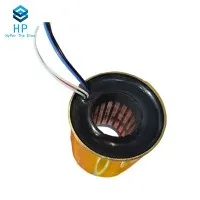
Now, let's dive into what makes a Trap Coil different. A trap coil is designed to block a specific frequency or a narrow range of frequencies. It acts like a trap, hence the name, catching those unwanted frequencies and preventing them from passing through the circuit.
One of the key differences between a trap coil and a normal coil lies in their design. Trap coils are often tuned to a particular frequency, which means they have a very specific inductance value. This tuning allows them to be highly selective in blocking only the frequencies they're designed for. Normal coils, on the other hand, might have a more general-purpose design and a broader range of applications.
In terms of construction, trap coils can be a bit more complex. They might use special materials or winding techniques to achieve the precise tuning required. Sometimes, they're also part of a resonant circuit, which helps enhance their ability to trap specific frequencies.
Let's look at an example to illustrate the difference. Suppose you're working on a radio receiver. You want to receive a particular radio station at a specific frequency, but there are other nearby stations causing interference. A normal coil might help filter out some general noise, but it won't do a great job of specifically targeting those interfering frequencies. A trap coil, on the other hand, can be tuned to the frequencies of the interfering stations and block them, allowing you to get a clearer signal from your desired station.
Another difference is in their applications. While normal coils are used in a wide variety of electronics for basic functions like filtering or oscillation, trap coils are often used in more specialized applications. For instance, in radio frequency (RF) circuits, trap coils are essential for preventing interference between different channels. They're also used in some audio systems to eliminate unwanted frequencies that could cause distortion or feedback.
When it comes to performance, trap coils offer a higher level of frequency selectivity. This means they can more precisely block the specific frequencies you don't want, while normal coils might have a more general effect on a range of frequencies. The trade-off is that trap coils are usually more expensive to produce because of their specialized design and tuning requirements.


If you're in the market for trap coils, it's important to understand your specific needs. You need to know the frequency or frequencies you want to block, as well as the overall requirements of your circuit. That's where we come in as a trap coil supplier. We have the expertise and the manufacturing capabilities to produce high-quality trap coils tailored to your exact specifications.
Whether you're working on a small DIY project or a large-scale industrial application, we can provide you with the right trap coils. Our team of engineers is always on hand to offer technical support and advice. We understand that every project is unique, and we're committed to helping you find the best solution for your needs.
So, if you're interested in learning more about our trap coils or are ready to start a procurement process, don't hesitate to reach out. We're eager to have a discussion with you and see how we can help you with your coil requirements.
In conclusion, while normal coils are great all-rounders in the electronics world, trap coils offer a specialized solution for dealing with specific frequency issues. Their unique design and high level of frequency selectivity make them indispensable in many advanced electronic applications. And as a dedicated trap coil supplier, we're here to make sure you have access to the best products and support in the industry.
References
- Boylestad, R. L., & Nashelsky, L. (2019). Electronic Devices and Circuit Theory. Pearson.
- Horowitz, P., & Hill, W. (2015). The Art of Electronics. Cambridge University Press.