


As an inductor supplier with years of experience in the industry, I often encounter customers who are confused about the differences between air - core and iron - core inductors. In this blog post, I'll delve into the key disparities between these two types of inductors, which will help you make informed decisions when choosing the right one for your specific applications.
Physical Structure and Composition
The most obvious difference between air - core and iron - core inductors lies in their physical structure and the materials they are made of.
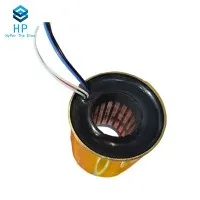
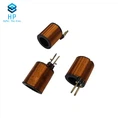
An air - core inductor, as the name suggests, has a core made of air or some non - magnetic material such as plastic, ceramic, or fiber. The coil of wire is wound around a non - magnetic form, which means there is no magnetic material to enhance the magnetic field produced by the current flowing through the coil. The magnetic field is mainly generated by the current in the wire itself.
On the other hand, an iron - core inductor uses a magnetic core, typically made of iron or an iron - based alloy. The coil of wire is wound around this magnetic core. The iron core has high magnetic permeability, which means it can greatly enhance the magnetic field generated by the current in the coil. This is because the magnetic domains in the iron core align with the magnetic field produced by the current, amplifying the overall magnetic field.
Inductance Value
Inductance is a measure of an inductor's ability to store energy in a magnetic field when a current flows through it. The inductance value is a crucial parameter in many electrical and electronic applications.
Air - core inductors generally have lower inductance values compared to iron - core inductors. Since there is no magnetic core to enhance the magnetic field, the inductance of an air - core inductor mainly depends on the number of turns of the coil, the cross - sectional area of the coil, and the length of the coil. For a given coil geometry, the inductance is relatively limited.
Iron - core inductors, due to the high magnetic permeability of the iron core, can achieve much higher inductance values with the same number of turns and coil geometry. The iron core effectively concentrates and amplifies the magnetic field, allowing for a significant increase in inductance. This makes iron - core inductors suitable for applications where high inductance is required, such as power transformers and some types of filters.
Frequency Response
The frequency response of an inductor refers to how its inductance and other electrical properties change with the frequency of the applied current.
Air - core inductors have a relatively flat frequency response over a wide range of frequencies. Since there is no magnetic core with its associated losses and nonlinearities, the inductance of an air - core inductor remains relatively constant with frequency. This makes air - core inductors ideal for high - frequency applications, such as radio frequency (RF) circuits, where a stable inductance value is crucial for proper circuit operation.
Iron - core inductors, however, have a more complex frequency response. At low frequencies, the high magnetic permeability of the iron core allows for high inductance values. But as the frequency increases, several factors come into play. Eddy currents are induced in the iron core, which cause power losses and can reduce the effective inductance. Additionally, the magnetic properties of the iron core may become nonlinear at high frequencies, leading to distortion in the signal. Therefore, iron - core inductors are more commonly used in low - to medium - frequency applications, such as power supplies and audio circuits.
Saturation Characteristics
Saturation is a phenomenon that occurs when the magnetic core of an inductor reaches its maximum magnetic flux density. Once the core is saturated, further increases in the current flowing through the coil do not result in a proportional increase in the magnetic field.
Air - core inductors do not suffer from saturation because there is no magnetic core. The magnetic field is solely determined by the current in the coil, and there is no limit to the magnetic field that can be generated by increasing the current (within the limits of the wire's current - carrying capacity). This makes air - core inductors suitable for applications where high - current or large - signal operation is required, such as in some high - power RF amplifiers.
Iron - core inductors are prone to saturation. When the current through the coil reaches a certain level, the magnetic domains in the iron core become fully aligned, and the core saturates. Once saturated, the inductance of the inductor drops significantly, which can lead to increased current and potential damage to the circuit. Designers need to carefully consider the saturation characteristics of iron - core inductors and ensure that the operating current does not exceed the saturation limit.
Size and Weight
Size and weight are important considerations, especially in applications where space and weight are restricted.
Air - core inductors are generally smaller and lighter than iron - core inductors. Since there is no heavy magnetic core, the overall mass of the inductor is reduced. Also, because air - core inductors typically have lower inductance values for a given size, they can be made more compact. This makes them suitable for applications where miniaturization is a priority, such as in portable electronic devices.
Iron - core inductors are larger and heavier due to the presence of the iron core. The iron core adds significant mass and volume to the inductor. However, their ability to achieve high inductance values in a relatively small number of turns can sometimes offset the size disadvantage in applications where high inductance is essential.
Losses
Losses in an inductor can occur in several forms, including resistive losses in the wire (also known as copper losses) and magnetic losses in the core (if present).
In air - core inductors, the main losses are resistive losses in the wire. The resistance of the wire causes power to be dissipated as heat when current flows through it. Since there is no magnetic core, there are no magnetic losses such as eddy current losses or hysteresis losses. This makes air - core inductors more efficient in high - frequency applications where minimizing losses is crucial.
Iron - core inductors have both resistive losses in the wire and magnetic losses in the core. Eddy current losses occur due to the induction of circulating currents in the iron core, which dissipate energy as heat. Hysteresis losses are caused by the energy required to reverse the magnetization of the iron core as the current changes direction. These magnetic losses can significantly reduce the efficiency of iron - core inductors, especially at high frequencies.
Applications
The differences in the characteristics of air - core and iron - core inductors make them suitable for different applications.
Air - core inductors are commonly used in high - frequency applications such as radio frequency (RF) circuits, including RF filters, oscillators, and antennas. Their stable frequency response and lack of saturation make them ideal for these applications. They are also used in some high - power RF amplifiers where high - current operation is required.
Iron - core inductors are widely used in low - to medium - frequency applications. They are a key component in power supplies, where they are used for filtering and energy storage. They are also used in audio circuits, such as in audio transformers and filters, to provide the necessary inductance for proper signal processing.
Conclusion
In summary, air - core and iron - core inductors have distinct differences in their physical structure, inductance value, frequency response, saturation characteristics, size, weight, losses, and applications. Understanding these differences is essential for selecting the right inductor for your specific needs.
As an inductor supplier, we offer a wide range of air - core and iron - core inductors to meet the diverse requirements of our customers. Whether you need high - frequency air - core inductors for your RF circuits or low - frequency iron - core inductors for your power supplies, we have the expertise and products to provide you with the best solutions.
If you are in the market for inductors and need further information or have specific requirements, we encourage you to contact us for a detailed discussion. Our team of experts is ready to assist you in choosing the most suitable inductors for your applications and to support you throughout the procurement process.
References
- Grob, Bernard. "Introduction to Electronics." McGraw - Hill, 2001.
- Boylestad, Robert L., and Nashelsky, Louis. "Electronic Devices and Circuit Theory." Pearson, 2018.
- Hayt, William H., and Kemmerly, Jack E. "Engineering Circuit Analysis." McGraw - Hill, 2012.