


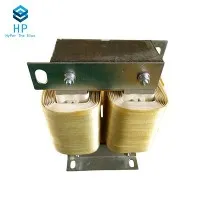

The inductance value of a filter inductor is a critical parameter that significantly influences its performance in various electrical and electronic applications. As a leading supplier of filter inductors, we understand the importance of this parameter and its implications for our customers. In this blog post, we will delve into the concept of inductance value, its significance, how it is determined, and its impact on the functionality of filter inductors.
Understanding Inductance
Inductance is a fundamental property of an electrical conductor, specifically a coil, that opposes changes in the electric current flowing through it. It is measured in henries (H), named after the American scientist Joseph Henry. When an electric current passes through a coil, it generates a magnetic field around the coil. The strength of this magnetic field is proportional to the current flowing through the coil. According to Faraday's law of electromagnetic induction, a changing magnetic field induces an electromotive force (EMF) in the coil, which opposes the change in current. This opposition to the change in current is what we refer to as inductance.


Mathematically, the inductance (L) of a coil is defined as the ratio of the induced EMF (ε) to the rate of change of current (di/dt) in the coil:
[L = \frac{\epsilon}{\frac{di}{dt}}]
Significance of Inductance Value in Filter Inductors
Filter inductors are essential components in power supplies, audio systems, and other electronic circuits. Their primary function is to filter out unwanted frequencies and provide a clean, stable output. The inductance value of a filter inductor plays a crucial role in determining its filtering capabilities.
- Frequency Response: The inductance value determines the frequency at which the inductor will start to impede the flow of current. A higher inductance value will have a lower cut - off frequency, meaning it will be more effective at filtering out low - frequency noise. Conversely, a lower inductance value will have a higher cut - off frequency and will be better suited for filtering high - frequency noise.
- Current Handling Capacity: The inductance value also affects the current handling capacity of the inductor. Higher inductance values typically require larger coils with more turns of wire, which can handle higher currents. However, this also increases the resistance of the coil, leading to higher power losses.
- Size and Cost: The inductance value is directly related to the physical size of the inductor. Higher inductance values generally require larger inductors, which can be more expensive to manufacture. Therefore, it is essential to select the appropriate inductance value based on the specific requirements of the application to balance performance, size, and cost.
Determining the Inductance Value
There are several factors to consider when determining the appropriate inductance value for a filter inductor:
- Application Requirements: The first step is to understand the specific requirements of the application. For example, in a power supply filter, the inductance value will depend on the input and output voltages, the load current, and the desired level of ripple reduction. In an audio system, the inductance value will be determined by the frequency range of the audio signal and the level of noise suppression required.
- Inductor Design: The physical design of the inductor, including the number of turns, the core material, and the cross - sectional area of the coil, also affects the inductance value. Increasing the number of turns or using a core material with a higher permeability will increase the inductance value.
- Manufacturing Tolerances: It is important to note that the actual inductance value of a manufactured inductor may deviate from the nominal value due to manufacturing tolerances. These tolerances can range from a few percent to several tens of percent, depending on the manufacturing process and the quality of the components.
Types of Filter Inductors and Their Inductance Values
There are several types of filter inductors, each with its own typical inductance values and applications:
- PFC Inductor: Power Factor Correction (PFC) inductors are used in power supplies to improve the power factor by reducing the harmonic content of the input current. PFC inductors typically have inductance values in the range of a few hundred microhenries to several millihenries.
- Coil Inductor: Coil inductors are simple inductors made of a single coil of wire. They are commonly used in low - power applications, such as radio frequency (RF) circuits and audio filters. Coil inductors can have inductance values ranging from a few nanohenries to several henries, depending on the number of turns and the size of the coil.
- BUCK Inductor: Buck inductors are used in buck converters, which are DC - DC power converters that step down the input voltage. The inductance value of a buck inductor is determined by the input and output voltages, the switching frequency, and the load current. Buck inductors typically have inductance values in the range of a few microhenries to several hundred microhenries.
Selecting the Right Inductance Value for Your Application
Selecting the right inductance value for your application is crucial to ensure optimal performance. Here are some steps to help you make the right choice:
- Define Your Requirements: Clearly define the requirements of your application, including the input and output voltages, the load current, the frequency range, and the desired level of filtering.
- Research and Compare: Research different types of filter inductors and compare their inductance values, current handling capacities, and other specifications. Consider factors such as size, cost, and reliability.
- Consult an Expert: If you are unsure about which inductance value to choose, consult with an experienced engineer or a technical support team. They can provide valuable insights and recommendations based on their expertise and experience.
Conclusion
The inductance value of a filter inductor is a critical parameter that determines its performance in various electrical and electronic applications. As a filter inductor supplier, we offer a wide range of inductors with different inductance values to meet the diverse needs of our customers. Whether you are looking for a PFC inductor, a coil inductor, or a BUCK inductor, we have the expertise and resources to provide you with the right solution.
If you are interested in purchasing filter inductors or have any questions about inductance values and their applications, please feel free to contact us. Our team of experts is ready to assist you in selecting the most suitable inductors for your specific requirements and guide you through the procurement process.
References
- Boylestad, R. L., & Nashelsky, L. (2013). Electronic Devices and Circuit Theory. Pearson.
- Sedra, A. S., & Smith, K. C. (2015). Microelectronic Circuits. Oxford University Press.