



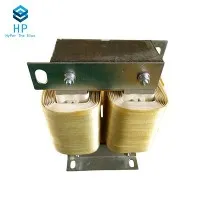

An output reactor, also known as a motor reactor or load reactor, is an essential component in electrical systems, especially those involving variable frequency drives (VFDs) and motors. As a leading supplier of output reactors, I have witnessed firsthand the significant influence these devices have on motor operation. In this blog post, I will delve into the various aspects of how an output reactor affects motor operation, exploring both the positive impacts and potential considerations.
Reducing Voltage Spikes and Transients
One of the primary functions of an output reactor is to reduce voltage spikes and transients that can occur in a motor circuit. When a VFD switches the voltage to the motor, it can generate high - frequency voltage spikes. These spikes can cause insulation breakdown in the motor windings over time, leading to premature motor failure. An output reactor acts as a buffer, smoothing out the voltage waveform and reducing the magnitude of these spikes.
The reactor's inductance opposes changes in current, which helps to limit the rate of rise of the voltage. By doing so, it protects the motor from the harmful effects of voltage surges. This is particularly important in applications where the motor is located far from the VFD, as the long cable runs can exacerbate the voltage spike problem. With an output reactor in place, the motor can operate more reliably, and its lifespan can be significantly extended.
Improving Power Factor
Another significant influence of an output reactor on motor operation is its ability to improve the power factor. The power factor is a measure of how effectively electrical power is being used in a circuit. A low power factor can result in increased energy consumption and higher electricity bills.
In a motor circuit with a VFD, the non - linear nature of the drive can cause a poor power factor. The output reactor helps to correct this by introducing inductive reactance into the circuit. This inductive reactance counteracts the capacitive effects of the motor and the cable, bringing the power factor closer to unity. As a result, the motor can draw less reactive power from the supply, leading to more efficient energy usage and cost savings.
Mitigating Cable and Motor Heating
High - frequency currents generated by VFDs can cause excessive heating in both the motor and the cables. These high - frequency currents can create skin and proximity effects, which increase the effective resistance of the conductors and lead to additional power losses in the form of heat.
An output reactor can help to mitigate this problem by reducing the high - frequency components of the current. By filtering out these unwanted frequencies, the reactor reduces the power losses in the cables and the motor. This not only helps to keep the temperature of the motor and cables within safe limits but also improves the overall efficiency of the system.
Enhancing Motor Performance and Torque
Output reactors can also have a positive impact on motor performance and torque. By smoothing out the voltage and current waveforms, the reactor ensures that the motor receives a more stable and consistent power supply. This results in smoother motor operation, reduced vibration, and improved torque characteristics.


In some applications, such as those requiring high - precision speed control or rapid acceleration and deceleration, the improved motor performance provided by an output reactor can be crucial. The reactor helps to maintain the motor's speed and torque stability, even under varying load conditions, leading to better overall system performance.
Potential Considerations
While output reactors offer many benefits, there are also some potential considerations to keep in mind. One of the main drawbacks is the additional cost. Output reactors can be relatively expensive, especially for larger motor applications. However, it is important to weigh this cost against the potential savings in terms of reduced motor maintenance and energy consumption.
Another consideration is the physical size of the output reactor. Depending on the application, the reactor may require a significant amount of space. This can be a challenge in installations where space is limited. Additionally, the reactor may introduce some voltage drop in the circuit, which needs to be carefully considered to ensure that the motor receives an adequate supply voltage.
Types of Reactors Related to Output Reactors
There are several types of reactors that are related to output reactors and can be used in conjunction with them or in similar applications. For example, the Saturated Reactor is a type of reactor whose inductance varies with the current flowing through it. It can be used for power factor correction and voltage regulation. The Series Resonant Reactor is used in series resonant circuits to control the flow of current and protect the system from over - currents. The Variable Reactor allows for adjustable inductance, which can be useful in applications where the electrical characteristics of the system need to be fine - tuned.
Conclusion
In conclusion, an output reactor has a profound influence on motor operation. It provides numerous benefits, including reducing voltage spikes and transients, improving power factor, mitigating cable and motor heating, and enhancing motor performance and torque. While there are some potential considerations, such as cost and physical size, the advantages of using an output reactor often outweigh the drawbacks.
As a supplier of output reactors, I am committed to providing high - quality products that meet the diverse needs of our customers. If you are considering the use of an output reactor in your motor application or have any questions about our products, I encourage you to contact us for a detailed discussion. Our team of experts is ready to assist you in selecting the right output reactor for your specific requirements and to guide you through the procurement process.
References
- Fitzgerald, A. E., Kingsley, C., & Umans, S. D. (2003). Electric Machinery. McGraw - Hill.
- Chapman, S. J. (2012). Electric Machinery Fundamentals. McGraw - Hill.
- Mohan, N., Undeland, T. M., & Robbins, W. P. (2012). Power Electronics: Converters, Applications, and Design. Wiley.