


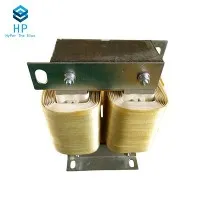

Hey there! As a supplier of Output Reactors, I often get asked about the insulation class of these important electrical components. So, let's dive right in and explore what the insulation class of an Output Reactor really means.
First off, what's an Output Reactor? Well, an Output Reactor is a type of inductor that's used in electrical systems, mainly in variable frequency drives (VFDs). It helps to smooth out the current and voltage waveforms, reduce electromagnetic interference (EMI), and protect the motor from voltage spikes. In simple terms, it's like a shield for your motor, making sure it runs smoothly and safely.
Now, let's talk about insulation. Insulation in an Output Reactor is super important. It's what keeps the electrical current flowing where it's supposed to and prevents it from leaking out and causing problems. The insulation class of an Output Reactor is a rating that tells you how well the insulation can handle heat. You see, when an Output Reactor is in use, it generates heat due to the electrical current passing through it. If the insulation can't handle the heat, it can break down, which can lead to all sorts of issues like short - circuits and equipment failure.
There are several standard insulation classes, and each one has a specific temperature limit. The most common insulation classes for Output Reactors are Class A, Class E, Class B, Class F, and Class H.
Class A insulation has a maximum temperature limit of 105°C. It's one of the older insulation classes and is not as commonly used in modern Output Reactors. The materials used in Class A insulation are usually organic materials like cotton, silk, and paper that have been impregnated with varnish or another insulating compound.
Class E insulation can handle temperatures up to 120°C. It offers better heat resistance than Class A and is often used in applications where the operating temperature is a bit higher. The materials in Class E insulation are a step up from Class A, with a combination of inorganic and organic materials that can withstand the increased heat.
Class B insulation has a maximum temperature rating of 130°C. It's a popular choice for many Output Reactor applications. The insulation materials in Class B are typically mica, glass fiber, and asbestos (although asbestos use has been phased out in many regions due to health concerns), along with suitable bonding substances. This class provides a good balance between cost and performance, as it can handle moderately high temperatures without being overly expensive.
Class F insulation can handle temperatures up to 155°C. It's used in more demanding applications where the Output Reactor is likely to generate a significant amount of heat. The materials used in Class F insulation are high - quality inorganic materials with special bonding agents that can withstand the high - temperature environment.
Class H insulation is the heavy - hitter. It has a maximum temperature limit of 180°C. This class is used in extreme applications where the Output Reactor is exposed to very high temperatures for extended periods. The insulation materials in Class H are often made of silicone resins and other high - temperature - resistant compounds.
So, how do you choose the right insulation class for your Output Reactor? Well, it depends on a few factors. First, you need to consider the operating environment. If the reactor is going to be used in a hot climate or in an area with poor ventilation, you'll need a higher insulation class. For example, if the ambient temperature in the location where the Output Reactor will be installed is already high, say around 40 - 50°C, you'll need an insulation class that can handle the additional heat generated by the reactor itself.
Another factor is the load on the Output Reactor. If the reactor is going to be operating at a high load for long periods, it will generate more heat. In this case, a higher insulation class like Class F or Class H would be a better choice. On the other hand, if the load is relatively light and the operating conditions are not too harsh, a lower insulation class like Class B might be sufficient.
It's also important to think about the long - term reliability of your system. Choosing a higher insulation class than you strictly need can add some extra protection and extend the lifespan of your Output Reactor. It's like buying a little bit of insurance for your electrical system.


Now, let's touch on a couple of related types of reactors. There are Parallel Resonant Reactors and Series Resonant Reactors. While they have different functions compared to Output Reactors, they also have insulation requirements.
Parallel Resonant Reactors are used in power systems to improve power factor and reduce harmonic distortion. They work by creating a parallel resonant circuit with the system capacitance. Just like Output Reactors, the insulation class of a Parallel Resonant Reactor is crucial for its proper operation and longevity.
Series Resonant Reactors, on the other hand, are used to limit the short - circuit current in a power system. They are connected in series with the load. The insulation class of a Series Resonant Reactor needs to be carefully selected based on the operating conditions and the expected heat generation.
As a supplier of Output Reactors, I've seen firsthand the importance of choosing the right insulation class. We offer a wide range of Output Reactors with different insulation classes to meet the diverse needs of our customers. Whether you're running a small - scale industrial operation or a large - scale power plant, we can help you find the perfect Output Reactor with the appropriate insulation class for your application.
If you're in the market for an Output Reactor or have any questions about insulation classes, don't hesitate to get in touch. We're here to help you make the right choice and ensure that your electrical system runs smoothly and efficiently. Whether it's a simple consultation or a full - scale procurement, we're ready to assist you.
In conclusion, the insulation class of an Output Reactor is a critical factor that can't be overlooked. It directly impacts the performance, reliability, and lifespan of the reactor. By understanding the different insulation classes and how to choose the right one for your specific application, you can make an informed decision and get the most out of your Output Reactor.
References
- Electrical Engineering Handbook, various editions
- Standards and guidelines from relevant electrical industry organizations