


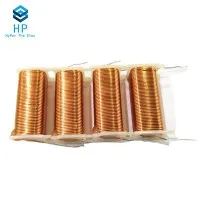

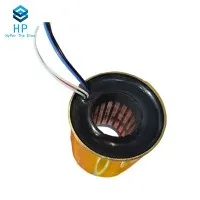

In the complex and demanding environment of railway power systems, the role of a filter inductor is both crucial and multifaceted. As a trusted supplier of Filter Inductor, I have witnessed firsthand how these components contribute to the efficient and reliable operation of railway power infrastructure.
The Basics of Filter Inductors in Railway Power Systems
To understand the role of a filter inductor, we first need to grasp the unique characteristics of railway power systems. These systems are subject to a wide range of electrical disturbances, including harmonics, voltage fluctuations, and electromagnetic interference (EMI). These issues can arise from various sources, such as the operation of traction motors, power converters, and other electrical equipment on trains and in railway substations.
A filter inductor is an essential component in the power filtering circuit. It works based on the principle of electromagnetic induction. When an alternating current (AC) passes through the inductor, it creates a magnetic field around the coil. According to Lenz's law, this magnetic field opposes the change in the current, which results in the inductor having the property of blocking high - frequency signals while allowing low - frequency or direct current (DC) to pass through relatively easily.
Harmonic Filtering
One of the primary roles of a filter inductor in a railway power system is harmonic filtering. Harmonics are unwanted frequencies that are integer multiples of the fundamental frequency (usually 50Hz or 60Hz in the power grid). In railway systems, power electronic devices such as converters used in traction drives generate a significant amount of harmonics.
These harmonics can have several detrimental effects. They can cause overheating of transformers, motors, and other electrical equipment, leading to reduced efficiency and shortened lifespan. Additionally, harmonics can interfere with communication systems and cause malfunctions in control circuits.


A filter inductor, when combined with capacitors in a passive filter circuit, can effectively attenuate these harmonic frequencies. By carefully selecting the inductance value and the capacitance value, the filter can be tuned to target specific harmonic frequencies. For example, a fifth - harmonic filter can be designed to reduce the fifth - harmonic component in the power system, which is a common harmonic generated by three - phase converters.
Voltage Regulation and Smoothing
In railway power systems, the voltage can fluctuate due to the varying load demands of trains. When a train accelerates, it draws a large amount of current from the power supply, which can cause a significant drop in the voltage. Conversely, when a train decelerates or is at rest, the voltage may rise.
Filter inductors play a vital role in voltage regulation and smoothing. In a DC power supply system, such as the one used in some subway or light rail systems, the inductor is used in conjunction with a capacitor to form a smoothing circuit. The inductor resists the rapid change in current, which helps to maintain a more stable voltage across the load. This is particularly important for sensitive electronic equipment on trains, such as control systems and communication devices, which require a stable power supply to operate correctly.
In an AC power system, the inductor can also be used in voltage regulation circuits. By adjusting the inductance in the circuit, the impedance of the system can be changed, which in turn affects the voltage distribution. This can help to compensate for voltage drops and ensure that the voltage at different points in the railway power network remains within acceptable limits.
Electromagnetic Interference (EMI) Suppression
Another critical role of a filter inductor is electromagnetic interference suppression. Railway power systems are rich in electromagnetic noise sources, including power switches in converters and high - speed motors. This electromagnetic noise can radiate into the surrounding environment and interfere with other electronic systems, such as radio communication systems on trains and in railway stations.
Filter inductors are used in EMI filters to block the high - frequency electromagnetic noise from entering or leaving the power system. In a differential - mode EMI filter, the inductor is connected in series with the power line. It blocks the high - frequency differential - mode noise, which is the noise that appears between the two conductors of a power line.
In a common - mode EMI filter, the inductor is designed to have a high impedance for common - mode noise, which is the noise that appears on both conductors with respect to the ground. By suppressing EMI, filter inductors help to ensure the reliable operation of other electronic systems in the railway environment and comply with electromagnetic compatibility (EMC) standards.
Different Types of Filter Inductors in Railway Power Systems
There are several types of filter inductors used in railway power systems, each with its own advantages and applications.
BUCK Inductor
A BUCK inductor is commonly used in buck converters, which are power electronic circuits that step down the voltage. In railway systems, buck converters are used in various applications, such as powering low - voltage auxiliary systems on trains. The BUCK inductor stores energy during the on - time of the switching transistor in the buck converter and releases it during the off - time. This process helps to convert the high - voltage input to a lower, regulated output voltage.
Toroidal Inductors
Toroidal inductors are known for their high magnetic efficiency and low electromagnetic radiation. The toroidal shape of the core allows for a more uniform magnetic field distribution, which reduces the leakage flux. In railway power systems, toroidal inductors are often used in high - performance filter circuits where space is limited and low EMI is required. They are also suitable for applications that require high inductance values in a relatively small volume.
Impact on System Reliability and Efficiency
The proper use of filter inductors has a significant impact on the reliability and efficiency of railway power systems. By reducing harmonics, suppressing EMI, and regulating voltage, filter inductors help to protect electrical equipment from damage and malfunction. This results in fewer breakdowns and maintenance requirements, which in turn reduces the overall operating costs of the railway system.
Moreover, the improved power quality provided by filter inductors leads to increased energy efficiency. When electrical equipment operates under a clean and stable power supply, it consumes less energy and has a higher power factor. This not only saves energy but also reduces the stress on the power grid.
Conclusion and Call to Action
In conclusion, filter inductors play a vital role in railway power systems, from harmonic filtering and voltage regulation to EMI suppression. As a supplier of high - quality Filter Inductor, we understand the unique requirements of railway power systems and are committed to providing the best solutions for our customers.
If you are involved in the design, operation, or maintenance of railway power systems and are looking for reliable filter inductors, we invite you to contact us for a detailed discussion. Our team of experts can help you select the most suitable filter inductors for your specific application and ensure that your railway power system operates at its best.
References
- Grover, F. W. (1946). Inductance Calculations: Working Formulas and Tables. Dover Publications.
- Chapman, S. J. (2012). Electric Machinery Fundamentals. McGraw - Hill Education.
- Brown, H. E., & Holmes, D. G. (2002). Power Quality Enhancement Using Custom Power Devices. John Wiley & Sons.