


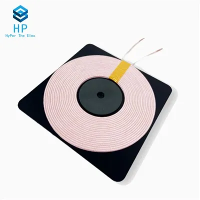
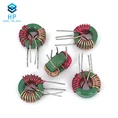

Hey there! As a supplier of Saturated Reactors, I'm super stoked to dive into the nitty - gritty of what these nifty devices do in a current - limiting circuit. So, let's get right into it!


First off, what the heck is a Saturated Reactor? Well, you can check out this Saturated Reactor link to get a more detailed lowdown. In a nutshell, a saturated reactor is an electromagnetic device that uses the magnetic saturation of its core to control the flow of electrical current. It's kind of like a traffic cop for electricity, deciding how much current gets to pass through and when.
Now, let's talk about current - limiting circuits. These circuits are crucial in electrical systems. They prevent excessive current from flowing through components, which can cause all sorts of problems like overheating, component failure, and even electrical fires. Think of them as the safety nets in the wild world of electricity.
So, where does the saturated reactor fit into all this? One of the main roles of a saturated reactor in a current - limiting circuit is to provide non - linear impedance. Unlike regular resistors or inductors that have a fixed impedance value, the impedance of a saturated reactor changes depending on the amount of current flowing through it. When the current is low, the reactor's core is in an unsaturated state, and it has a relatively high impedance. This high impedance restricts the flow of current, acting as a sort of speed bump for the electricity.
As the current starts to increase, the magnetic field in the core of the saturated reactor also increases. Once the magnetic field reaches a certain point, the core becomes saturated. In this saturated state, the impedance of the reactor drops significantly. This allows more current to flow through, but only up to a certain safe limit. It's like a valve that opens wider as the pressure (current) builds up, but it won't open so wide that it causes a flood.
Another cool thing about saturated reactors in current - limiting circuits is their ability to respond quickly to changes in current. When there's a sudden surge in current, the saturated reactor can rapidly change its impedance to limit the flow. This fast response time is essential in protecting sensitive electrical equipment from damage. For example, in power distribution systems, where short - circuits can occur in a split second, a saturated reactor can jump into action and prevent a potentially catastrophic overload.
Let's compare the saturated reactor with other components commonly used in current - limiting circuits, like fuses and circuit breakers. Fuses are one - time use devices. Once they blow due to excessive current, they need to be replaced. Circuit breakers, on the other hand, can be reset after they trip, but they have a relatively slow response time compared to saturated reactors. Saturated reactors offer a more dynamic and reusable solution. They can handle multiple current surges without needing to be replaced, and they can react much faster to protect the system.
Now, if you're thinking about the practical applications of saturated reactors in current - limiting circuits, there are plenty. In industrial power systems, they're used to protect motors, transformers, and other heavy - duty equipment. Motors, in particular, can draw large inrush currents when they start up. A saturated reactor can limit these inrush currents, preventing damage to the motor windings and the electrical supply system.
In renewable energy systems, like solar and wind power plants, saturated reactors are also used in current - limiting circuits. These systems often have variable power outputs, and sudden changes in power can lead to current surges. The saturated reactor helps to stabilize the current flow and protect the inverters and other power - conditioning equipment.
If you're into electronics, you might have seen saturated reactors used in some high - end audio amplifiers. In these amplifiers, current - limiting is crucial to ensure clean and distortion - free sound. The saturated reactor can control the current flow to the amplifier's output stage, preventing overheating and maintaining the quality of the audio signal.
There are also some other types of reactors that you might come across in current - limiting circuits, like Output Reactor and Parallel Resonant Reactor. Output reactors are typically used to protect the output of frequency converters and to improve the quality of the output waveform. Parallel resonant reactors, on the other hand, are used to create a resonant circuit that can selectively filter out certain frequencies and limit the current at those frequencies.
As a supplier of saturated reactors, I know how important it is to choose the right one for your specific application. There are several factors to consider, such as the rated current, the maximum allowable current surge, the operating temperature range, and the size and weight of the reactor. Our team of experts can help you select the perfect saturated reactor for your current - limiting circuit needs.
We offer a wide range of saturated reactors with different specifications and features. Whether you're working on a small - scale electronic project or a large - scale industrial power system, we've got you covered. Our reactors are made with high - quality materials and state - of - the - art manufacturing processes to ensure reliable and long - lasting performance.
If you're interested in learning more about our saturated reactors or if you have a project that requires current - limiting solutions, don't hesitate to reach out. We're always happy to have a chat and discuss how our products can meet your requirements. Whether it's for a new installation or an upgrade to an existing system, we can provide you with the best - in - class saturated reactors and excellent customer service.
In conclusion, the role of a saturated reactor in a current - limiting circuit is vital. It provides non - linear impedance, responds quickly to current changes, and helps protect electrical equipment from damage. With its unique properties and capabilities, it's a key component in many electrical systems. So, if you're in the market for a reliable current - limiting solution, give our saturated reactors a look.
References:
- Electrical Engineering Handbook, Third Edition
- Power System Analysis and Design, Fifth Edition