


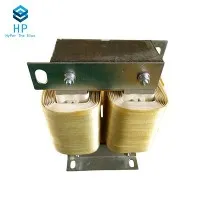

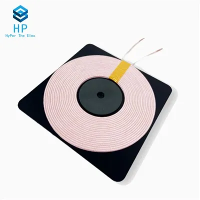

In the industrial and electronic fields, the utilization of solenoid coils is widespread, serving a variety of purposes from simple switching mechanisms to complex automation tasks. As a trusted [Your company role: AC Solenoid Coil supplier], we often encounter inquiries regarding the suitability of AC solenoid coils for high - power applications. This blog aims to delve into this question, exploring the capabilities, limitations, and considerations when using AC solenoid coils in high - power scenarios.
Understanding AC Solenoid Coils
An AC solenoid coil operates on the principle of electromagnetic induction. When an alternating current (AC) is passed through the coil, it generates a continuously changing magnetic field. This magnetic field can then be used to induce mechanical motion, such as pulling or pushing a plunger, which makes solenoid coils useful for valves, relays, and various actuating devices.


Key Features of AC Solenoid Coils
- Simple Design: AC solenoid coils generally have a straightforward structure consisting of a wire wound around a core, often made of iron or ferrite. This simplicity makes them cost - effective and easy to manufacture.
- Self - Starting: Unlike some DC motors that may require additional starting mechanisms, AC solenoid coils start operating immediately when an AC voltage is applied, which is an advantage in quick - response applications.
Different Types of AC Solenoid Coils
There are several types of AC solenoid coils, each with its own characteristics. For instance, the Encapsulated Coil is sealed in a protective enclosure, which provides better resistance to environmental factors such as dust, moisture, and chemicals. On the other hand, the Hollow Coil has no central core, which reduces its weight and inductance, making it suitable for high - frequency applications.
High - Power Applications and Their Requirements
High - power applications typically demand a significant amount of electrical energy to operate properly. Some common high - power applications include large - scale industrial machinery, high - capacity valves for fluid control, and heavy - duty electromagnetic actuators.
Power Requirements
In high - power applications, the solenoid coil must be able to handle a large amount of current and voltage. For example, industrial machines may require solenoids that can operate at hundreds of volts and draw several amperes of current. This calls for coils with low resistance and high insulation capabilities to prevent overheating and electrical breakdown.
Thermal Management
Power dissipation in a solenoid coil is directly related to the current flowing through it. In high - power applications, the heat generated can be substantial. Effective thermal management is crucial to ensure the longevity and reliability of the solenoid coil. This may involve using heat - conducting materials, adding cooling fins, or implementing a cooling system.
Mechanical Strength
High - power solenoid actuators often need to generate strong mechanical forces. The coil and its associated components must be able to withstand the mechanical stress produced during operation. This requires the use of robust materials and proper construction methods.
Using AC Solenoid Coils in High - Power Applications
Advantages
- High Torque Output: AC solenoid coils can produce relatively high magnetic forces, which is beneficial for high - power applications where large mechanical movements or forces are required.
- Widespread Availability of Power Source: The AC power grid is widely accessible in industrial and commercial settings. Using an AC solenoid coil allows for easy integration with the existing power infrastructure without the need for complex power conversion systems.
Limitations
Eddy Current Losses
In AC solenoid coils, the alternating current induces eddy currents in the core material. These eddy currents generate additional heat, resulting in energy losses. In high - power applications, where the current is large, these losses can be significant and may reduce the overall efficiency of the system.
AC Ripple Effects
The alternating nature of the current in an AC solenoid coil can cause ripple in the magnetic field and the resulting mechanical force. This can lead to vibrations and noise in the system, which may be unacceptable in some high - precision high - power applications.
Temperature Rise
As mentioned earlier, high - power operation leads to increased heat generation. If the thermal management of the AC solenoid coil is not adequately addressed, the high temperature can lead to insulation breakdown, reduced magnetic performance, and even permanent damage to the coil.
Considerations for High - Power AC Solenoid Coil Applications
Coil Design Optimization
When designing an AC solenoid coil for high - power applications, the number of turns, wire gauge, and core material must be carefully selected. A larger wire gauge can reduce the resistance of the coil, allowing it to carry more current without excessive heating. Using a laminated core can help reduce eddy current losses.
Thermal Management Solutions
Implementing effective thermal management strategies is essential. This can include using heat - sink materials, improving the ventilation around the coil, or integrating a liquid - cooling system. For example, some high - power solenoids are immersed in a coolant bath to maintain a stable operating temperature.
Control and Protection Circuits
To ensure the safe and reliable operation of the AC solenoid coil in high - power applications, appropriate control and protection circuits should be installed. These circuits can monitor the current, voltage, and temperature of the coil and take corrective actions such as shutting off the power in case of an abnormal condition.
Conclusion
In summary, an AC solenoid coil can be used in high - power applications, but it comes with both advantages and limitations. The key lies in understanding the specific requirements of the application and addressing the potential challenges through proper design, thermal management, and control systems.
As an AC Solenoid Coil supplier, we have extensive experience in providing custom - designed solenoid coils for high - power applications. Our products are engineered to meet the highest standards of performance, reliability, and safety. If you are involved in a high - power project and are considering using AC solenoid coils, we invite you to contact us for a detailed consultation. Our team of experts will work closely with you to understand your needs and provide the most suitable solutions for your application.
References
- Johnson, R. P. (2018). Electromagnetic Devices and Their Applications. McGraw - Hill Education.
- Smith, A. B. (2020). Industrial Solenoid Technology: Principles and Design. Wiley Engineering.
- International Electrotechnical Commission (IEC) standards related to solenoid coils and electrical machinery.