


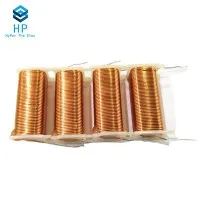


A flat wave reactor, also known as a smoothing reactor or a current - limiting reactor in some contexts, is an essential component in electrical systems. As a leading supplier of Flat Wave Reactor, I'm excited to share in - depth knowledge about how these remarkable devices work.
Basic Principles of Electrical Reactors
Before delving into the specifics of a flat wave reactor, it's crucial to understand the fundamental principles of electrical reactors. Reactors are passive electrical components that store energy in a magnetic field when an electric current flows through them. They are mainly characterized by their inductance, which is measured in henries (H).
The behavior of an inductor in an electrical circuit is governed by Faraday's law of electromagnetic induction. According to this law, when the current through an inductor changes, an electromotive force (EMF) is induced in the inductor. The induced EMF opposes the change in current, as stated by Lenz's law. This property of inductors makes them useful for various applications, such as filtering, current limiting, and power factor correction.
Structure of a Flat Wave Reactor
A flat wave reactor typically consists of a core and a winding. The core is usually made of a magnetic material, such as laminated steel. Laminated steel is used to reduce eddy current losses, which occur when a changing magnetic field induces circulating currents within the core material. The laminations are thin sheets of steel that are insulated from each other, effectively reducing the cross - sectional area available for eddy current flow.
The winding is made of a conductive material, usually copper or aluminum. The number of turns in the winding and the way it is wound around the core determine the inductance of the reactor. In a flat wave reactor, the winding is often designed in a flat or pancake - like shape, which gives the reactor its name. This flat design offers several advantages, including better heat dissipation and more compact packaging.
How a Flat Wave Reactor Works in a DC Circuit
In a DC circuit, a flat wave reactor is often used as a smoothing reactor. When a DC power supply is connected to a load, the output voltage may contain some ripple, which is an unwanted AC component. This ripple can be caused by the switching action of power electronic devices, such as rectifiers.
The flat wave reactor is connected in series with the load. When the current through the reactor changes, the inductor stores energy in its magnetic field. As the current tries to increase, the induced EMF in the reactor opposes the increase, and as the current tries to decrease, the induced EMF opposes the decrease. This results in a more stable current flow through the load, effectively reducing the ripple in the DC output.
Mathematically, the voltage across an inductor is given by (V = L\frac{di}{dt}), where (V) is the voltage across the inductor, (L) is the inductance, and (\frac{di}{dt}) is the rate of change of current. By choosing an appropriate inductance value, we can control the rate of change of current and thus smooth out the DC output.
How a Flat Wave Reactor Works in an AC Circuit
In an AC circuit, a flat wave reactor can be used as a current - limiting reactor. When there is a short - circuit or a sudden increase in current in an AC system, the reactor limits the rate of change of current. This is important because high - current surges can damage electrical equipment and cause power outages.
The impedance of an inductor in an AC circuit is given by (Z = j\omega L), where (Z) is the impedance, (\omega) is the angular frequency of the AC signal, and (L) is the inductance. As the frequency of the AC signal increases, the impedance of the inductor also increases. When a short - circuit occurs, the sudden increase in current causes a large induced EMF in the reactor, which limits the current flow.
Applications of Flat Wave Reactors
Flat wave reactors have a wide range of applications in various industries. In the power electronics industry, they are used in rectifiers, inverters, and DC - DC converters to smooth out the DC output and reduce current ripple. For example, in a solar power system, a flat wave reactor can be used in the DC - AC inverter to improve the quality of the power output.
In the electric vehicle (EV) industry, flat wave reactors are used in the charging systems. They help to limit the inrush current when the vehicle is being charged and also smooth out the DC current supplied to the battery. This protects the charging equipment and the battery from damage.
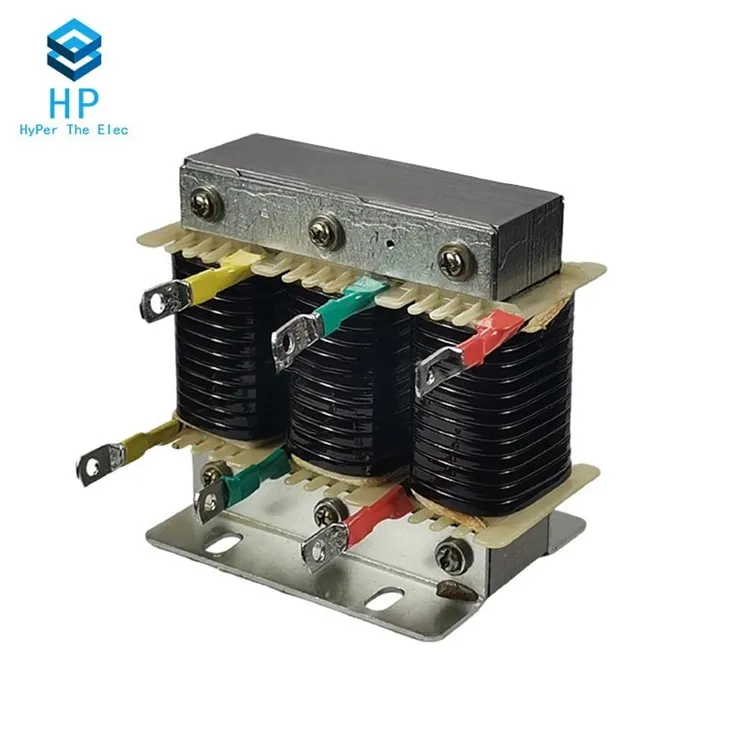

In industrial power systems, flat wave reactors are used for power factor correction. By adjusting the inductance of the reactor, the power factor of the system can be improved, which reduces the reactive power consumption and improves the overall efficiency of the system.
Comparison with Other Reactors
There are other types of reactors in the market, such as Balancing Reactor and Smoothing Reactor. While a flat wave reactor shares some similarities with these reactors, it also has its unique features.
A balancing reactor is mainly used to balance the currents in different phases of a multi - phase system. It ensures that the currents in each phase are equal, which is important for the proper operation of electrical equipment. A smoothing reactor, on the other hand, is focused on reducing the ripple in a DC or AC signal.
The flat wave reactor combines the advantages of both. Its flat design allows for better heat dissipation and more compact installation, while its inductive properties make it effective in smoothing out current and limiting current surges.
Maintenance and Safety Considerations
Proper maintenance of a flat wave reactor is essential to ensure its reliable operation. Regular inspection of the winding and the core is necessary to check for any signs of damage, such as overheating, insulation breakdown, or mechanical deformation.
The temperature of the reactor should be monitored during operation. Overheating can cause the insulation of the winding to degrade, which can lead to short - circuits and equipment failure. Adequate ventilation should be provided to dissipate the heat generated by the reactor.
Safety is also a crucial aspect when working with flat wave reactors. Since they can store a significant amount of energy in their magnetic fields, proper safety procedures should be followed when handling or servicing the reactors. For example, the power supply should be disconnected before any maintenance work is carried out.
Conclusion
In conclusion, a flat wave reactor is a versatile and important component in electrical systems. Its ability to smooth out current, limit current surges, and improve power quality makes it indispensable in various industries. As a supplier of flat wave reactors, we are committed to providing high - quality products that meet the diverse needs of our customers.
If you are interested in learning more about our flat wave reactors or are considering a purchase for your electrical system, we invite you to contact us for a detailed discussion. Our team of experts is ready to assist you in choosing the right reactor for your specific application and can provide you with all the technical support you need.
References
- Grover, F. W. (1946). Inductance Calculations: Working Formulas and Tables. Dover Publications.
- Chapman, S. J. (2012). Electric Machinery Fundamentals. McGraw - Hill.
- Nasar, S. A., & Unnewehr, L. E. (1993). Electromechanics and Electric Machines. Wiley.