


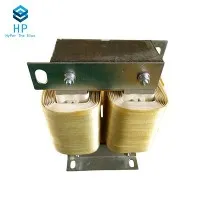



In the realm of low - voltage electrical systems, the role of reactors is pivotal in ensuring stability, efficiency, and proper functioning. Among these reactors, the Variable Reactor stands out as a versatile and highly effective component. As a supplier of Variable Reactors, I am excited to delve into how these remarkable devices perform in low - voltage systems.
Understanding the Basics of Variable Reactors
A Variable Reactor, as the name implies, is a type of reactor whose reactance can be adjusted. Unlike fixed - value reactors, which have a constant reactance, variable reactors offer the flexibility to adapt to different operating conditions. This adjustability is crucial in low - voltage systems where the electrical load and power quality requirements can vary significantly.
The fundamental principle behind a Variable Reactor is based on the control of magnetic flux. By altering the magnetic field within the reactor, the reactance can be changed. This is typically achieved through various control mechanisms such as thyristor control or magnetic saturation control.
In a low - voltage system, a Variable Reactor can be used in a wide range of applications. For example, it can be employed in power factor correction. In many industrial and commercial low - voltage systems, the power factor is often less than optimal due to the presence of inductive loads such as motors. A Variable Reactor can be adjusted to compensate for the reactive power, thereby improving the power factor. This not only reduces the energy consumption but also helps in avoiding penalties imposed by utility companies for poor power factor.
Performance in Power Quality Improvement
One of the key performance aspects of a Variable Reactor in a low - voltage system is its ability to improve power quality. Power quality issues such as voltage sags, swells, and harmonics can have a detrimental effect on the operation of electrical equipment.
Voltage regulation is an important aspect of power quality. In low - voltage distribution networks, the voltage can vary due to changes in load demand. A Variable Reactor can be used to adjust the reactive power flow in the system, which in turn helps in regulating the voltage. By increasing or decreasing the reactance of the Variable Reactor, the voltage at the load end can be maintained within acceptable limits.
Harmonics are another major concern in low - voltage systems. Non - linear loads such as computers, variable - speed drives, and lighting systems generate harmonics, which can cause overheating of equipment, interference with communication systems, and inaccurate metering. A Variable Reactor can be designed to filter out specific harmonics. By adjusting the reactance, the resonance frequency of the reactor - capacitor combination can be tuned to the frequency of the harmonic to be filtered. This effectively reduces the harmonic content in the system, improving the overall power quality.
Comparison with Other Types of Reactors in Low - Voltage Systems
To better understand the performance of a Variable Reactor, it is useful to compare it with other types of reactors commonly used in low - voltage systems, such as Series Resonant Reactor and Parallel Resonant Reactor.
A Series Resonant Reactor is connected in series with the load. It is mainly used for filtering harmonics and limiting inrush currents. However, its reactance is fixed, which means it may not be able to adapt to changing operating conditions. In contrast, a Variable Reactor can be adjusted to provide different levels of harmonic filtering and inrush current limitation depending on the actual requirements of the system.
A Parallel Resonant Reactor is connected in parallel with the load. It is often used for power factor correction and voltage support. While it can provide some degree of flexibility, a Variable Reactor offers more precise control. The ability to continuously adjust the reactance allows for better optimization of power factor and voltage regulation in low - voltage systems.
Efficiency and Energy Savings
In low - voltage systems, energy efficiency is a top priority. A Variable Reactor can contribute significantly to energy savings. By improving the power factor, the amount of reactive power in the system is reduced. This means that the electrical equipment can operate more efficiently, as less energy is wasted in the form of reactive power.
Moreover, the adjustable nature of the Variable Reactor allows it to adapt to different load conditions. During periods of low load, the reactance can be adjusted to minimize the power losses in the reactor itself. This dynamic adjustment ensures that the system operates at the highest possible efficiency at all times.


Installation and Maintenance Considerations
When installing a Variable Reactor in a low - voltage system, several factors need to be considered. Firstly, the location of the reactor should be carefully chosen to minimize the impact of electromagnetic interference. It should also be installed in a well - ventilated area to prevent overheating.
Proper sizing of the Variable Reactor is crucial for its optimal performance. This requires a thorough analysis of the electrical load, power quality requirements, and system configuration. Our team of experts can assist in the sizing process to ensure that the right Variable Reactor is selected for your specific application.
Maintenance of a Variable Reactor is relatively straightforward. Regular inspections should be carried out to check for any signs of damage or wear. The control system of the reactor should also be tested periodically to ensure its proper functioning.
Real - World Applications
Variable Reactors have been widely used in various low - voltage applications. In industrial plants, they are used to improve the power factor of large - scale motor drives. By adjusting the reactance of the Variable Reactor, the power factor can be maintained at a high level, reducing the energy costs and improving the overall efficiency of the plant.
In commercial buildings, Variable Reactors are used for voltage regulation and harmonic filtering. With the increasing use of electronic equipment in offices and shopping centers, power quality issues have become more prevalent. A Variable Reactor can effectively address these issues, ensuring the reliable operation of the electrical systems.
Our Variable Reactor Offerings
As a leading supplier of Variable Reactors, we offer a wide range of products to meet the diverse needs of low - voltage systems. Our Variable Reactors are designed and manufactured using the latest technology and high - quality materials, ensuring excellent performance and reliability.
We provide customized solutions to our customers. Our engineering team can work closely with you to understand your specific requirements and develop a Variable Reactor that is tailored to your application. Whether you need a Variable Reactor for power factor correction, voltage regulation, or harmonic filtering, we have the expertise and resources to deliver a solution that meets your expectations.
Conclusion
In conclusion, a Variable Reactor performs exceptionally well in low - voltage systems. Its ability to adjust the reactance provides a high degree of flexibility, allowing it to adapt to different operating conditions and address various power quality issues. From power factor correction to voltage regulation and harmonic filtering, a Variable Reactor plays a crucial role in ensuring the stability and efficiency of low - voltage electrical systems.
If you are interested in learning more about our Variable Reactor products or would like to discuss a potential project, we encourage you to contact us for procurement and further discussions. Our team is ready to assist you with all your Variable Reactor needs.
References
- Electric Power System Analysis, J. Duncan Glover, Mulukutla S. Sarma, Thomas J. Overbye.
- Power Quality in Electrical Systems, Bimal K. Bose.