


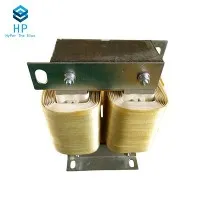


Hey there! As a supplier of saturated reactors, I've been dealing with these nifty devices for quite a while. One question that often pops up is how the core material influences the performance of a saturated reactor. Well, let's dig into it!
First off, what's a saturated reactor? It's a type of electrical reactor where the magnetic core can be saturated by a DC control current. This saturation changes the reactor's impedance, which is super useful in various applications like voltage regulation, power factor correction, and harmonic filtering.
Now, let's talk about the core material. The core is the heart of a saturated reactor, and different materials have different properties that can really impact how the reactor works.
1. Magnetic Permeability
Magnetic permeability is a key property of the core material. It measures how easily a magnetic field can be established in the material. High - permeability materials, like certain types of iron alloys, allow a large magnetic flux to be created with a relatively small magnetizing force.
When the core material has high permeability, the reactor can achieve a high inductance value with a smaller number of turns in the coil. This means less copper wire is needed, which can reduce the cost and size of the reactor. On the other hand, low - permeability materials result in lower inductance values for the same number of turns.
For example, in a Variable Reactor, a high - permeability core can make it easier to control the reactor's impedance over a wide range. The DC control current can more effectively saturate the core, leading to significant changes in the inductance and thus the impedance of the reactor.
2. Saturation Flux Density
Saturation flux density is another crucial factor. It's the maximum magnetic flux density that the core material can support before it becomes saturated. Once the core is saturated, increasing the magnetizing force won't result in a proportional increase in the magnetic flux.

Materials with high saturation flux density, such as some silicon steels, can handle large magnetic fields without saturating too quickly. This is beneficial in applications where high - power levels are involved. For instance, in a Parallel Resonant Reactor, a core with high saturation flux density can prevent premature saturation under high - current conditions. This ensures that the reactor can operate efficiently and maintain its desired performance characteristics.
Conversely, materials with low saturation flux density will saturate more easily. This can be useful in some cases where rapid saturation is required, like in certain types of protection circuits where the reactor needs to quickly change its impedance in response to an over - current situation.

3. Core Losses
Core losses are a big deal when it comes to the performance of a saturated reactor. These losses occur due to two main mechanisms: hysteresis loss and eddy - current loss.
Hysteresis loss is caused by the energy dissipated as the magnetic domains in the core material realign with the changing magnetic field. Materials with a narrow hysteresis loop have lower hysteresis losses. For example, some advanced amorphous metal alloys have very low hysteresis losses compared to traditional iron - based materials.
Eddy - current loss is due to the circulating currents induced in the core material by the changing magnetic field. To reduce eddy - current losses, the core material is often laminated or made of a material with high electrical resistivity. For example, silicon steel is commonly used in reactor cores because its silicon content increases the electrical resistivity, reducing eddy - current losses.
In a Series Resonant Reactor, minimizing core losses is crucial for high - efficiency operation. Lower core losses mean less heat generation, which can extend the lifespan of the reactor and reduce the need for complex cooling systems.
4. Temperature Stability
The performance of a saturated reactor can be affected by temperature changes, and the core material plays a significant role in its temperature stability.
Some materials, like certain ceramics, have excellent temperature stability. They maintain their magnetic properties over a wide range of temperatures. This is important in applications where the reactor may be exposed to high - temperature environments, such as in industrial power systems or in outdoor installations.
On the other hand, some materials may experience significant changes in their magnetic properties with temperature variations. For example, the saturation flux density of some materials may decrease as the temperature rises. This can lead to a change in the reactor's impedance and affect its overall performance.
5. Cost and Availability
Of course, cost and availability are practical considerations when choosing a core material. Some high - performance materials, like certain rare - earth alloys, can be very expensive and may have limited availability.
In contrast, more common materials like silicon steel are relatively inexpensive and widely available. This makes them a popular choice for many saturated reactor applications, especially when cost is a major factor.
As a saturated reactor supplier, I often work with customers to find the right balance between performance, cost, and availability. We consider the specific requirements of each application and recommend the most suitable core material accordingly.
Impact on Different Applications
The choice of core material can have a significant impact on different applications of saturated reactors.
In power factor correction applications, a core material with high permeability and low core losses is preferred. This allows the reactor to efficiently adjust the reactive power in the system, improving the power factor and reducing energy losses.
In harmonic filtering applications, the core material's ability to handle high - frequency magnetic fields is crucial. Materials with low eddy - current losses at high frequencies are often selected to ensure effective filtering of harmonics.
Conclusion
In conclusion, the core material has a profound influence on the performance of a saturated reactor. From magnetic permeability and saturation flux density to core losses, temperature stability, and cost, every property of the core material matters.
As a supplier, I understand the importance of choosing the right core material for each customer's needs. Whether you're looking for a Variable Reactor, a Parallel Resonant Reactor, or a Series Resonant Reactor, we can help you find the optimal solution.
If you're interested in purchasing saturated reactors or have any questions about core materials and their impact on performance, feel free to reach out. We're here to assist you in making the best choice for your application.
References
- "Electrical Power Systems: Design and Analysis" by John J. Grainger and William D. Stevenson
- "Magnetic Materials and Their Applications" by E. C. Stoner and E. P. Wohlfarth
- "Reactors in Power Systems" by R. K. Rajput