


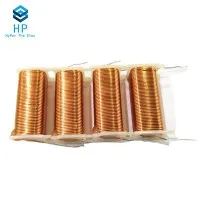

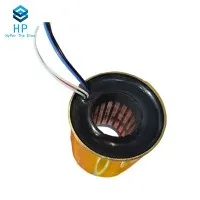

Hey there! I'm a supplier of Balancing Reactors, and today I wanna chat about how the price of a Balancing Reactor varies with its parameters. It's a topic that's super important for both us suppliers and you buyers out there.
Let's start with the basics. A Balancing Reactor is a key component in electrical systems, and it plays a crucial role in ensuring the stability and efficiency of power distribution. You can learn more about it on this page: Balancing Reactor.
One of the most significant parameters that affect the price is the rated power. Generally speaking, the higher the rated power of a Balancing Reactor, the more expensive it is. Why? Well, a higher - rated power means the reactor needs to handle more electrical energy. To achieve this, it requires more high - quality materials, like better conductors and magnetic cores. For example, a reactor with a rated power of 100 kVA will cost a lot more than one with a rated power of 10 kVA. The production process for high - power reactors is also more complex, involving more precise manufacturing techniques and strict quality control. This all adds up to a higher price tag.
Another important parameter is the inductance value. Inductance is a measure of the reactor's ability to store energy in a magnetic field. Reactors with higher inductance values usually cost more. This is because achieving a high inductance often requires more turns of wire in the coil. More wire means more raw material costs, and it also takes more time and labor to wind the coil. Additionally, high - inductance reactors may need special magnetic cores with better magnetic properties to enhance the inductance. These specialized cores are often more expensive to produce.
The insulation class is yet another factor that impacts the price. Reactors with a higher insulation class are designed to withstand higher temperatures and electrical stresses. They use better insulation materials, such as high - grade mica or special epoxy resins. These materials are not only more expensive but also require more advanced manufacturing processes to ensure proper insulation. For instance, a reactor with an insulation class of H (180°C) will be pricier than one with an insulation class of B (130°C). The higher - class insulation provides better reliability and longer service life, but it comes at a cost.
The frequency range is also a consideration. Balancing Reactors are designed to work within specific frequency ranges. Reactors for high - frequency applications are more expensive. High - frequency operation requires the use of materials with low eddy - current losses and high magnetic permeability. These materials are often more costly to source. Also, the design and manufacturing of high - frequency reactors need to account for the effects of skin effect and proximity effect, which adds to the complexity and cost of production.


The environmental conditions for which the reactor is designed can also influence the price. If a reactor is designed for harsh environments, such as high - humidity or high - altitude areas, it needs to be specially protected. This may involve additional enclosures, corrosion - resistant coatings, or moisture - proof treatments. All these extra features increase the production cost and, consequently, the price. For example, a reactor designed for use in a coastal area where there is a lot of salt in the air will have a higher price due to the need for anti - corrosion measures.
Now, let's talk about some related products. Power Factor Compensation Reactor and Current Limiting Reactor are similar in some ways to Balancing Reactors. They all play important roles in electrical systems, but their functions and parameters are different, which also leads to different price points.
As a supplier, I understand that price is a major concern for you. But it's important to remember that when you're buying a Balancing Reactor, you're not just paying for the product itself. You're also paying for the reliability, performance, and long - term value it provides. A high - quality reactor may cost more upfront, but it can save you a lot of money in the long run by reducing maintenance costs and preventing system failures.
If you're in the market for a Balancing Reactor, I'd love to have a chat with you. We can discuss your specific requirements, and I can help you find the right reactor at a competitive price. Whether you need a reactor with a specific rated power, inductance value, or insulation class, we can work together to meet your needs. So, don't hesitate to reach out for a procurement discussion. I'm here to make sure you get the best product for your electrical system.
References:
- Electrical Engineering Handbook, various editions
- Industry reports on power reactor manufacturing and pricing