


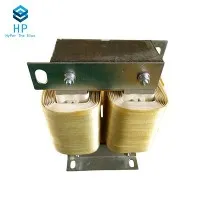

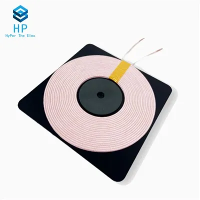

Hey there! As a supplier of Coil Inductors, I've seen firsthand how various factors can impact the performance of these crucial components. One such factor that often flies under the radar but can have a significant effect is the proximity effect. In this blog post, I'll break down what the proximity effect is, how it affects the performance of a coil inductor, and why it matters to you as a buyer.
What is the Proximity Effect?
Let's start with the basics. The proximity effect is a phenomenon that occurs when alternating current (AC) flows through adjacent conductors in a coil inductor. When this happens, the magnetic fields generated by the currents in these conductors interact with each other. This interaction causes the current to distribute unevenly within the conductors.
To put it simply, the current tends to concentrate on the sides of the conductors that are closest to each other. This uneven distribution of current is a far cry from the ideal scenario where the current is evenly spread across the cross - section of the conductor. And this uneven distribution has some pretty big implications for the performance of the coil inductor.


How the Proximity Effect Affects Coil Inductor Performance
Increased Resistance
One of the most noticeable impacts of the proximity effect is an increase in the effective resistance of the coil inductor. When the current is concentrated on the sides of the conductors, the effective cross - sectional area through which the current can flow is reduced. According to the basic formula for resistance (R = ρL/A, where ρ is resistivity, L is length, and A is cross - sectional area), a decrease in the cross - sectional area (A) leads to an increase in resistance (R).
This increased resistance means that more power is dissipated as heat. In practical applications, this can lead to overheating of the coil inductor, which not only reduces its efficiency but can also shorten its lifespan. For example, in a Filter Inductor used in a power supply, excessive heat can cause the inductor to fail prematurely, leading to system downtime and costly repairs.
Reduced Inductance
The proximity effect can also have an impact on the inductance of the coil inductor. Inductance is a measure of the ability of the inductor to store energy in its magnetic field. When the current distribution is affected by the proximity effect, the magnetic field distribution within the coil is also altered.
The change in the magnetic field distribution can cause a reduction in the overall inductance of the coil. This is a problem because the inductance value is a critical parameter in many applications. For instance, in a BUCK Inductor used in a DC - DC converter, a decrease in inductance can lead to increased ripple current, which can affect the stability and performance of the converter.
Frequency Dependence
The impact of the proximity effect is highly frequency - dependent. At low frequencies, the effect is relatively small because the magnetic fields have more time to interact in a more uniform way. However, as the frequency increases, the proximity effect becomes more pronounced.
This frequency dependence means that the performance of the coil inductor can vary significantly depending on the operating frequency of the circuit. For high - frequency applications, such as in radio frequency (RF) circuits, the proximity effect can be a major challenge. Designers need to carefully consider the proximity effect when selecting and designing Coil Inductors for these high - frequency applications to ensure optimal performance.
Mitigating the Proximity Effect
Conductor Geometry
One way to mitigate the proximity effect is by carefully choosing the conductor geometry. Using Litz wire is a popular solution. Litz wire consists of multiple insulated strands of wire that are twisted together in a specific pattern. This design helps to reduce the proximity effect by ensuring that each strand experiences a more uniform magnetic field.
Another option is to use flat conductors or foil windings. Flat conductors have a larger surface area compared to round conductors, which can help to reduce the current concentration caused by the proximity effect.
Coil Design
The way the coil is designed can also have an impact on the proximity effect. For example, increasing the spacing between the turns of the coil can reduce the interaction between the magnetic fields of adjacent conductors. However, this approach may increase the overall size of the inductor, which may not be desirable in some applications.
Another design consideration is the use of multiple layers in the coil. By carefully arranging the layers and the direction of the current flow in each layer, it is possible to minimize the proximity effect.
Why This Matters to You as a Buyer
As a buyer of coil inductors, understanding the proximity effect and its impact on performance is crucial. It can help you make more informed decisions when selecting inductors for your applications.
If you're working on a high - frequency project, you'll want to look for inductors that are specifically designed to minimize the proximity effect. This may mean choosing inductors made with Litz wire or those with a special coil design.
On the other hand, if you're working on a low - frequency application, you may have more flexibility in your choice of inductors. But it's still important to be aware of the potential impact of the proximity effect, especially if your application has strict efficiency or temperature requirements.
Let's Talk
If you're in the market for coil inductors and have questions about how the proximity effect might affect your application, I'd love to chat. Whether you need a Filter Inductor for a power supply, a BUCK Inductor for a DC - DC converter, or any other type of Coil Inductor, I can help you find the right solution. Don't hesitate to reach out and start a conversation about your specific needs.
References
- Grover, F. W. (1946). Inductance Calculations: Working Formulas and Tables. Dover Publications.
- Paul, C. R. (2007). Analysis of Multiconductor Transmission Lines. Wiley - Interscience.