


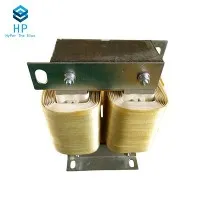

Hey there! As a supplier of BUCK Inductors, I've had my fair share of chats with engineers and hobbyists about how different factors can impact a circuit. One question that pops up a lot is, "How does the quality factor of a BUCK inductor affect the circuit?" Well, let's dig into it.
First off, what's the quality factor, or Q, of an inductor? In simple terms, it's a measure of how 'good' an inductor is at storing energy compared to how much energy it loses. A high Q value means the inductor stores more energy and loses less, while a low Q value indicates more energy loss.
Let's start with efficiency. Efficiency is a big deal in any circuit, especially in power - related ones like BUCK converters. A BUCK converter is used to step down voltage, and it's everywhere, from your phone chargers to industrial power supplies. When you use a BUCK inductor with a high Q value, the inductor can store and release energy more effectively. This means less energy is wasted as heat in the inductor itself.
Think about it like a water tank. A high - Q inductor is like a well - sealed water tank that can hold water (energy) without leaking much. On the other hand, a low - Q inductor is like a leaky tank. In a circuit, that energy loss translates into lower efficiency. For example, in a power - hungry device, a high - Q BUCK inductor can help the device run cooler and use less power overall. This is not only good for the environment but also for the bottom line, as it can reduce electricity costs in the long run.
Now, let's talk about the output voltage ripple. Ripple is the small, unwanted AC component that rides on top of the DC output voltage in a BUCK converter. A high - Q inductor can help reduce this ripple. Since it stores and releases energy more smoothly, it can better filter out those unwanted AC variations.
Imagine you're trying to pour a steady stream of water from a pitcher. A high - Q inductor is like a pitcher with a well - designed spout that allows the water to flow out in a smooth, steady stream. A low - Q inductor, on the other hand, is like a pitcher with a wobbly spout that causes the water to splash around. In a circuit, a lower output voltage ripple means a more stable DC output, which is crucial for sensitive electronic components. Components like microcontrollers and sensors can be very sensitive to voltage variations, and a stable power supply can prevent malfunctions and improve the overall performance of the device.
Another aspect is the transient response of the circuit. Transient response refers to how the circuit reacts to sudden changes in load or input voltage. A high - Q BUCK inductor can improve the transient response. When there's a sudden change in the load, a high - Q inductor can quickly adjust the energy flow in the circuit. It can release or store energy rapidly to maintain a stable output voltage.
Let's say you have a device that suddenly starts drawing more power. A high - Q inductor can supply the extra energy needed without causing a significant drop in the output voltage. In contrast, a low - Q inductor might struggle to keep up, leading to a larger voltage dip and potentially causing the device to malfunction.
Now, you might be wondering about the trade - offs. A high - Q inductor often comes with a higher cost. This is because achieving a high Q value usually requires better materials and more precise manufacturing processes. For example, using high - quality magnetic cores and low - resistance windings can increase the Q value but also add to the production cost.


However, in many applications, the benefits of a high - Q inductor far outweigh the extra cost. For critical applications like medical devices or aerospace electronics, where reliability and performance are of utmost importance, paying a little extra for a high - Q BUCK inductor is a no - brainer.
As a BUCK Inductor supplier, we offer a wide range of inductors with different Q values to suit various applications. Whether you're working on a low - cost consumer product or a high - end industrial project, we've got you covered.
If you're interested in PFC Inductor, BUCK Inductor, or Toroidal Inductors, we can provide you with detailed specifications and technical support. We understand that every project is unique, and we're here to help you find the right inductor for your needs.
If you're in the market for BUCK inductors or have any questions about how the quality factor might affect your circuit, don't hesitate to reach out. We're always happy to have a chat and discuss your requirements. Whether you're an experienced engineer or just starting out with electronics, we can offer valuable insights and guidance. Let's work together to build better circuits and create more efficient devices.
References
- "Inductor Design Handbook" by Colonel William T. McLyman
- "Power Electronics: Converters, Applications, and Design" by Ned Mohan, Tore M. Undeland, and William P. Robbins