


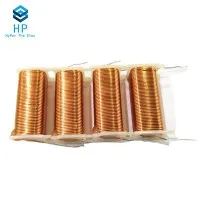

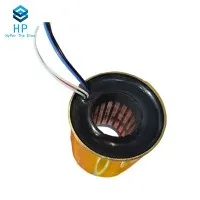

Selecting the right trap coil is a crucial decision for many electronic applications, whether you're an amateur radio enthusiast, a professional in the electronics industry, or someone working on a DIY project. As a trap coil supplier, I understand the complexities involved in this choice. In this blog post, I'll guide you through the key factors to consider when choosing a trap coil, ensuring that you make an informed decision that meets your specific needs.
Understanding Trap Coils
Before delving into the selection process, it's essential to understand what trap coils are and how they work. A trap coil is a type of inductor designed to block or "trap" certain frequencies while allowing others to pass through. This property makes them invaluable in various applications, such as radio frequency (RF) circuits, where they can be used to filter out unwanted frequencies and improve the signal quality.


Trap coils are often used in conjunction with other components like Antenna Coil, Choke Coil, and Resonant Coil. For example, in an antenna system, a trap coil can be used to tune the antenna to a specific frequency range, enhancing its performance.
Key Factors to Consider When Choosing a Trap Coil
1. Frequency Range
The first and most critical factor to consider is the frequency range you need to trap. Different applications require different frequency responses. For instance, in amateur radio, you might need to trap frequencies in the HF (High Frequency) band, which ranges from 3 to 30 MHz. In contrast, a professional RF circuit might require trapping frequencies in the VHF (Very High Frequency) or UHF (Ultra High Frequency) bands, which can range from 30 MHz to several GHz.
When selecting a trap coil, ensure that its resonant frequency (the frequency at which it traps) matches your desired frequency range. You can usually find this information in the coil's datasheet. If you're unsure about the exact frequency range you need, it's a good idea to consult with a professional or use a frequency analyzer to measure the frequencies present in your circuit.
2. Inductance Value
The inductance value of a trap coil is another important parameter. Inductance is measured in henries (H) and determines how much magnetic field the coil can store. A higher inductance value will result in a lower resonant frequency, while a lower inductance value will lead to a higher resonant frequency.
To calculate the required inductance value for your trap coil, you can use the following formula:
[ L = \frac{1}{(2\pi f)^2 C} ]
where ( L ) is the inductance in henries, ( f ) is the resonant frequency in hertz, and ( C ) is the capacitance in farads. Keep in mind that this formula assumes an idealized circuit, and in practice, you may need to adjust the values slightly to achieve the desired performance.
3. Quality Factor (Q)
The quality factor, or Q, of a trap coil is a measure of its efficiency. A higher Q value indicates that the coil has less resistance and can store more energy in its magnetic field. This results in a sharper frequency response and less energy loss.
In general, a Q value of 100 or higher is considered good for most applications. However, in some high-performance circuits, you may need a coil with a Q value of several hundred or even more. When choosing a trap coil, look for one with a high Q value to ensure optimal performance.
4. Current Rating
The current rating of a trap coil specifies the maximum amount of current that the coil can handle without overheating or being damaged. It's important to choose a coil with a current rating that is higher than the maximum current that will flow through it in your application.
If the current exceeds the coil's rating, it can cause the coil to heat up, which can lead to a decrease in its performance and even permanent damage. To determine the current rating you need, calculate the maximum current that will flow through the coil in your circuit and choose a coil with a rating that is at least 20% higher.
5. Physical Size and Mounting
The physical size and mounting options of a trap coil are also important considerations, especially if you have limited space in your circuit. Trap coils come in various sizes and shapes, from small surface-mount components to large, bulky coils.
When choosing a coil, make sure it will fit in your circuit board or enclosure. Consider the mounting method as well, such as through-hole or surface-mount, and ensure that it is compatible with your manufacturing process.
6. Temperature Stability
The performance of a trap coil can be affected by temperature changes. In some applications, such as those in harsh environments or high-power circuits, the temperature can vary significantly. Therefore, it's important to choose a coil with good temperature stability.
Look for coils that are made from materials with low temperature coefficients, such as ceramic or ferrite. These materials will maintain their electrical properties over a wide temperature range, ensuring consistent performance.
Additional Considerations
In addition to the above factors, there are a few other things to keep in mind when choosing a trap coil:
- Cost: The cost of a trap coil can vary depending on its specifications and quality. While it's important to choose a coil that meets your requirements, you also don't want to overspend. Compare prices from different suppliers to find the best value for your money.
- Supplier Reputation: When purchasing a trap coil, it's important to choose a reputable supplier. A reliable supplier will provide high-quality products, accurate specifications, and good customer support. Look for suppliers with positive reviews and a proven track record in the industry.
- Customization Options: If your application has unique requirements, you may need a custom-designed trap coil. Some suppliers offer customization services, allowing you to specify the exact parameters of your coil. This can be a great option if you need a coil with specific frequency, inductance, or other characteristics.
Conclusion
Choosing the right trap coil is a complex process that requires careful consideration of several factors, including frequency range, inductance value, quality factor, current rating, physical size, temperature stability, cost, supplier reputation, and customization options. By understanding these factors and doing your research, you can select a trap coil that meets your specific needs and ensures optimal performance in your application.
As a trap coil supplier, I'm here to help you with your selection process. If you have any questions or need further assistance, please don't hesitate to contact me. I look forward to working with you and providing you with the highest quality trap coils for your projects.
References
- "The Art of Electronics" by Paul Horowitz and Winfield Hill
- "RF Circuit Design" by Chris Bowick
- Various datasheets and technical documents from trap coil manufacturers