




Hey there! As an antenna coil supplier, I've been in the game for quite a while, and I'm super stoked to share some insights on how to design an antenna coil. It's a topic that's not only fascinating but also crucial for a wide range of applications, from radio communication to RFID systems.
First things first, let's understand the basics. An antenna coil is essentially a passive electronic component that uses electromagnetic induction to convert electrical energy into magnetic energy and vice versa. It's like a magic little device that helps signals travel through the air.
Understanding the Purpose
The very first step in designing an antenna coil is to figure out what it's gonna be used for. Are you building a radio receiver to pick up your favorite tunes? Or maybe it's for an RFID system to track inventory? Different applications have different requirements in terms of frequency range, power handling, and radiation pattern.
For example, if you're designing a coil for a radio receiver, you'll want to focus on getting the right resonance frequency. This is the frequency at which the coil works most efficiently. If the resonance frequency doesn't match the frequency of the radio signal you're trying to pick up, you're gonna have a hard time getting a clear reception.
Choosing the Right Materials
The materials you use for your antenna coil can have a huge impact on its performance. The most common material for the wire is copper because it has low electrical resistance, which means less energy is wasted as heat. The thickness of the wire, also known as the gauge, matters too. Thicker wires generally have lower resistance but might be more difficult to wind, especially if you're making a small coil.
The core material is another important factor. Air cores are simple and can work well at high frequencies. They don't introduce any magnetic losses, but they also have a relatively low inductance. On the other hand, ferrite cores can significantly increase the inductance of the coil, which is great for low - frequency applications. However, they can also introduce losses at high frequencies.
Calculating the Inductance
Inductance is a key parameter in antenna coil design. It determines how well the coil stores and releases magnetic energy. There are several formulas you can use to calculate the inductance of a coil, depending on its shape. For a solenoid coil (a simple cylindrical coil), the inductance formula is (L=\frac{\mu N^{2}A}{l}), where (L) is the inductance, (\mu) is the permeability of the core material, (N) is the number of turns, (A) is the cross - sectional area of the coil, and (l) is the length of the coil.
Figuring out the right number of turns is crucial. Too few turns, and the inductance might be too low for your application. Too many turns, and you could end up with a coil that's too bulky or has too much resistance. You'll also need to consider the spacing between the turns. Tightly wound turns can increase the inductance, but they can also increase the capacitance between the turns, which can affect the coil's performance at high frequencies.
Considering the Different Types of Antenna Coils
There are several types of antenna coils, each with its own unique properties and applications.
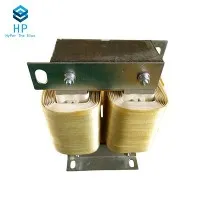
- Choke Coil: A choke coil is designed to block high - frequency signals while allowing low - frequency or DC signals to pass through. It's often used in power supply circuits to filter out unwanted noise. The design of a choke coil usually involves a large number of turns to increase the inductance and a core material that can handle the magnetic fields without excessive losses.
- Trap Coil: Trap coils are used to reject a specific frequency or a narrow band of frequencies. They work by creating a resonance at the unwanted frequency, which causes a high impedance at that frequency. This effectively traps the unwanted signals and prevents them from interfering with the desired signals.
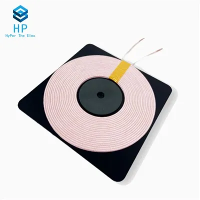
- Resonant Coil: Resonant coils are designed to resonate at a specific frequency. At resonance, the impedance of the coil is minimized, and it can transfer energy most efficiently. They're commonly used in radio circuits, such as in transmitters and receivers, to select and tune to a particular frequency.
Simulating the Design
Once you've got a rough idea of your coil design, it's a good idea to use simulation software. There are plenty of free and paid options available. Simulation allows you to test your design before you actually start winding the coil. You can see how the coil will perform at different frequencies, how its impedance will change, and how it will interact with other components in your circuit.


During the simulation, you can tweak the parameters like the number of turns, the wire gauge, and the core material to optimize the performance of the coil. This can save you a lot of time and money in the long run by avoiding costly mistakes.
Prototyping and Testing
After you're satisfied with the simulation results, it's time to build a prototype. Winding an antenna coil can be a bit of a tricky task, especially if you're aiming for precision. You'll need a good winding machine or you can do it by hand if you're patient enough. Make sure to wind the turns evenly and keep the spacing consistent.
Once the prototype is ready, it's time for testing. You'll need a frequency generator to produce different frequencies and a spectrum analyzer or an oscilloscope to measure the response of the coil. This will help you verify if the coil is performing as expected. If the results aren't what you wanted, you may need to go back and make some adjustments to your design.
Contact for Procurement
If you're considering designing and manufacturing antenna coils for your project but don't have the time or expertise to do it in - house, we're here to help. We, as an antenna coil supplier, have a team of experienced engineers who can work with you to design the perfect antenna coil for your specific needs. Whether you need a single prototype or a large - scale production, we've got you covered.
Don't hesitate to reach out to us for a free consultation. We can discuss your requirements, provide you with custom solutions, and offer competitive pricing. Let's work together to bring your project to life!
References
- "The Art of Electronics" by Paul Horowitz and Winfield Hill
- "Antenna Engineering Handbook" by John L. Volakis