




In the field of electronics, antenna coils play a crucial role in various applications, from radio communication to wireless charging. As an Antenna Coil supplier, I understand the importance of making antenna coils more compact without sacrificing their performance. In this blog, I will share some effective strategies and techniques to achieve this goal.
Understanding the Basics of Antenna Coils
Before delving into the methods of making antenna coils more compact, it's essential to have a basic understanding of how they work. An antenna coil is a type of inductor that stores energy in a magnetic field when an electric current passes through it. The inductance of the coil determines its ability to store energy and interact with electromagnetic waves.
The performance of an antenna coil is influenced by several factors, including its physical dimensions, the number of turns, the type of core material, and the spacing between the turns. By carefully controlling these factors, we can optimize the coil's performance and make it more compact.


Choosing the Right Core Material
One of the most effective ways to make an antenna coil more compact is to choose the right core material. The core material affects the inductance and the magnetic properties of the coil. Different core materials have different permeability values, which determine how easily the magnetic field can pass through the core.
- Ferrite Cores: Ferrite cores are widely used in antenna coils because they have high permeability, which means they can store a large amount of magnetic energy in a small volume. Ferrite cores are also relatively inexpensive and easy to work with. They are suitable for applications where high inductance and compact size are required, such as in radio frequency (RF) circuits.
- Air Cores: Air cores are another option for antenna coils. They have low permeability, which means they store less magnetic energy compared to ferrite cores. However, air cores have the advantage of being lightweight and having a low self - capacitance, which can improve the coil's performance at high frequencies. Air cores are often used in applications where low loss and high - frequency operation are required, such as in microwave circuits.
Optimizing the Coil Geometry
The geometry of the antenna coil also plays a significant role in its compactness. Here are some ways to optimize the coil geometry:
- Reducing the Number of Turns: The number of turns in a coil is directly related to its inductance. By reducing the number of turns, we can decrease the physical size of the coil. However, this also reduces the inductance, so we need to find a balance between the size and the performance of the coil. We can use techniques such as increasing the wire diameter or using a higher - permeability core material to compensate for the reduced inductance.
- Using Tightly Wound Coils: Tightly wound coils can save space compared to loosely wound coils. By winding the wire closely together, we can reduce the overall size of the coil. However, tightly wound coils may have higher self - capacitance, which can affect the coil's performance at high frequencies. To mitigate this, we can use techniques such as using a spacer between the turns or using a coil with a non - uniform winding pattern.
- Changing the Coil Shape: The shape of the coil can also affect its compactness. For example, a toroidal coil (a coil wound around a doughnut - shaped core) can be more compact than a solenoid coil (a coil wound in a cylindrical shape) because it has a higher magnetic coupling and a lower self - capacitance. Toroidal coils are often used in applications where space is limited, such as in small electronic devices.
Utilizing Advanced Manufacturing Techniques
Advanced manufacturing techniques can also help in making antenna coils more compact. Here are some examples:
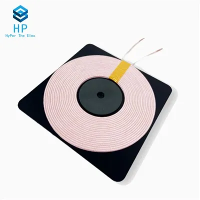
- Printed Circuit Board (PCB) Coils: PCB coils are fabricated using printed circuit board technology. They can be designed to have a very small size and high precision. PCB coils are often used in applications where miniaturization is required, such as in mobile phones and wearable devices.
- Multilayer Coils: Multilayer coils are made by stacking multiple layers of coils on top of each other. This allows for a higher inductance in a smaller volume compared to single - layer coils. Multilayer coils can be fabricated using techniques such as thin - film deposition or thick - film printing.
Considering the Application Requirements
When making an antenna coil more compact, it's important to consider the specific requirements of the application. Different applications have different performance requirements, such as frequency range, power handling, and radiation pattern.
- Frequency Range: The frequency range of the application determines the optimal design of the antenna coil. For example, coils used in low - frequency applications may require a larger number of turns and a higher inductance, while coils used in high - frequency applications may require a smaller number of turns and a lower inductance.
- Power Handling: The power handling capacity of the antenna coil is also an important consideration. If the coil is required to handle high power, it may need to be designed with a larger wire diameter or a more robust core material to prevent overheating.
- Radiation Pattern: The radiation pattern of the antenna coil affects its ability to transmit and receive electromagnetic waves. Depending on the application, the coil may need to be designed to have a specific radiation pattern, such as omnidirectional or directional.
Conclusion
Making an antenna coil more compact is a challenging but achievable goal. By choosing the right core material, optimizing the coil geometry, utilizing advanced manufacturing techniques, and considering the application requirements, we can design and manufacture antenna coils that are both compact and high - performing.
As an Antenna Coil supplier, we are committed to providing our customers with high - quality, compact antenna coils that meet their specific needs. If you are interested in purchasing antenna coils or have any questions about our products, please feel free to contact us for a procurement discussion.
For more information about our Antenna Coils, you can visit Antenna Coil. We also offer other types of coils, such as Choke Coil and Trap Coil.
References
- Electromagnetics for Engineers, by Nathan Ida
- Antenna Theory: Analysis and Design, by Constantine A. Balanis