


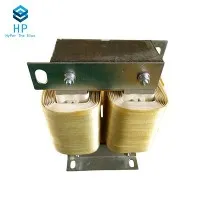



As a supplier of DC solenoid coils, I often receive inquiries about various aspects of these coils, including how to reverse their magnetic fields. In this blog post, I'll share some in - depth knowledge on this topic.
Understanding DC Solenoid Coils
Before delving into how to reverse the magnetic field of a DC solenoid coil, it's important to understand what a DC solenoid coil is. A DC solenoid coil is an electromagnetic device that generates a magnetic field when an electric current flows through it. The magnetic field is created due to Ampere's law, which states that an electric current produces a magnetic field around the conductor.
DC solenoid coils have many applications. They are commonly used in Solenoid Valve Coil systems to control the flow of fluids, in relays to switch electrical circuits, and in various types of actuators. Compared to AC Solenoid Coil, DC solenoid coils have a more stable magnetic field because the current flows in one direction only.
The Principle of the Magnetic Field of a DC Solenoid Coil
The magnetic field of a DC solenoid coil can be determined by the right - hand rule. If you wrap your right hand around the solenoid with your fingers pointing in the direction of the current flow, your thumb will point in the direction of the magnetic north pole of the solenoid. The strength of the magnetic field (B) inside a solenoid is given by the formula (B=\mu_0nI), where (\mu_0) is the permeability of free space ((\mu_0 = 4\pi\times10^{- 7}\ T\cdot m/A)), (n) is the number of turns per unit length of the solenoid, and (I) is the current flowing through the coil.
Methods to Reverse the Magnetic Field of a DC Solenoid Coil
Method 1: Reverse the Current Direction
The most straightforward way to reverse the magnetic field of a DC solenoid coil is to reverse the direction of the current flowing through it. According to the right - hand rule, when the current direction changes, the direction of the magnetic field also changes.
To reverse the current direction, you can use a double - pole double - throw (DPDT) switch. A DPDT switch has six terminals and can be used to change the connection of the power supply to the solenoid coil. When the switch is toggled, the positive and negative terminals of the power supply connected to the coil are reversed, thus reversing the current flow and the magnetic field.
Here is a simple step - by - step guide on how to use a DPDT switch to reverse the current:
- Identify the six terminals of the DPDT switch. Usually, they are labeled.
- Connect the power supply's positive terminal to one of the common terminals of the DPDT switch.
- Connect the power supply's negative terminal to the other common terminal.
- Connect one end of the solenoid coil to one of the normally - open terminals and the other end of the coil to the other normally - open terminal.
- When you flip the switch, the current direction through the coil will be reversed, and so will the magnetic field.
Method 2: Reverse the Coil Winding Direction
Another way to reverse the magnetic field is to physically reverse the winding direction of the solenoid coil. However, this method is more complicated and is usually not practical for pre - made coils.


If you are making a solenoid coil from scratch, you can wind the wire in the opposite direction compared to the original design. For example, if you originally wound the wire in a clockwise direction, you can wind it counter - clockwise. When the same current is applied, the magnetic field will be in the opposite direction because the relationship between the current and the magnetic field is based on the direction of the current flow relative to the coil's winding.
Factors to Consider When Reversing the Magnetic Field
When reversing the magnetic field of a DC solenoid coil, there are several factors to consider:
Power Supply Compatibility
Make sure that your power supply can handle the current reversal. Some power supplies may not be designed to work with a rapidly changing current direction. If the power supply cannot handle the reversal, it may overheat or even be damaged.
Coil Design and Rating
The coil itself has a certain design and rating. Reversing the magnetic field may cause changes in the coil's performance, such as changes in the inductance and resistance. You need to ensure that the coil can withstand the changes without being damaged. For example, if the coil is rated for a certain maximum current, make sure that the current during the reversal process does not exceed this rating.
Application Requirements
Consider the requirements of your specific application. In some applications, rapid magnetic field reversal may cause mechanical wear or other problems. For example, in a solenoid valve application, frequent magnetic field reversal may cause the valve to wear out more quickly.
Our DC Solenoid Coils and Technical Support
As a DC Solenoid Coil supplier, we offer high - quality DC solenoid coils with different specifications. Our coils are designed to meet various application requirements, and we can provide technical support for customers who want to reverse the magnetic field of the coils.
If you are interested in our products or have any questions about reversing the magnetic field of DC solenoid coils, please feel free to contact us for procurement and further technical discussion. We have a professional team that can help you choose the right coil and provide solutions for your specific needs.
Conclusion
Reversing the magnetic field of a DC solenoid coil can be achieved by reversing the current direction or the coil winding direction. Each method has its own advantages and disadvantages. When implementing these methods, it is essential to consider factors such as power supply compatibility, coil design, and application requirements.
As a reliable DC solenoid coil supplier, we are committed to providing high - quality products and excellent technical support. Whether you are a new user or an experienced engineer, we are here to assist you in achieving the best performance from our DC solenoid coils.
References
- Halliday, D., Resnick, R., & Walker, J. (2014). Fundamentals of Physics. Wiley.
- Purcell, E. M., & Morin, D. J. (2013). Electricity and Magnetism. Cambridge University Press.