


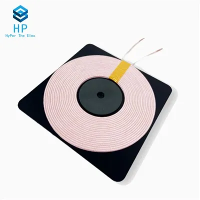
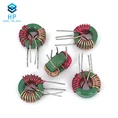

Winding a coil inductor is a fundamental process in electronics manufacturing, and as a coil inductor supplier, I'm excited to share in - depth knowledge about this crucial procedure. Coil inductors play a vital role in various electronic circuits, from power supplies to communication devices. In this blog, I'll guide you through the step - by - step process of winding a coil inductor, including the materials needed, the techniques involved, and some tips for achieving optimal results.
Understanding Coil Inductors
Before we dive into the winding process, it's essential to understand what a coil inductor is and how it functions. A Coil Inductor is a passive electronic component that stores energy in a magnetic field when an electric current flows through it. The inductance of a coil, measured in henries (H), depends on factors such as the number of turns, the cross - sectional area of the coil, the length of the coil, and the permeability of the core material.
Materials and Tools Required
To wind a coil inductor, you'll need the following materials and tools:
- Wire: The choice of wire depends on the application of the inductor. Common types of wire include copper, which is a good conductor of electricity. The gauge of the wire (thickness) is also important; thinner wires are used for high - frequency applications, while thicker wires are suitable for high - current applications.
- Core Material: Cores can be made of various materials, such as ferrite, iron powder, or air. Ferrite cores are commonly used because they have high magnetic permeability, which increases the inductance of the coil. Toroidal Inductors often use ferrite cores due to their excellent magnetic properties.
- Winding Machine (Optional): For large - scale production or precise winding, a winding machine can be used. However, for small - scale projects or prototyping, you can wind the coil by hand.
- Insulation Tape: This is used to insulate the coil and prevent short - circuits between the turns of the wire.
- Measuring Tools: A multimeter or an LCR meter can be used to measure the inductance of the coil after winding.
Step - by - Step Winding Process
Step 1: Prepare the Core
If you're using a ferrite or iron powder core, make sure it's clean and free of any debris. Inspect the core for cracks or damage, as this can affect the performance of the inductor. If necessary, sand the core lightly to ensure a smooth surface for winding.


Step 2: Determine the Number of Turns
The number of turns of the wire on the core is a critical factor in determining the inductance of the coil. You can use an inductance formula or an online calculator to calculate the number of turns based on the desired inductance, the core material, and the wire gauge. For example, the formula for the inductance of a solenoid coil is (L=\frac{\mu N^{2}A}{l}), where (L) is the inductance, (\mu) is the permeability of the core material, (N) is the number of turns, (A) is the cross - sectional area of the coil, and (l) is the length of the coil.
Step 3: Start Winding
- By Hand: If you're winding the coil by hand, secure one end of the wire to the core. You can use a small piece of tape or a knot to hold the wire in place. Then, start winding the wire tightly and evenly around the core. Make sure the turns are close together and there are no gaps between them. As you wind, keep the tension on the wire consistent to ensure a uniform coil.
- Using a Winding Machine: If you're using a winding machine, set the machine to the appropriate speed and number of turns. Feed the wire through the machine and start the winding process. The machine will wind the wire around the core automatically, ensuring a more precise and consistent winding.
Step 4: Insulate the Coil
Once you've completed the winding, wrap the coil with insulation tape. This will protect the wire from damage and prevent short - circuits. Make sure the tape covers the entire coil evenly.
Step 5: Measure the Inductance
Use a multimeter or an LCR meter to measure the inductance of the coil. Compare the measured value with the desired value. If the measured inductance is too low, you may need to add more turns of wire. If it's too high, you can remove some turns.
Tips for Winding a High - Quality Coil Inductor
Consistent Tension
Maintaining consistent tension on the wire during winding is crucial. Inconsistent tension can lead to uneven turns, which can affect the inductance and the performance of the inductor.
Layer Winding
For larger inductors or when using a thicker wire, you may need to wind the coil in layers. When winding in layers, make sure to insulate each layer with tape to prevent short - circuits between the layers.
Avoiding Cross - Overs
Try to avoid cross - overs of the wire during winding. Cross - overs can cause magnetic interference and reduce the performance of the inductor.
Applications of Coil Inductors
Coil inductors have a wide range of applications in electronics:
- Power Supplies: Filter Inductor are used in power supplies to filter out unwanted noise and ripple from the DC output. They smooth the current flow and improve the stability of the power supply.
- RF Circuits: In radio frequency (RF) circuits, coil inductors are used in resonant circuits, impedance matching networks, and filters. They help to select specific frequencies and reject unwanted frequencies.
- Audio Equipment: Inductors are used in audio equipment, such as amplifiers and speakers, to filter out high - frequency noise and improve the audio quality.
Conclusion
Winding a coil inductor is a skill that requires patience and precision. By following the steps outlined in this blog, you can wind a high - quality coil inductor for your electronic projects. As a coil inductor supplier, we offer a wide range of coil inductors, including Coil Inductor, Toroidal Inductors, and Filter Inductor. Our products are made with high - quality materials and strict manufacturing processes to ensure excellent performance.
If you're interested in purchasing coil inductors for your projects or need more information about our products, we invite you to contact us for a detailed discussion. We're committed to providing you with the best solutions and high - quality products.
References
- "The Art of Electronics" by Paul Horowitz and Winfield Hill
- "Electromagnetic Fields and Waves" by Cheng D. K.