



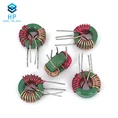

Hey there! As a supplier of Balancing Reactors, I often get asked about what the resistance of a Balancing Reactor actually is. So, I thought I'd take the time to break it down for you in this blog post.
First off, let's understand what a Balancing Reactor is. A Balancing Reactor is a key component in electrical systems, especially in those where there's a need to balance the current flow between different phases or circuits. It helps in ensuring that the electrical load is evenly distributed, which in turn improves the overall efficiency and stability of the system.
Now, onto the resistance of a Balancing Reactor. Resistance in a Balancing Reactor can be a bit tricky to understand because it's not just about the simple electrical resistance you might learn about in basic physics. There are actually two main types of resistance we need to consider: DC resistance and AC resistance.
DC resistance is the resistance of the reactor when a direct current (DC) is applied. It's mainly determined by the material and dimensions of the conductor used in the reactor. For example, if we use a thicker wire, the DC resistance will be lower because there's more space for the electrons to flow through. The formula for calculating DC resistance is pretty straightforward: (R = \rho\frac{l}{A}), where (R) is the resistance, (\rho) is the resistivity of the material, (l) is the length of the conductor, and (A) is the cross - sectional area of the conductor.
But in most real - world applications, we're dealing with alternating current (AC). AC resistance is a bit more complex. It's not only affected by the DC resistance but also by other factors like skin effect and proximity effect. The skin effect causes the current to flow more towards the outer surface of the conductor at high frequencies. This effectively reduces the cross - sectional area available for current flow, increasing the resistance. The proximity effect occurs when there are multiple conductors close to each other. The magnetic fields from these conductors interact, which can also change the distribution of current and increase the resistance.
So, why does the resistance of a Balancing Reactor matter? Well, a higher resistance means more power is dissipated as heat. This can lead to inefficiencies in the system and may even cause overheating, which can damage the reactor and other components in the electrical system. On the other hand, a very low resistance might not provide the necessary balancing effect. It's all about finding the right balance.


Let's talk about how the resistance of a Balancing Reactor compares to other types of reactors. For instance, a Smoothing Reactor is used to smooth out the ripples in a DC current. Its resistance characteristics are different because its main function is to filter out high - frequency components rather than balance the current between phases. A Power Factor Compensation Reactor is used to improve the power factor of an electrical system. Its resistance is designed to work in conjunction with capacitors to achieve the desired power factor correction. And a Current Limiting Reactor is used to limit the short - circuit current in a system. Its resistance is engineered to provide the right amount of impedance to limit the current during a fault.
As a supplier, we take great care in designing and manufacturing Balancing Reactors with the right resistance values. We use high - quality materials and advanced manufacturing techniques to ensure that our reactors have the optimal resistance for the specific application. We also conduct rigorous testing to make sure that the resistance meets the required standards and specifications.
If you're in the market for a Balancing Reactor, it's important to consider the resistance based on your specific needs. Think about the type of electrical system you have, the frequency of the current, and the amount of current that needs to be balanced. You might also want to consider factors like the operating temperature and the environment in which the reactor will be used, as these can also affect the resistance.
We're here to help you make the right choice. Whether you're an electrical engineer working on a large - scale project or a small business owner looking to improve the efficiency of your electrical system, we have the expertise and the products to meet your needs. If you have any questions about the resistance of our Balancing Reactors or any other aspects of our products, don't hesitate to reach out. We'd love to have a chat and see how we can work together to find the perfect solution for you.
In conclusion, understanding the resistance of a Balancing Reactor is crucial for ensuring the proper functioning and efficiency of an electrical system. It's a complex concept that involves both DC and AC resistance, and it's affected by various factors. But with the right knowledge and the right supplier, you can make an informed decision and get a Balancing Reactor that meets your requirements. So, if you're interested in learning more or making a purchase, feel free to contact us. We're ready to assist you in your procurement process.
References:
- Electrical Engineering textbooks on power systems and reactors
- Industry standards and guidelines for reactor design and performance